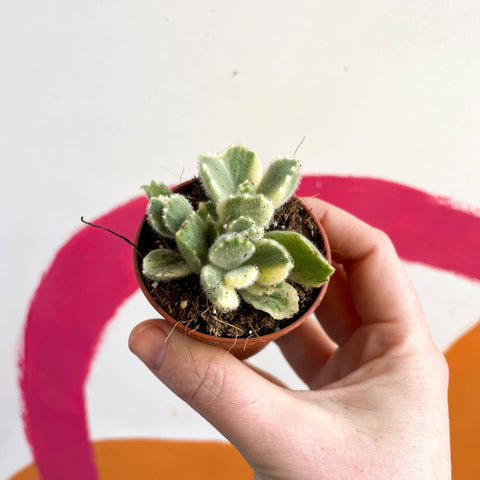
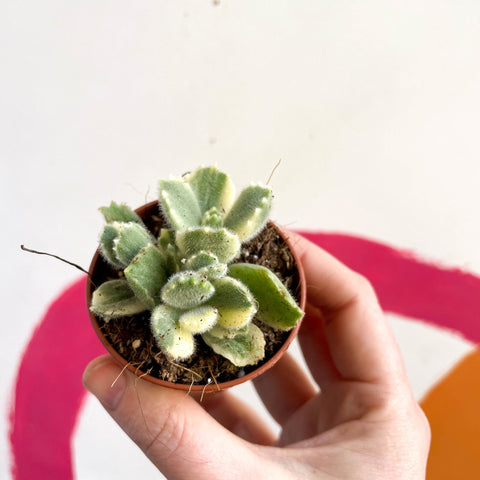
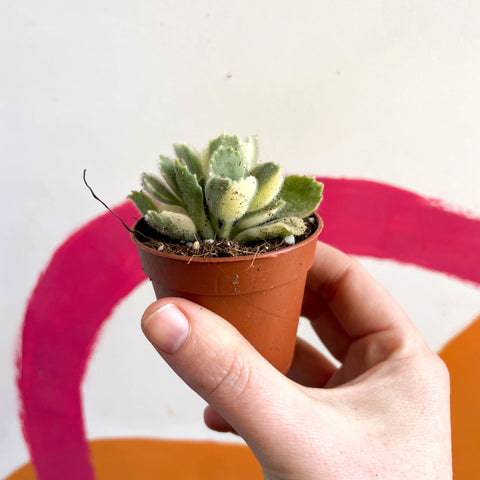
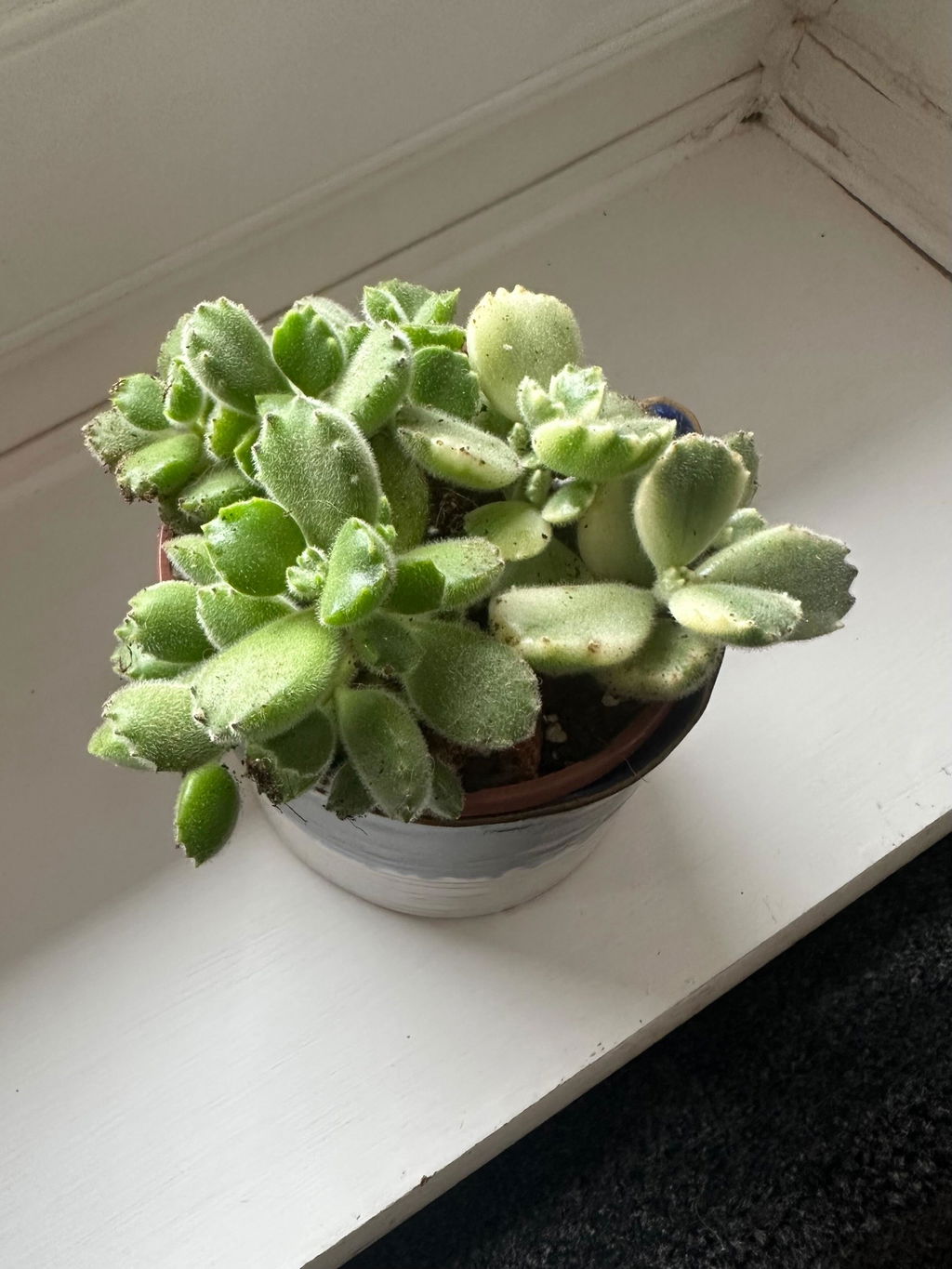
These cute and fluffy succulents are made even more eyecatching thanks to the stripes of cream variegation which border each leaf. This rare cultivar elevates the aesthetic of this adorable houseplant to really earn it pride of place in any succulent collection. The fluffy texture and distinctive shape of each leaf on this succulent give a hint to its common name as they really do look like tiny stripy paws. Silvery-green and striped with cream, each leaf grows from central stems, with new growth coming from the top, and it doesn't ask much of you either. Place it somewhere sunny, and make sure the soil is fully dry before you water it again, and it will love its new home with you.
Scientific Name
Cotyledon tomentosa subsp. ladismithiensis 'Variegata' (small cup plant, woolly species, subspecies from Ladismith, South Africa, cultivar: variegated)
Synonyms: Cotyledon ladismithiensis variegata, Cotyledon Ladysmithiensis Variagata
In the Crassulaceae family, this plant was first published in 1936 as Cotyledon ladismithensis, this was updated following a 1977 paper which found that it is in fact a subspecies of C. tomentosa
Common Name(s)
Variegated Bear's Paw, Variegated Bear Paw Succulent, Variegated Bear Paw Cactus, Variegated Fuzzy Cotyledon
Origin
This plant is native to rocky outcrops between the Laingsburg, Ladismith and Muiskraal regions of South Africa
Light
Your Bear Paws will do best with some direct sun. A windowledge facing east, west or south should work well. If you're putting it somewhere very bright, make sure to acclimatise it gradually to avoid sunburn. If it isn't getting enough light it will grow leggy and start to lose its colour. If new leaves are coming through with less variegation, it will benefit from a little more sun.
Water
Let the soil dry out totally between waters, and when you water, make sure it gets a good soak. It's useful to grow in a pot with really good drainage with succulents like this one.
Humidity
Bear Paws prefer low to average indoor humidity. Avoid placing it in overly damp or humid environments to prevent rot.
Soil
Plant in a well-draining cactus or succulent mix. Added perlite, grit or sand in these mixes can improve drainage. Repot every 2-3 years to refresh the soil or when the plant outgrows its pot.
Food
Feed every couple of months in the spring-summer growing season. Feeding is less important in winter so you can pause feeding until the spring.
Temperature
Thrives in temperatures between 18-26°C. Protect from frost and temperatures below 5°C, as this plant is not frost-tolerant.
Pet-safe
No, this plant is toxic to pets and small humans.
Sprouts Top Tips
The fuzzy 'bear paw' leaves can trap dust, so gently clean them with a soft brush or by blowing air on them to keep the plant looking its best and ensure it can still access the sunlight.
In ideal conditions, this plant can produce clusters of pink-orange, bell-shaped flowers on long stems during the growing season, adding a vibrant pop of colour.