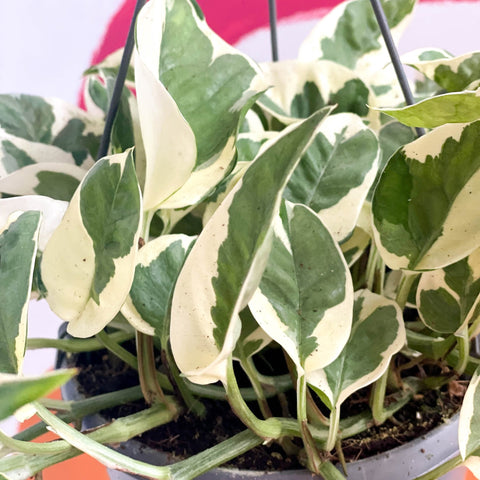
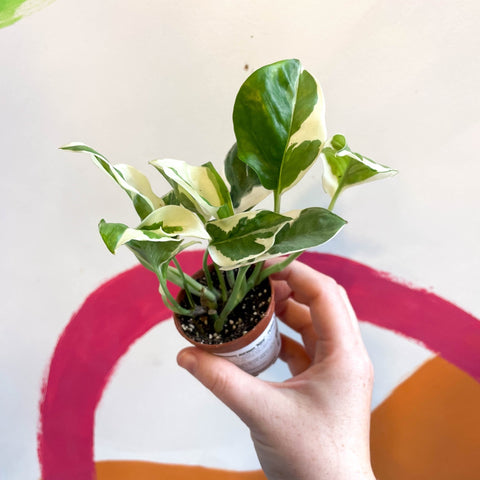
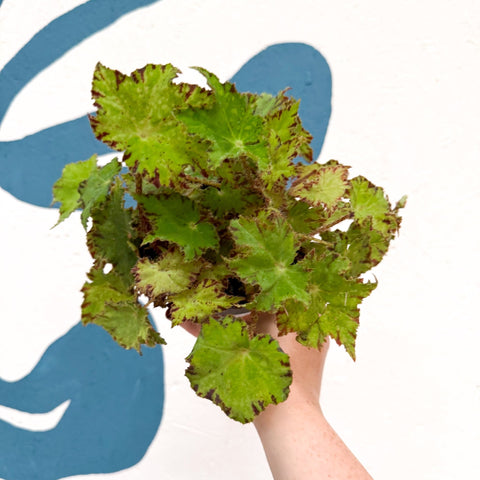
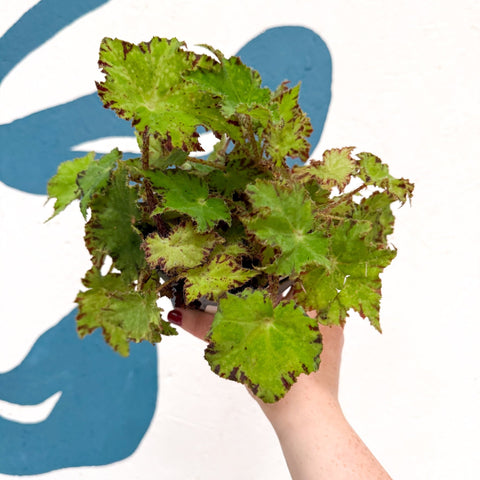
The vibrant shades of this hanging pothos will bring a little slice of tropical rainforest into your home. Easygoing, beautiful and full of character, Pothos plants will quite happily grow and ving from high shelves, hanging pots or even up moss poles - plus, they are super easy to trim and propagate, so you can have lots of tiny bushy plants or grow one mega long vine. This variety's glossy, mid-green leaves are splashed with a generous amount of golden-yellow variegation which really helps them stand out from the crowd.
Scientific Name
Epipremnum aureum ‘N’Joy Gold' (golden plant which grows on the bottom of a tree, cultivar: n'joy gold)
Synonyms: Pothos aureus, Rhaphidophora aurea, Scindapsus aureus
This plant was first described as a Pothos, and subsequently reclassified as both Rhaphidophora aurea and Scindapsus aureus before settling on the current scientific name: Epipremnum aureum.
Common Name
Golden N'joy Pothos, Devil's Ivy, Taro Vine
Origin
The species E. aureum is native to the Society Islands in the South Pacific
Light
Bright but indirect light is the way to go here - direct sun can scorch the leaves, so avoid any midday or afternoon sun. A little in the morning or evening will be fine, but really as long as the light in the chosen spot is bright enough to read by in daylight, your pothos will be fine. If it's too shady you'll start to lose that gorgeous variegation!
Water
Not too fussy if you're a bit forgetful, your pothos will prefer its soil to start to dry between waters. Make sure the top inch or so of soil feels dry to the touch before you water again - and if you leave it a little longer, don't worry; even if you lose a few leaves, your Pothos will forgive you.
Humidity
These are rainforest plants, so above-average humidity is what they're used to - they are easygoing and adaptable enough to not be too bothered with most household humidity levels, though, so just make sure you keep them away from operating heaters.
Soil
Something chunky and well-draining that retains water while allowing air to the roots is called for here. A mix designed for Monstera or Philodendron plants, epiphytes like this one, will work well here - make sure there's plenty of bark in there! Repot every few years in spring as the plant grows.
Food
Feed every month or so in spring and summer to keep it growing happy, reduce to every couple of months in autumn and winter.
Temperature
Average temperatures of 18-30°C are fine; make sure it doesn't get colder than 12°C in winter.
Pet-safe
No, this plant is toxic to pets and small humans.
Sprouts Top Tips
Allow this plant somewhere to grow to or something to grow up and it will deliver! It can have a spread of up to 8m in height in the right conditions. Alternatively, you can trim the ends to make entire new plants from the cuttings; just make sure there's a leaf and a node and your plant should be able to root anew!