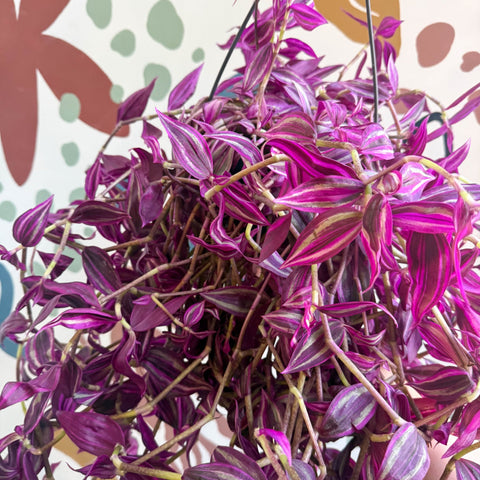
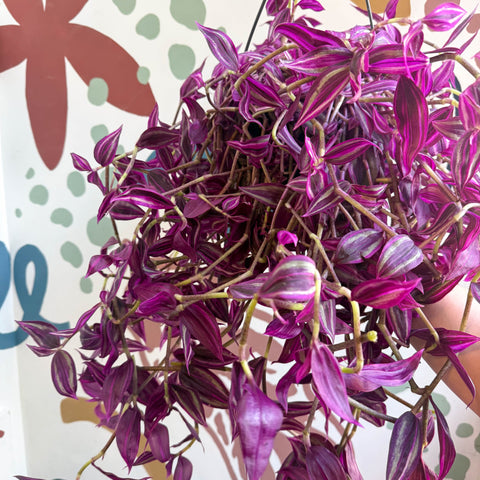
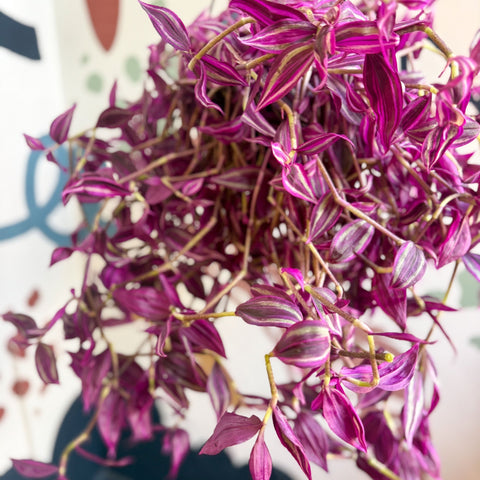
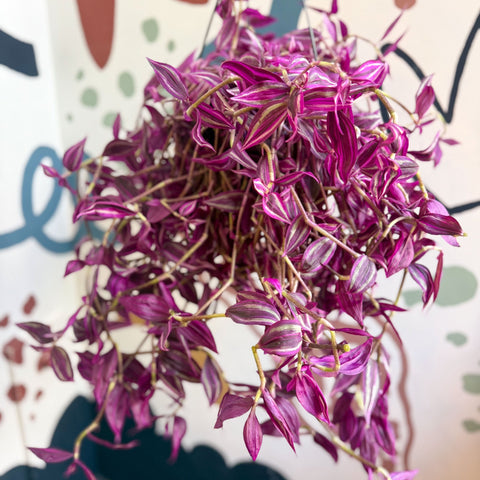
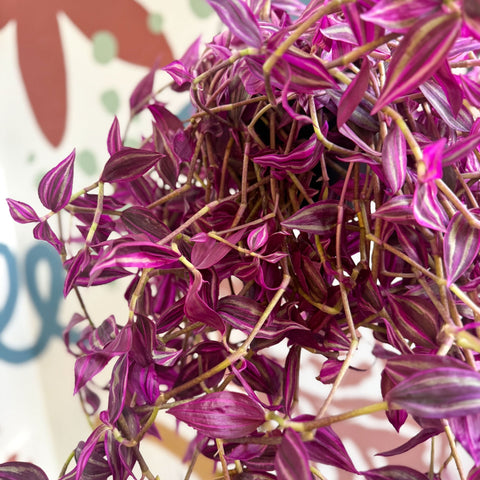
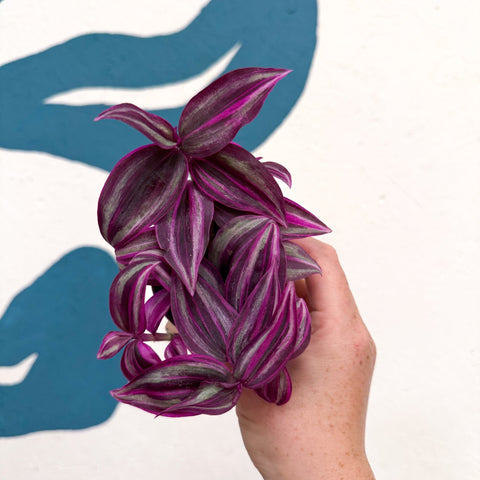
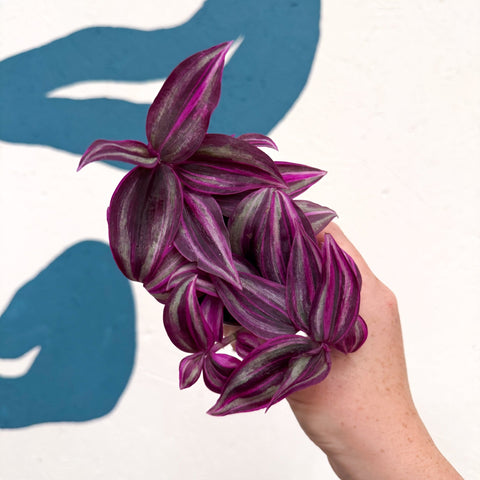
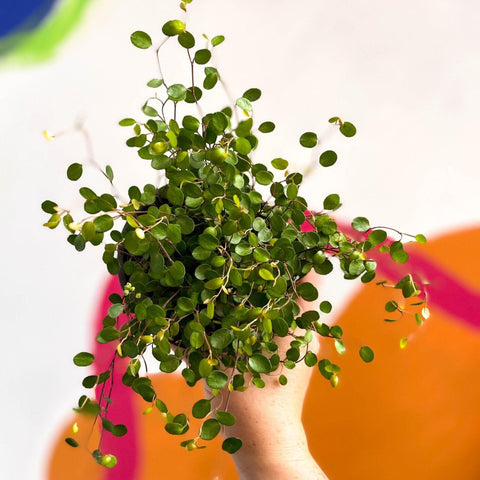
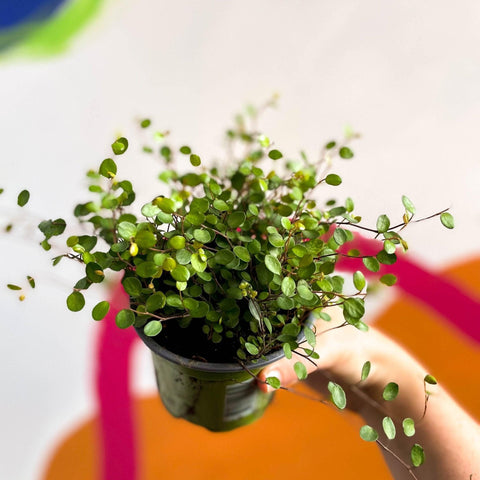
Tradescantia ‘Pink Paradise’ is a show-stopping trailing plant with soft green leaves streaked with cream, pale pink, and deep magenta. Each leaf is uniquely patterned, making this variety a popular choice for shelves, hanging pots, or colourful mixed planters. Fast-growing and easy to propagate, it brings instant cheer to any bright room.
Scientific Name
Tradescantia fluminensis – cultivar: ‘Pink Paradise’
Synonyms
Tradescantia albiflora ‘Pink Paradise’ (older classification), Pink Inch Plant, Pink Variegated Wandering Jew (avoid this outdated and offensive term)
Common Name(s)
Pink Paradise Inch Plant, Pink Wandering Plant, Pink Spiderwort
Origin
Native species originates from Brazil and Argentina; this is a cultivated variety bred for ornamental variegation
Light
Thrives in bright, indirect light; too little light will leave it leggy and damp, and too much bleached and dried-out.
Water
Water once the pot begins to feel light when lifted; these plants like to be moist, and prefer to be bottom-watered (using a dish underneath rather than pouring onto the soil) to prevent their leaves accumulating damp!
Humidity
Average humidity is fine, but your plant will benefit from an occasional misting or humidity tray.
Soil
Use a moisture-retentive, well-draining mix to keep this thirsty plant happy but not too soggy. Repot every three years if absolutely necessary; this plant is better potbound than drowning in soil.
Food
Feed every four waters in the growing season, reduce to every six in autumn and winter.
Temperature
Temperature should ideally be between 16-30°C- make sure it doesn't drop below 10°C in winter.
Pet-safe
No; while this plant is not toxic, it can cause some bad reactions when eaten by pets, including itchy skin and upset stomachs.
Sprouts Top Tips
To keep tradescantia bushy rather than leggy, you can pinch off or trim longer stems, which can then themselves be propagated, making more plants to spread around your home or share with others!
Did You Know?
The vibrant pink variegation is unstable and may shift over time – brighter light encourages more pink, while low light brings out more green.