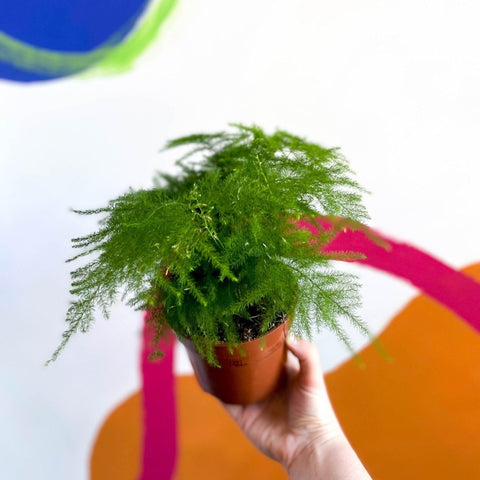
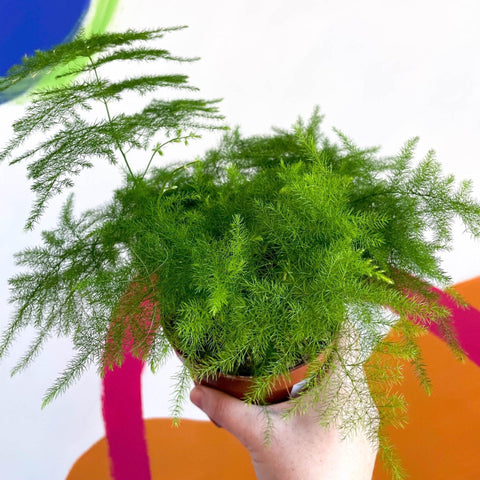
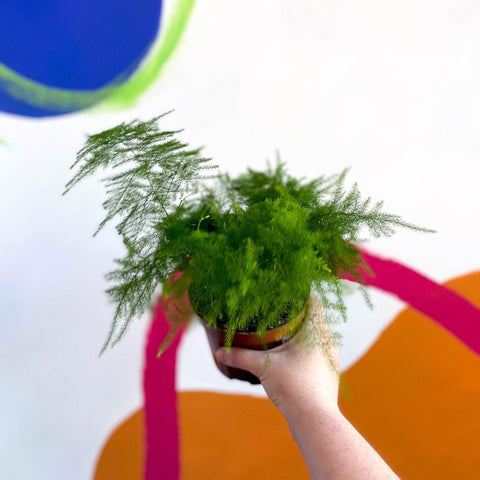
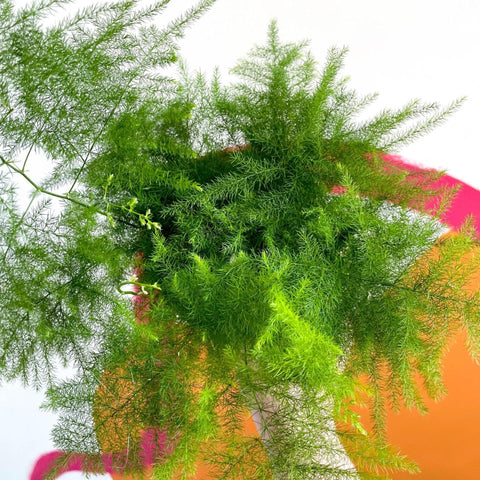
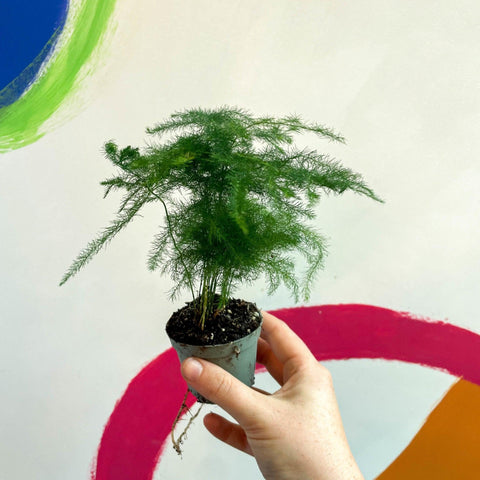
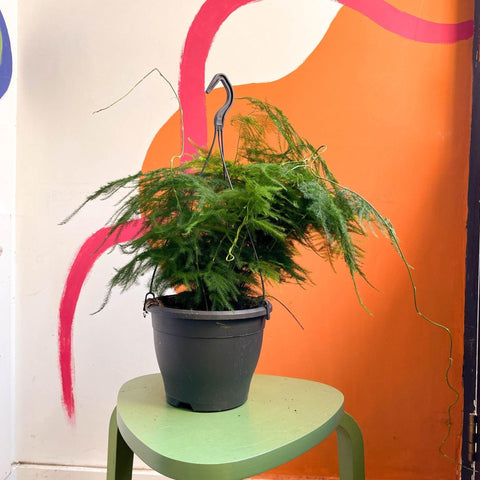
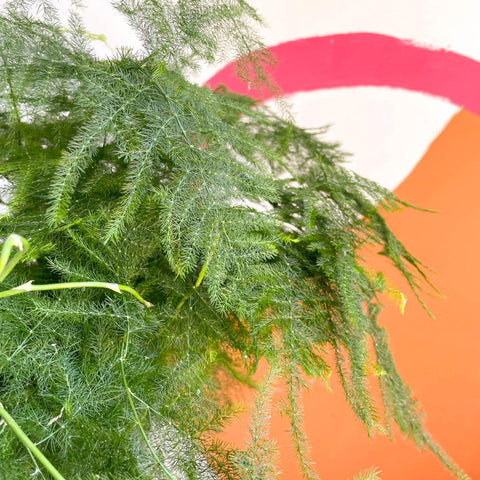
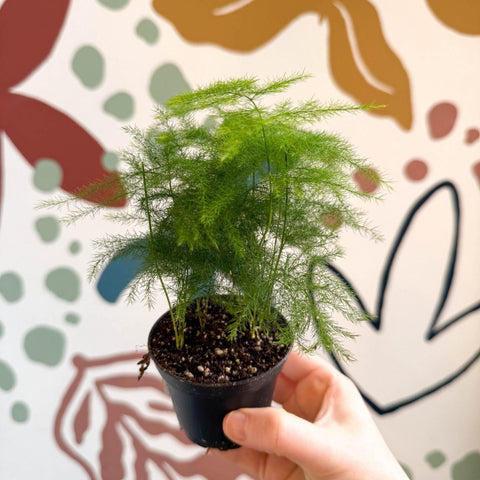
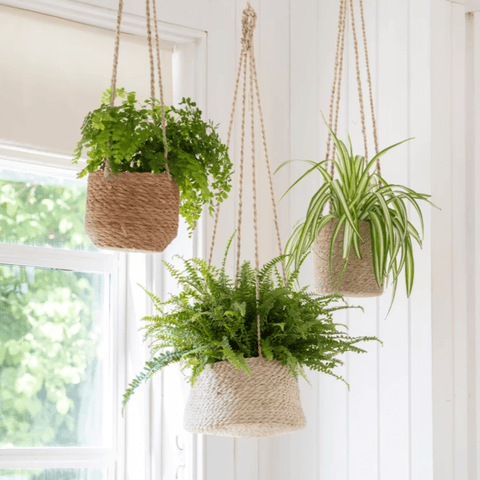
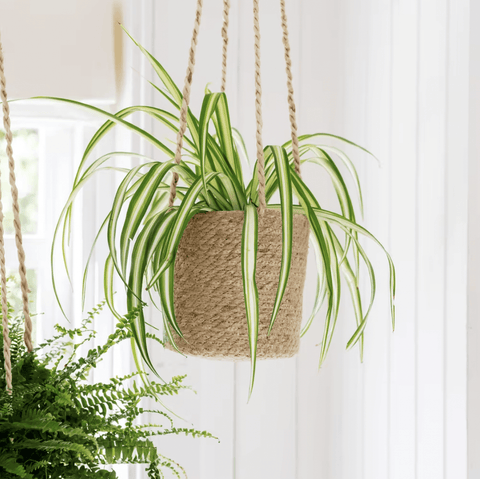
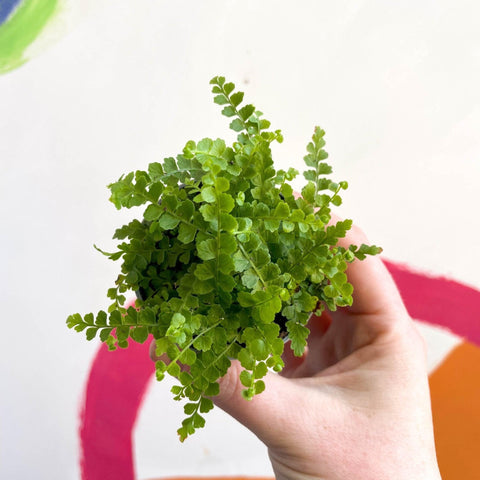
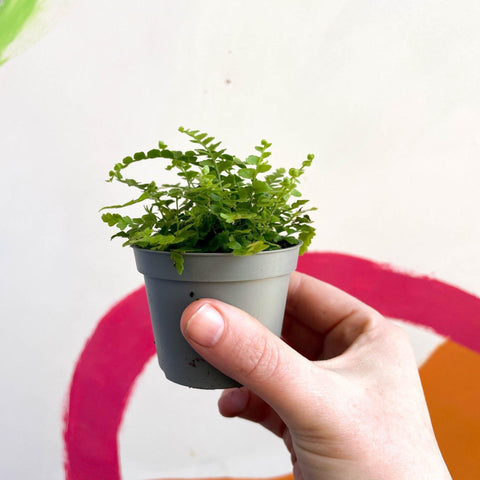
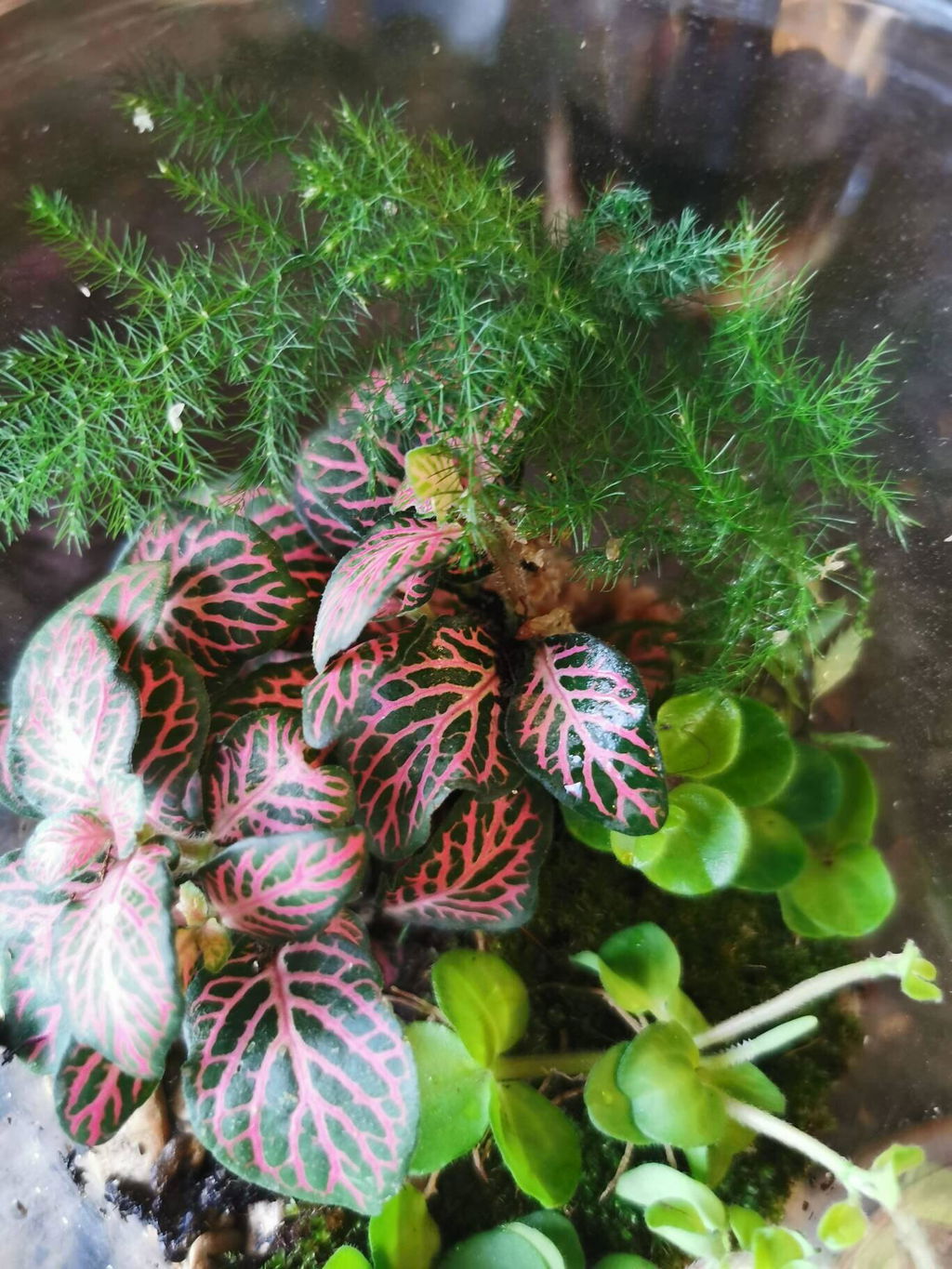
Despite the name setaceus meaning 'bristly', the asparagus fern is more fluffy than coarse. Its lush green foliage thrives in ordinary indoor conditions and really enhances any indoor jungle. The plant is more closely related to the edible asparagus than any true fern, but its appearance has earned it the nickname 'fern' due to how bushy, verdant and, well, fern-like its foliage is. As it grows, your plant will droop and grow outwards, making it well suited for hanging pots of high shelves once it's big enough! On these larger specimens, do watch out for long, thick creeping stems which can grow spikes. And remember, since it is not a true fern, the care is slightly different - it is more tolerant of high light and needs slightly less water, so may be a good option if your home is too bright for traditional ferns.
Scientific Name
Asparagus setaceus (bristly asparagus)
Synonyms: Asparagopsis setacea, Protasparagus setaceus, Asparagus plumosus, Asparagus zanzibaricus
The current classification was accepted following analysis in a 1966 paper; previously, it was not known just how closely this plant was related to the Asparagus plant.
Common Name
Asparagus Fern, Asparagus Grass, Lace Fern, Climbing Asparagus
Origin
Native to Southern and Eastern Africa, this plant is found in Botswana, South Africa, Lesotho, Eswatini, Comoros, Ethiopia, Kenya, Malawi, Mozambique, Tanzania, Zambia and Zimbabwe
Light
Likes bright but indirect light; the heat of direct sun can cause bleaching or scorching. The Asparagus fern likes a little more light than most true ferns, and will appreciate an hour of morning or evening sun over winter.
Water
Allow the top third of the soil to dry out between waterings. Dropping of needles often indicates under-watering, while yellowing foliage points to over-watering.
Humidity
Normal household humidity is suitable for this plant. Keep it away from radiators, as the dry heat can cause scorching.
Soil
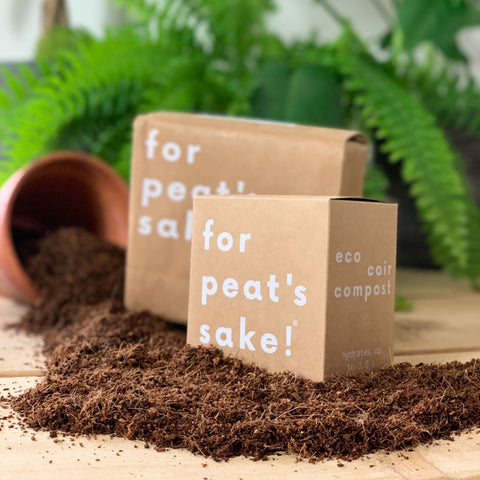
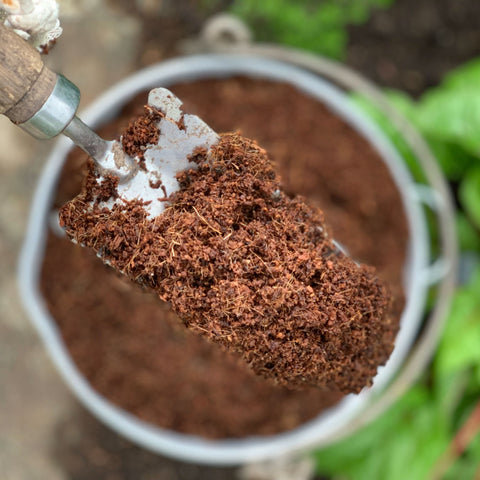
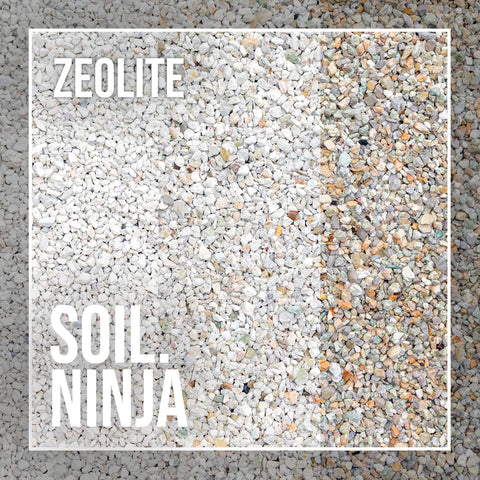
While it may not be a true fern, the Asparagus fern will still love potting soil designed for ferns; mixes with plenty of coir, perlite and sand will help give this plant what it needs. Repot every two years; when repotting, hydrate 24 hours in advance to protect the roots.
Food
Feed every four weeks with water during the growing season. Reduce feeding to every six weeks in autumn and winter.
Temperature
Room temperature conditions of 12-26°C are ideal for this plant.
Pet-safe
No, this plant is toxic to pets and small humans.
Sprouts Top Tips
The stems and roots of the Asparagus Fern grow from tubers at the top of the soil. If multiple tubers form, they can be separated to propagate new plants.
Extras
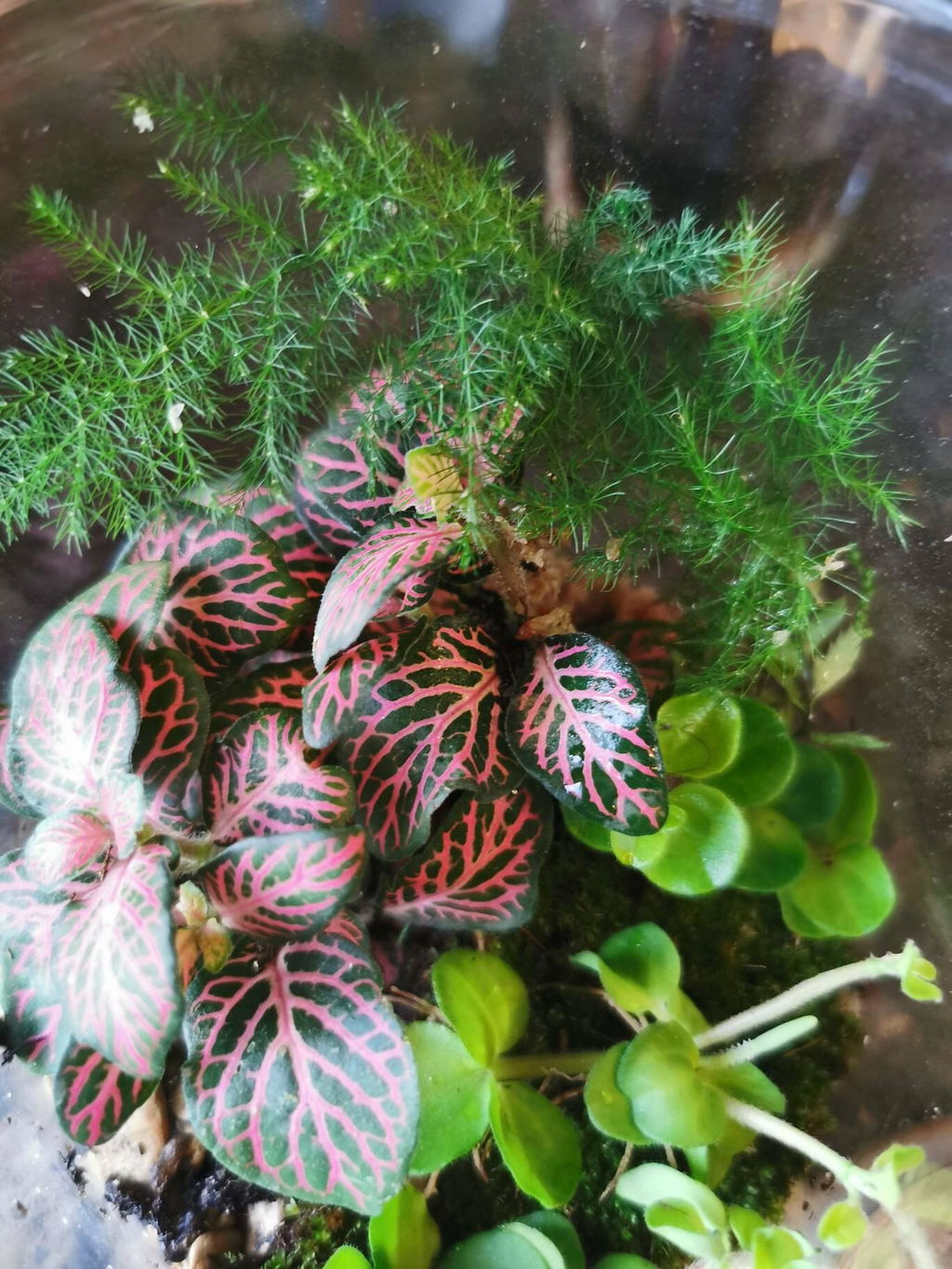
Asparagus ferns can grow well in terrariums, where they enjoy the high humidity. They can get quite tall for the enclosed environment, though, so if you want to keep it in a terrarium, be prepared to prune your asparagus fern a couple of times a year.