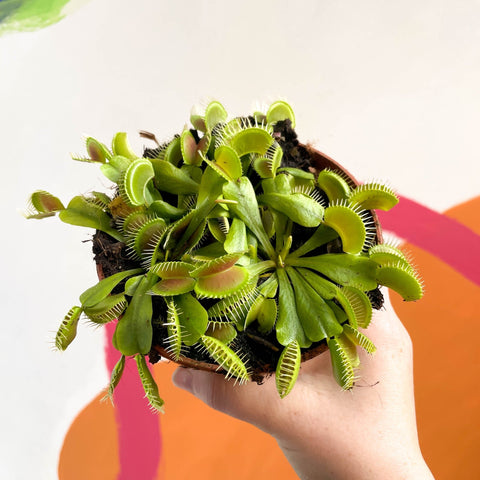
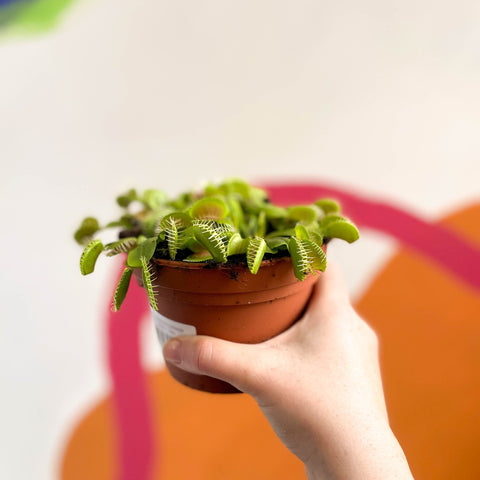
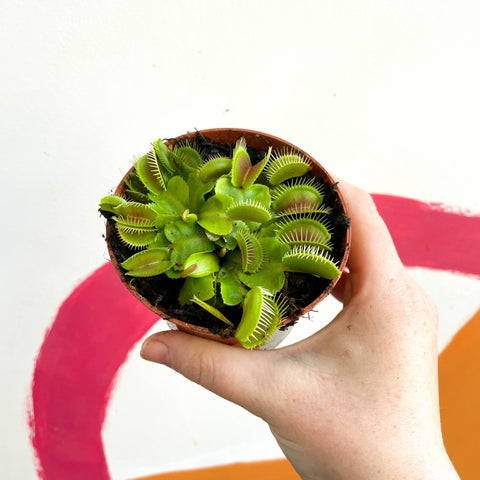
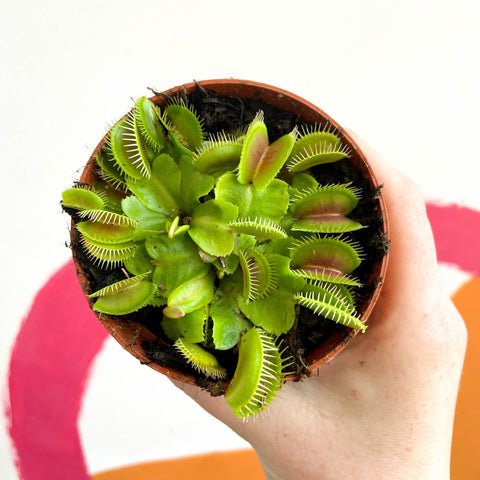
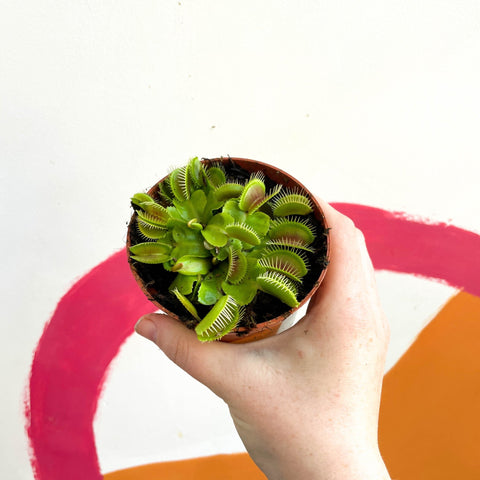
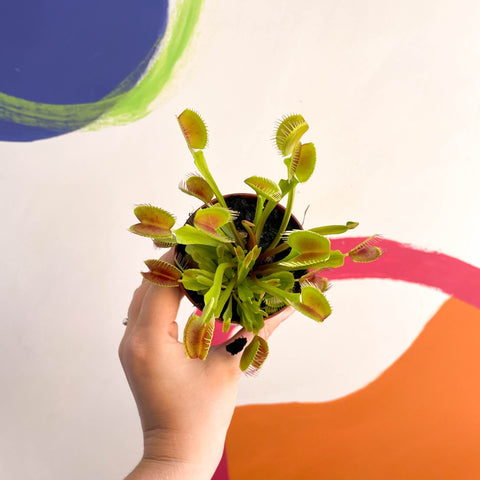
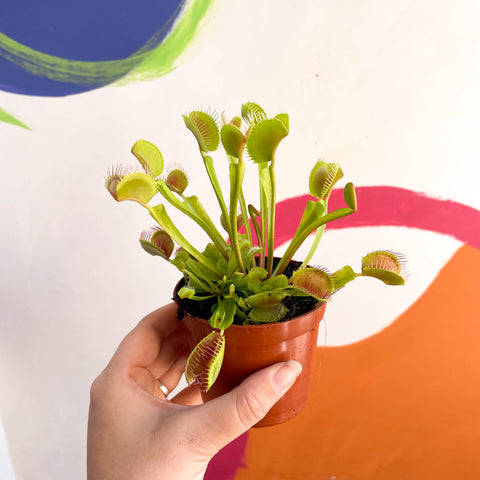
Dionaea muscipula - Venus Flytrap

Size
Regular price £12.00
Available for pickup at
*Sprouts HQ - Willway Yard, Bedminster, BS3 4BG
Usually ready in 24 hours

Willway Yard, Willway Street
Bristol BS3 4BG
United Kingdom

+441179294158

🌿 Our 7-day Plant Promise

Buying plants online can feel risky – that’s why every order comes with our 7-day Plant Promise.

If anything goes wrong in transit, just get in touch and we’ll help put it right.

Find out more here

Every plant is carefully packed by our small, plant-loving Bristol team using protective, mostly plastic-free packaging.

Occasionally, you may find reused bubble wrap – this has been donated to us, and we encourage you to reuse it too.

Orders are usually packed and dispatched within 2–4 working days. We may occasionally delay dispatch during periods of extreme weather to protect your plants. We always prioritise plant health over speed of delivery.


Delivery is £4.99 for any number of items, or free on orders over £60. We deliver across the UK only.

We also offer local, bike-powered delivery in Bristol for £4.99 via Pedal Collective, a gentler option for plants and the planet.

We believe in paying people fairly, that’s why we’ve been a Real Living Wage Employer from the very beginning. We’re an independent Bristol business, packing every order ourselves.

Supporting us means supporting fair work.

Questions before ordering? Just drop us a message – we’re always happy to help.

Head to our contact page and fill in the contact form and one of the team will be in touch shortly

One of the most recognisable plants in the world, the Venus Flytrap is famous for trapping and consuming insects; in its natural habitat, where it is an endangered species, its diet consists mainly of ants, spiders, beetles and grasshoppers, and only the occasional flying insect. It adapted this way to compensate for the poor quality of the boggy soil it grew in this was a more efficient way to get nutrients! The mechanism which closes the trap is cleverly adapted to catch only live, digestible insects; it is triggered to close when two of its sensors are touched within about 20 seconds of each other, and the body temperature and further movement of a live insect trigger digestion. The digestion process takes about ten days, after which the insect is reduced to a husk and the trap reopens. Each trap can only close three times, and needs to digest prey each time to make it worthwhile to do- so don't go poking your fingers into the traps to make them close, and don't feed it dead flies yourself; it might close but not be able to digest it!

Scientific Name
Dionaea muscipula (the fly or mouse trap of the daughter of Dione, aka Aphrodite/Venus)

Common Name
Venus Fly Trap, Venus' Flytrap

Origin
Native to wetlands (bogs) in on the East Coast of the US, especially North & South Carolina.

Light
Natural sunlight is an essential source of nourishment in the Flytrap's natural habitat; keep it somewhere it gets a few hours of morning or evening sunlight, and in late spring and summer (when night temperatures are above 10°C) it will benefit from being put outside, to get more light and catch its creepy-crawly prey

Water
As it's used to bog conditions, it needs to be sat in soggy soil all the time. Bottom-watering (placing your trap in a tray of water) will help you not to pour the water onto the traps which could accidentally trigger them. Flytraps can be fussy with tap water; rainwater or distilled water is best for them as they are so well adapted to not having nutrients in their water at all!

Humidity
Like the bogs it originates in, the Flytrap also thrives in a highly humid area. Mist a couple of times a week or introduce a humidity tray to keep it moist and happy!

Soil

Use compost designed for carnivorous plants; it should contain almost no nutrients like the soil it has adapted to. They cannot be grown in other soil as the nutrients can burn the roots. Repot every four years or so as the plant grows.

Food
Do not use fertiliser; equally, don't feed your specimen dead insects as they won't trigger digestion and will just waste the plant's energy closing the trap. If you do want to feed it, use live insects such as spiders, flies, mosquitos and even slugs- anything other than insects will kill the trap or even the whole plant. Make sure any insect you feed them is small enough to digest; the biggest it can be is about a third the size of a trap, otherwise, it can't close properly

Temperature

Tolerant of temperatures from 10-38°C; make sure it has a cooler dormancy period in winter, but not consistently colder than 12°C overnight. Once nighttime temperatures are above 10°C consistently in late spring, the trap can be grown outdoors, and will probably fare better for it!

Pet-safe
Yes, but too much nibbling won't be good for pets, small humans or the plant!

Sprouts Top Tips
A dormancy period is really important for Venus Flytraps! Over winter, keep the soil moist but the temperature slightly lower, at about 12°C, overnight- a cool windowsill is ideal- and don't worry about insects as it's used to not having many this time of year. It might look less vibrant in the colder months but this lets it rest and come back in the spring- and makes flowering in early spring more likely!

Did you know?
The Venus Flytrap, Dionaea muscipula, is the only species in the genus Dionaea- there really is nothing else like it!

Dionaea muscipula - Venus Flytrap
From £12.00

Check out The Sprouts Blog

Sprouts insights to house plants, gardening, our favourite brands and plant hire case studies.
We’re Growing – Welcome to Sprouts HQ! - Sprouts of Bristol
Sprouts of Bristol is expanding with the launch of Sprouts HQ – a new South Bristol premises that will house a dedicated packing space for online orders, an office, studio, and more room for rare and exciting plants. While the Kingsdown shop remains open as usual, the new HQ allows Sprouts to grow behind the scenes and offer even better service both in-store and online. This blog post shares the story behind the move, what customers can expect, and how to keep supporting this independent plant shop through the transition.
Jessy EdgarAugust 15, 2025
Terrarium & Wreath Workshops in Bristol – Autumn & Winter 2025 - Sprouts of Bristol
Join Sprouts of Bristol for terrarium, kokedama, and Christmas wreath workshops this autumn–winter. Creative, plant-filled fun in the heart of Bristol!
Jessy EdgarAugust 5, 2025
Build Your Own Terrarium: A Step-by-Step Guide from Sprouts - Sprouts of Bristol
Fancy creating your own tiny, self-contained world of green? Our DIY terrarium kits are the...
Jessy EdgarJuly 20, 2025