
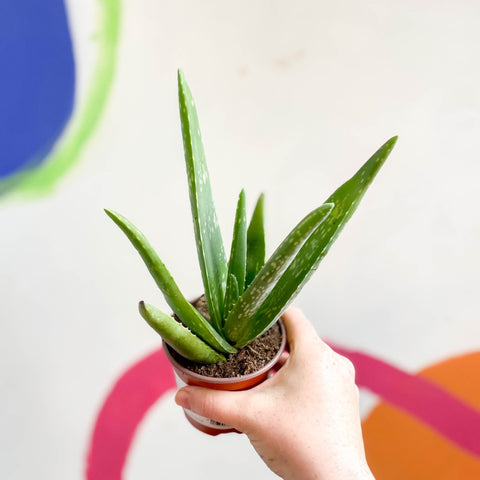
Aloe vera

Size
Regular price £6.00
Available for pickup at
*Sprouts HQ - Willway Yard, Bedminster, BS3 4BG
Usually ready in 24 hours

Willway Yard, Willway Street
Bristol BS3 4BG
United Kingdom

+441179294158

*Sprouts Shop - Kingsdown, BS6 5UD
Usually ready in 4 hours

2 Kingsdown Parade
Bristol BS6 5UD
United Kingdom

+441179294158

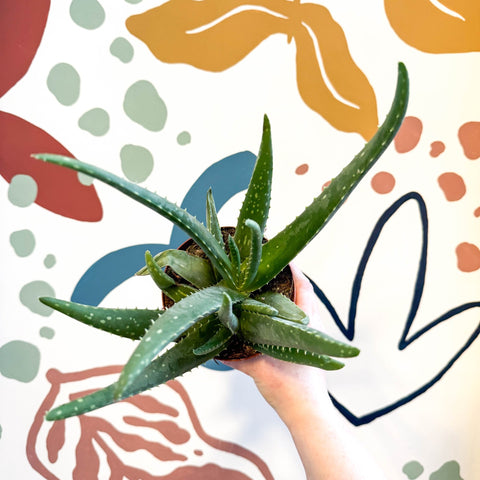
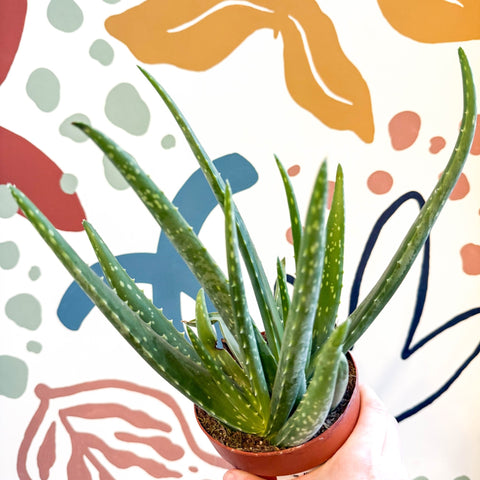
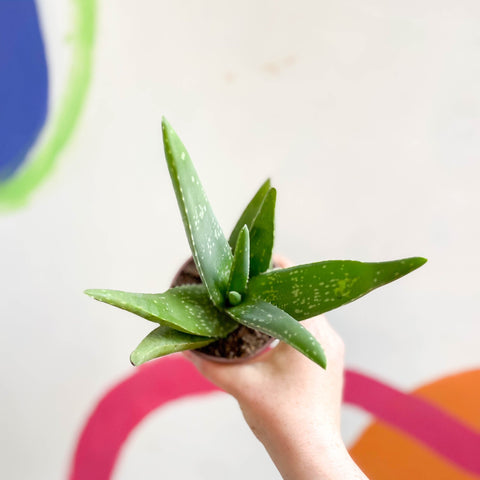
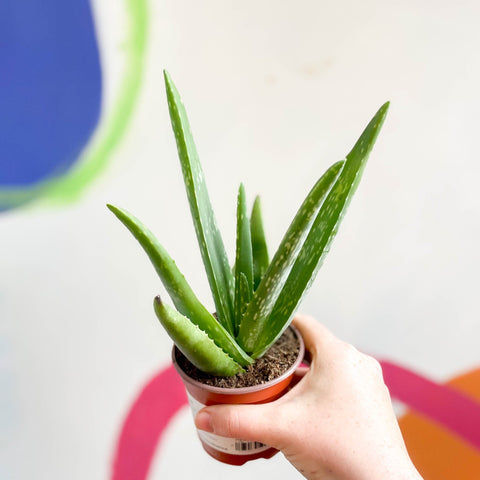
You may have heard about the healing properties of aloe vera, and even used it in the form of lotions or skincare. But have you ever grown your own Aloe vera plant? These succulents can be very happy grown as houseplants, enjoying plenty of light, and well-draining soil. You can even take the sap yourself to use: cut off a leaf at the base, cut down its length and you'll be able to apply the sap directly to your skin. And if you just enjoy looking at your plant, that's fine too - enjoy its sculptural shape, and possibly even a flower spike with little yellow flowers in summer. A splash of sun, the occasional water, and your Aloe will be good to grow.

Scientific Name
Aloe vera (true aloe)

Synonyms: Aloe barbadensis, Aloe chinensis, Aloe elongata, Aloe flava, Aloe indica, Aloe lanzae, Aloe littoralis, Aloe maculata, Aloe perfoliata var. vera, Aloe rubescens, Aloe variegata, Aloe vulgaris

Initially known as Aloe perfoliata var. vera, this plant was later found to be a distinct species; it has been known as A. vera since 1768. A few other names have been used and then later found to be the same species.

Common Name
Aloe Vera, Barbados Aloe, Medicinal Aloe, Burn Aloe, First Aid Plant, True Aloe

Origin
Although it has been introduced and naturalised all around the tropics of six continents, the Aloe vera is only actually native to a relatively small area, in the Hajar Mountains of Northern Oman.

Light
Aloes need bright light! Ideally, you should be giving your plant a few hours of direct sunlight per day; your best bet is a South- or West-facing window.

Water
Allow the soil to totally dry out between waters. Reduce watering further in winter to help it cope with the cooler temperatures and lower level of light.

Humidity
Dry air is perfectly fine here; make sure not to keep it somewhere excessively damp as this can make its soil dry out too slowly.

Soil
Use a well-draining soil mix with elements such as sand and grit, such as one designed for cacti and succulents. Ensure that the pot has drainage holes. Repot every few years as the plant grows when necessary; once the roots have totally crowded out the pot, it's time to go up a size.

Food
Fertilise every couple of months throughout the year. Aloes like this one are used to poor-quality soil, so don't worry if you miss a feed - and feeding is less important over winter.

Temperature
Mild temperatures are best here, between 15-25°C. You can grow your Aloe outside in summer, just make sure there's no risk of frost and the temperature is consistently over 10°C at night.

Pet-safe
No - the sap is fine on the skin but the plant contains toxins that can cause issues if eaten.

Sprouts Top Tips
One of the most common issues is overwatering with Aloe plants. Make sure you let the soil dry between waters, and keep an eye out for floppy, yellowing leaves as a warning sign of too much water. Rotate to keep its growth even. Red foliage indicates too much light; oif foliage is pale, it may be getting too little light,

Aloe vera
From £6.00

Check out The Sprouts Blog

Sprouts insights to house plants, gardening, our favourite brands and plant hire case studies.
We’re Growing – Welcome to Sprouts HQ! - Sprouts of Bristol
Sprouts of Bristol is expanding with the launch of Sprouts HQ – a new South Bristol premises that will house a dedicated packing space for online orders, an office, studio, and more room for rare and exciting plants. While the Kingsdown shop remains open as usual, the new HQ allows Sprouts to grow behind the scenes and offer even better service both in-store and online. This blog post shares the story behind the move, what customers can expect, and how to keep supporting this independent plant shop through the transition.
Jessy EdgarAugust 15, 2025
Terrarium & Wreath Workshops in Bristol – Autumn & Winter 2025 - Sprouts of Bristol
Join Sprouts of Bristol for terrarium, kokedama, and Christmas wreath workshops this autumn–winter. Creative, plant-filled fun in the heart of Bristol!
Jessy EdgarAugust 5, 2025
Build Your Own Terrarium: A Step-by-Step Guide from Sprouts - Sprouts of Bristol
Fancy creating your own tiny, self-contained world of green? Our DIY terrarium kits are the...
Jessy EdgarJuly 20, 2025