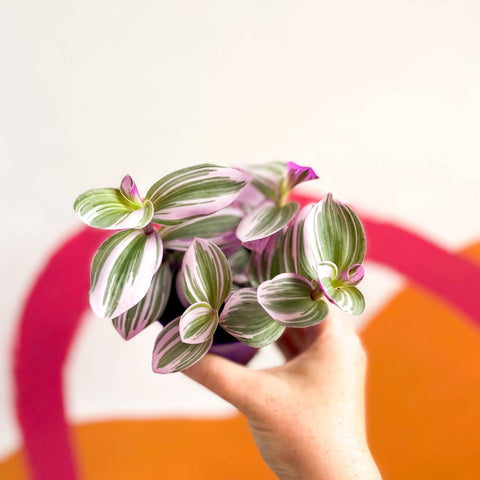
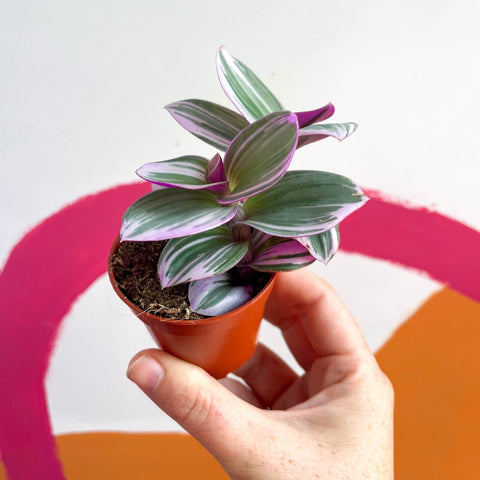
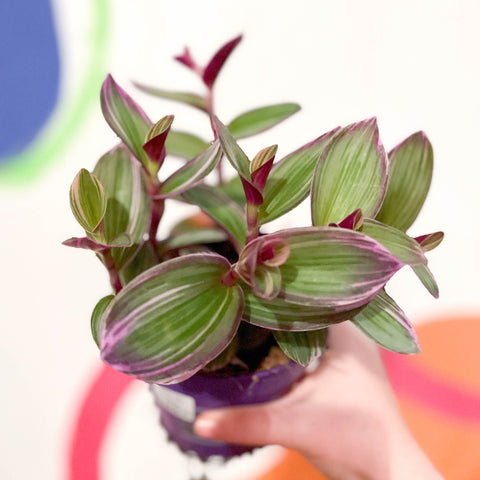
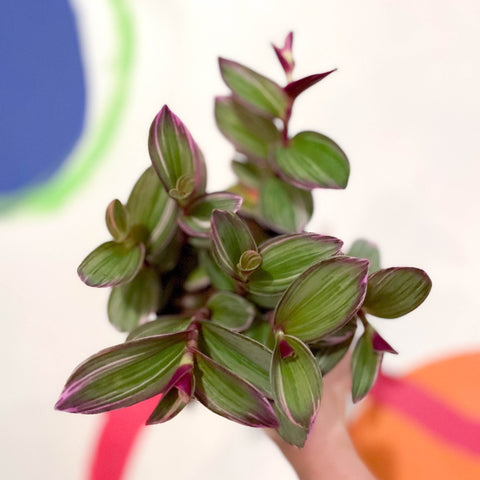
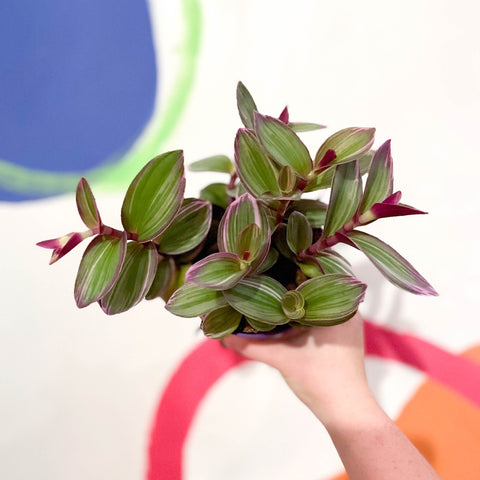
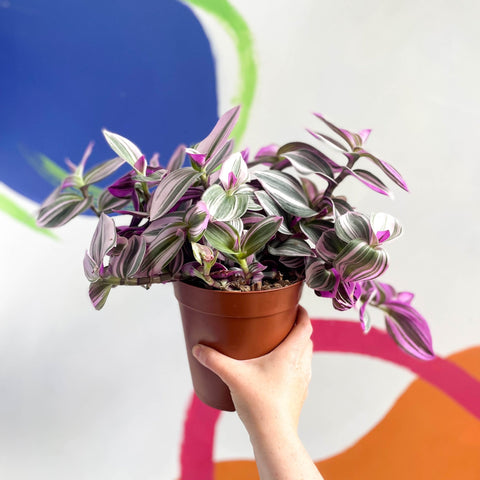
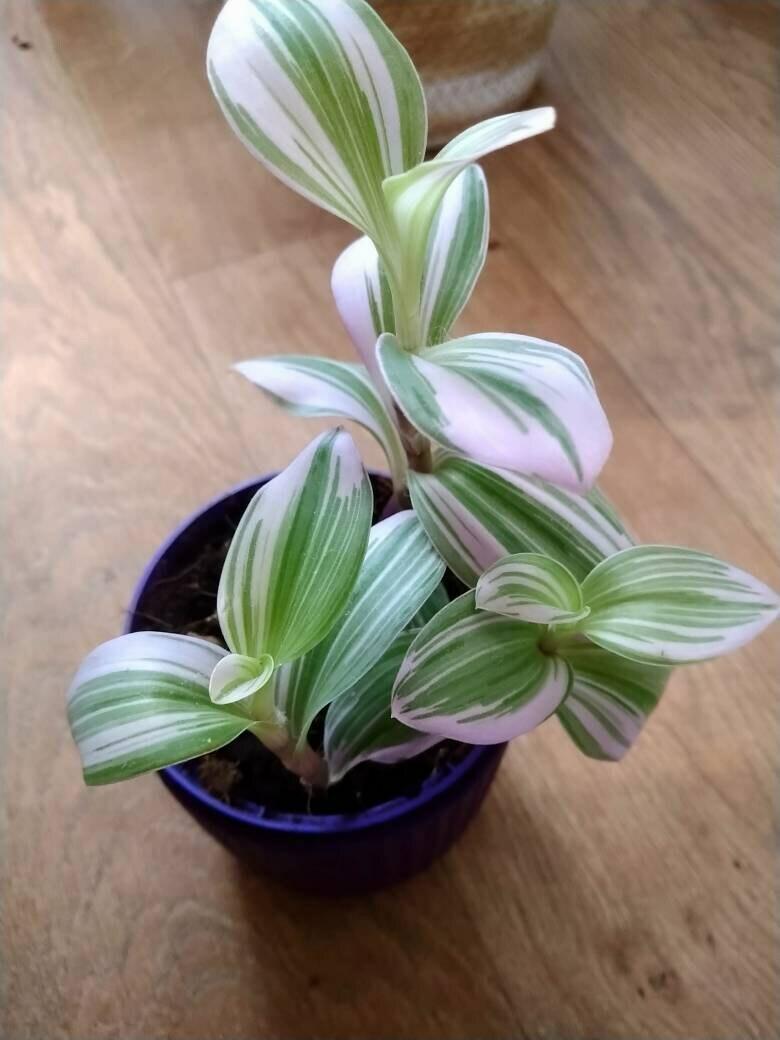
This variety of Tradescantia is a newer cultivar but has really become popular, and it's easy to see why. Its stunning bubblegum pink variegation really makes it stand out as a truly unusual piece of decor. This variety has denser foliage than most Tradescantiae, meaning it will often grow up and out before starting to trail. An easygoing plant, this semi-succulent is happy to let its soil dry between waters, and adapts well to a variety of light levels. GIve it an occasional water and a bright spot, and the Nanouk will repay your care with stunning, standout foliage and splashes of gorgeous colour.
Scientific Name
Tradescantia albiflora 'Nanouk' (Tradescant's plant with white flowers, cultivar: Nanouk)
Synonyms: Tradescantia fluminensis (accepted scientific name), Tradescantia albovittata, Tradescantia laekenensis
Tradescantia albiflora is listed as a synonym of T. fluminensis, however there is debate in horticulture whether it is its own species.
Common Name
Nanouk tradescantia, Fantasy Venice, Wandering Jew, Spiderwort, Tradescantia Bubblegum
Origin
The species is from Central America (native to northern Argentina, southern Brasil, Paraguay and Uruguay), but this cultivar was first grown in the Netherlands.
Light
Thrives in bright, indirect light, but can stand some direct sun. If it gets too little light it'll start to look leggy and have damp soil, but too much light will have it looking bleached and dried-out.
Water
This plant is a semi-succulent, so is happy for its soil to dry out between waters. Water once the pot feels light when lifted; bottom-water your plant (using a dish underneath rather than pouring onto the soil) to prevent their leaves accumulating damp.
Humidity
Average humidity is fine, but your plant may benefit from using a humidity tray if it starts to get crispy leaf tips or is in a very dry area.
Soil
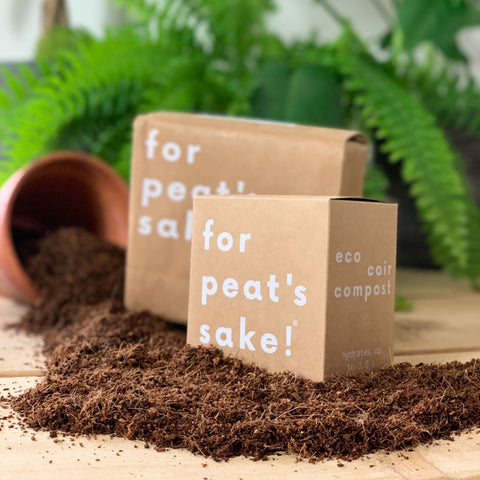
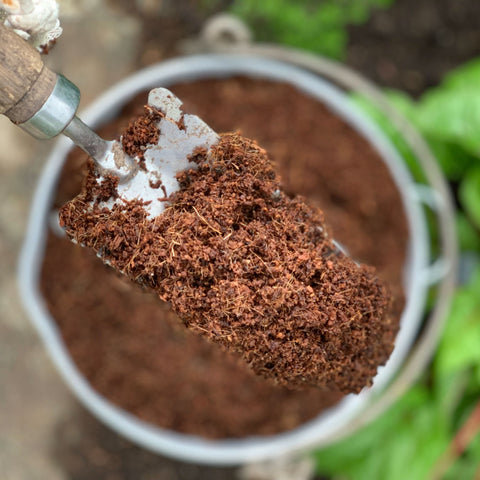
Use a moisture-retentive, well-draining mix to keep this plant happy but not too soggy. A mix designed for Calatheas and Marantas will work well here. Repot every three years if absolutely necessary; this plant is better potbound than drowning in soil.
Food
Feed every four waters in the growing season, reduce to every six in autumn and winter.
Temperature
Temperature should ideally be between 16-30°C- make sure it doesn't drop below 10°C in winter.
Pet-safe
No; while this plant is not toxic, it can cause some bad reactions when eaten by pets, including itchy skin and upset stomachs.
Sprouts Top Tips
To keep tradescantia bushy rather than leggy, you can pinch off or trim longer stems, which can then themselves be propagated, making more plants to spread around your home or share with others!
Extras
In the wild, this plant genus creeps over the ground rather than trailing. If a long stem starts to die off towards the root end, this probably just means it's trying to drop its stem and find more ground to grow on. Trim this bit off and pop it in water or straight into soil and it should root and grow quite happily from a cutting.