Primulina dryas ‘Pretty Turtle’ - Sprouts Grown By Us

Size
Regular price £5.00
This product is not available for pickup at any store

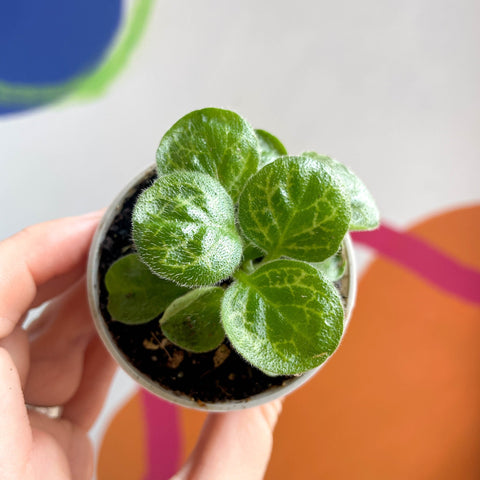
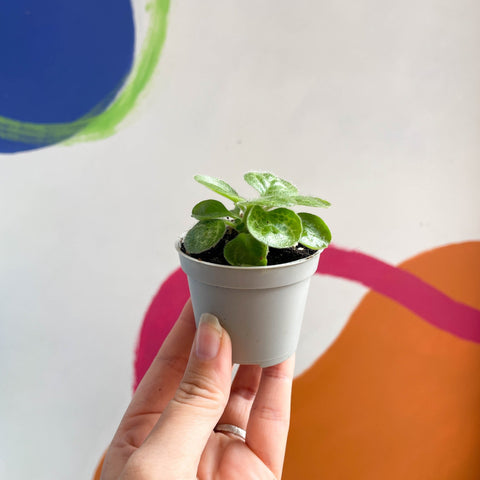
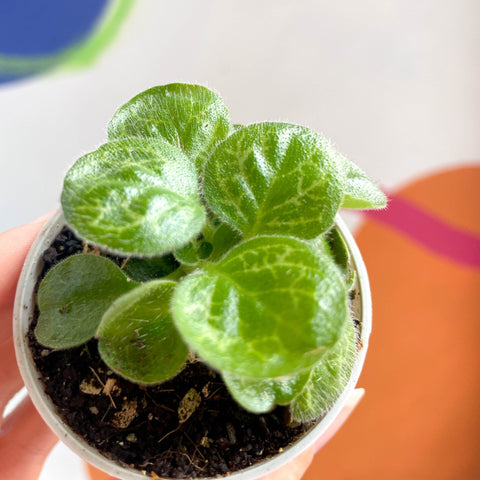
This houseplant's stunning leaves lend the inspiration for its cultivar name. They really do look like the patterning on a turtle shell, and their large, rounded shape only enhances this illusion. Sprouting in a rosette-like formation from the central stem, the mid-green leaves of this Primulina get larger over time, growing rounded and concave. Their texture is slightly fluffy on the top surface and the leaves themselves thick and fleshy. But the standout feature is the silvery blister variegation creating patterns across the surface of the leaves and shimmering in the light. It can also produce delicate, trumpet-shaped lavender purple flowers in the right conditions. Keep it in bright light out of direct sun and keep the soil consistently moist and your Pretty Turtle will reward you with more of those distinctive leaves.

Scientific Name
Primulina dryas ‘Pretty Turtle’ (primrose-coloured wood nymph, cultivar: pretty turtle)

Synonyms: Roettlera sinensis, Chirita dryas, Chirita sinensis, Didymocarpus sinensis, Primulina sinensis, Chirita sinensis var. latifolia, Chirita sinensis var. angustifolia, Chirita sinensis var. bodinieri

This plant has been known by several scientific names since its initial publication in 1844. It is also commonly referred to as a variety of Streptocarpus. However, the name Primulina dryas has been accepted following a 2011 publication placing it in this genus.

Common Names
Streptocarpus Pretty Turtle, Cape Primrose, False African Violet, Pretty Turtle Plant

Origin
This species of Primulina is native to Southeast China and Hong Kong. It grows in subtropical climates and is a lithophyte, growing onto rocks.

Light
Keep your Pretty Turtle in bright, indirect light; near an east- or west- facing window, or on a north-facing windowsill, would be a good amount of light. Direct sunlight can scorch the leaves.

Water
Your Primulina will be happiest with consistently moist soil. Top up the water once the top of the soil feels dry to the touch. It's a good idea to bottom water as water sat in the leaves can cause rotting; if bottom watering, place it in a tray of water and make sure you remove it and let it drip once the soil is moist through again. 

Humidity
High humidity is best for this plant; using a humidity tray is the best way to increase local humidity around the plant without getting its leaves wet and putting it in danger of disease or rot.

Soil
Use a well-draining but moisture retentive soil. One with elements like coir for retention added to bark and perlite for aeration and sand for drainage will work well; a mix designed for Ficus plants would work well here. Repot every few years in spring as the plant grows.

Food
Feed every four waters during the growing season (spring to early autumn) fertiliser designed for houseplants; if it's flowering, a tomato feed or one high in potassium will encourage these blooms. Do not fertilise during the winter months when growth slows.

Temperature
Prefers temperatures between 18-24°C. Protect from cold draughts and avoid exposure to temperatures below 12°C.

Pet Safe
Yes, non-toxic to pets and humans.

Sprouts Top Tips
To promote flowering, provide bright, indirect light and maintain consistent moisture. It can also be helpful to give a boost to your plant by starting to feed it, especially with a feed high in potassium, in spring. Avoid getting water on the leaves to prevent leaf spot. Rotate the plant occasionally to encourage even growth.

Check out The Sprouts Blog

Sprouts insights to house plants, gardening, our favourite brands and plant hire case studies.
We’re Growing – Welcome to Sprouts HQ! - Sprouts of Bristol
Sprouts of Bristol is expanding with the launch of Sprouts HQ – a new South Bristol premises that will house a dedicated packing space for online orders, an office, studio, and more room for rare and exciting plants. While the Kingsdown shop remains open as usual, the new HQ allows Sprouts to grow behind the scenes and offer even better service both in-store and online. This blog post shares the story behind the move, what customers can expect, and how to keep supporting this independent plant shop through the transition.
Jessy EdgarAugust 15, 2025
Terrarium & Wreath Workshops in Bristol – Autumn & Winter 2025 - Sprouts of Bristol
Join Sprouts of Bristol for terrarium, kokedama, and Christmas wreath workshops this autumn–winter. Creative, plant-filled fun in the heart of Bristol!
Jessy EdgarAugust 5, 2025
Build Your Own Terrarium: A Step-by-Step Guide from Sprouts - Sprouts of Bristol
Fancy creating your own tiny, self-contained world of green? Our DIY terrarium kits are the...
Jessy EdgarJuly 20, 2025