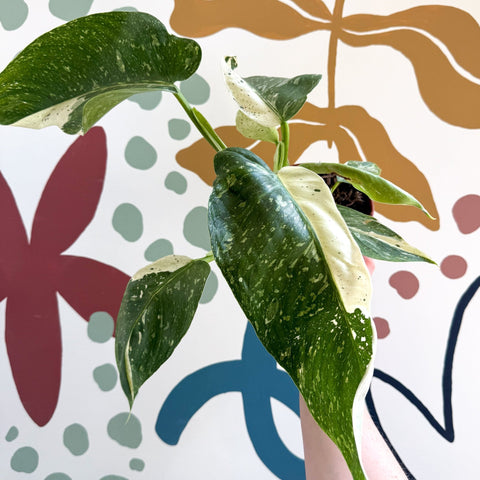
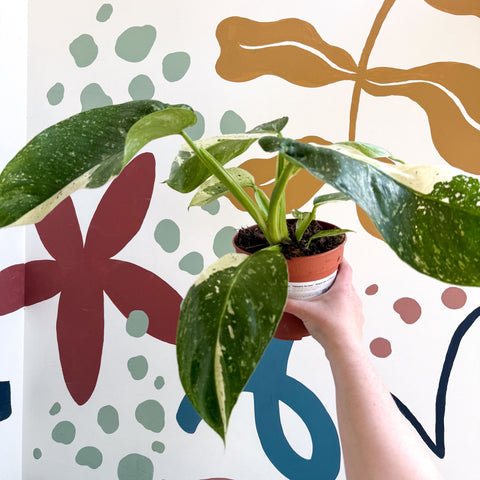
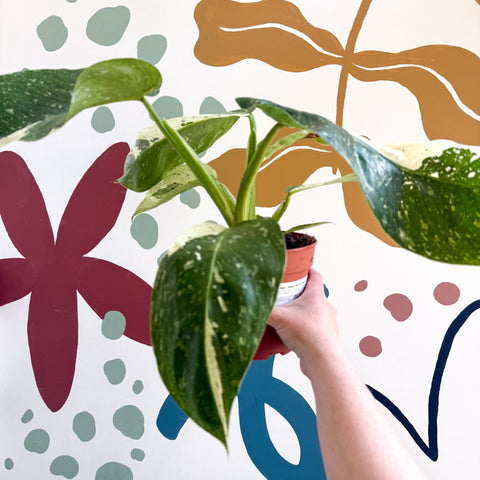
This stunning and rare Philodendron cultivar is characterised by the high levels of variegation on each leaf that grows through. Each long, almost heart-shaped leaf has a unique pattern of variegation, so appearances are not guaranteed, but they tend to be characterised by large patches of white variegation, contrasted with the mid-green of the rest of the leaf, and with speckles of white and paler green visible across the green parts of the leaf. As with many in its genus, this plant is epiphytic in its natural habitat, growing with the support of a tree trunk, so will love growing up a support like a moss pole, or being allowed to trail downwards once it gets long enough. It is also fairly easygoing, though you'll need to find the right balance of light to sustain its gorgeous variegation - too little and new leaves will come through with more green, too much and they will end up scorched.
Scientific Name
Philodendron ‘Jose Buono’
Common Name
Philodendron ‘Jose Buono’
Origin
This plant grows natively in tropical forests of South and Central America.
Light
Bright indirect light is still the best level of light for this plant, but it can benefit from a splash of morning of evening sun due to the high level of variegation. If you notice new leaves coming through with less variegation, it's likely that the plant is getting too little light.
Water
Allow the top two inches of soil to dry out in between waterings (these plants are easy-going so if you wait a little longer to water don't panic!). Make sure they don't sit soggy, and water less in shadier spots.
Humidity
This plant will appreciate above-average humidity, such as in a kitchen or bathroom, but will do fine with average household humidity levels too. If you notice the edges getting brown and crispy, it may benefit from the use of a pebble tray to increase local humidity.
Soil
Use a chunky, well draining mix; one designed for Monsteras or Philodendrons will be ideal. Repot every two years in spring as the plant grows.
Food
Feed every four waters in summer, reduce to every six in autumn and winter.
Temperature
Average household temperatures of about 18-28° are fine- try not to place somewhere where temperatures dip below 12°C for extended periods.
Pet-safe
No, this plant is toxic to pets and small humans.
Sprouts Top Tips
This plant has more variegation than most philodendrons, so will need more light; finding the balance where it sustains its variegation but doesn't scorch is important.
Water with tepid rather than cold water to avoid shocking the plant. Rotate it now and then to promote even growth. Avoid draughty spots.