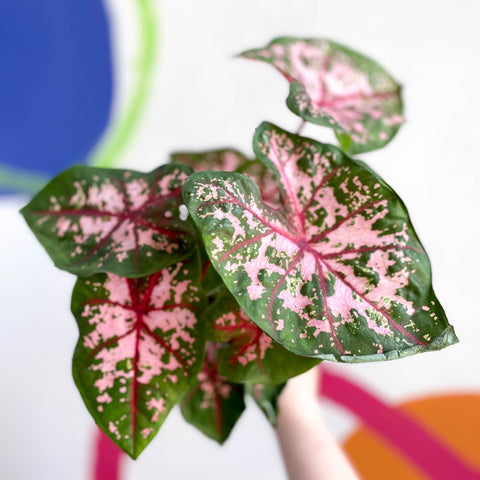
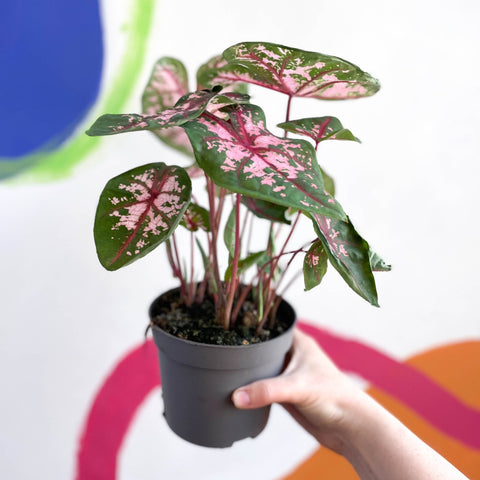
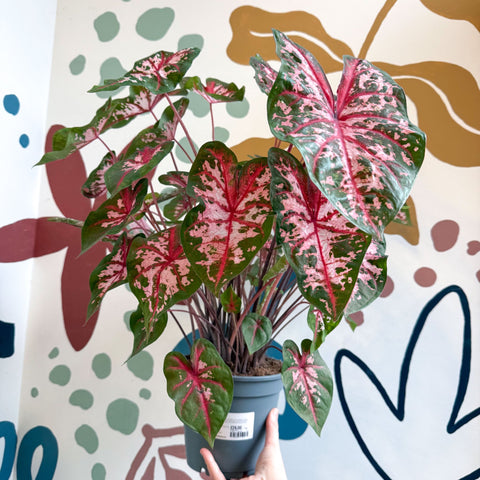
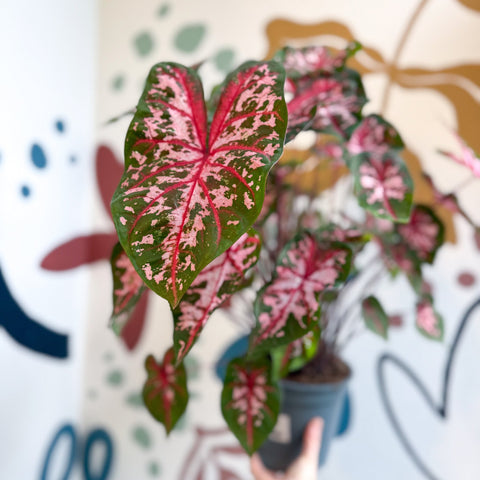
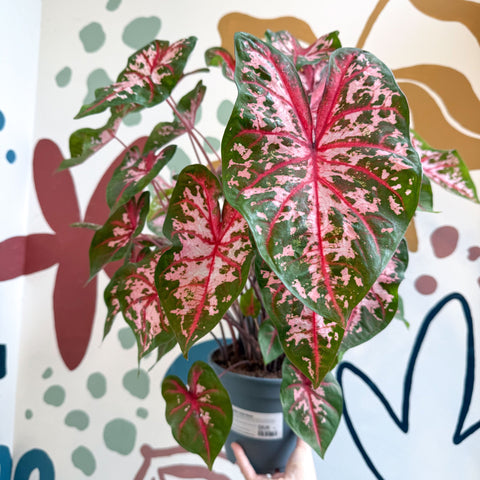
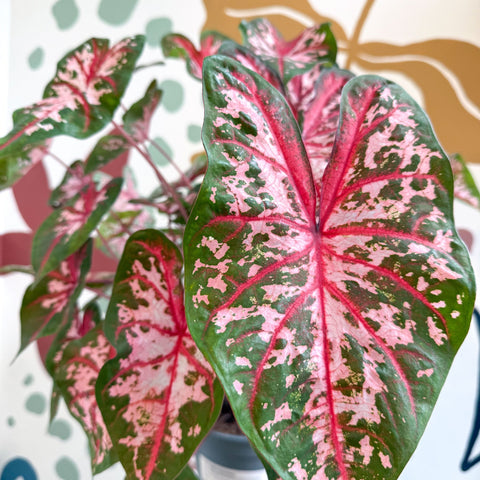
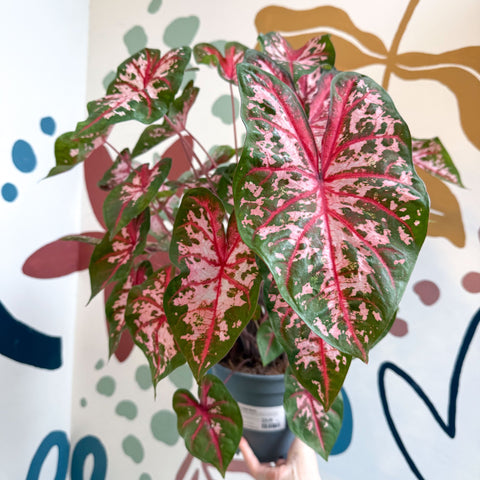
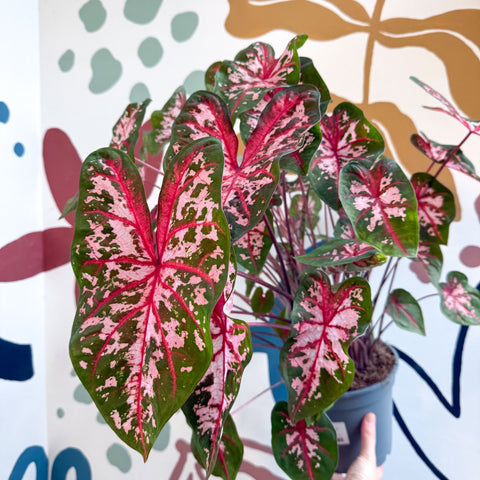
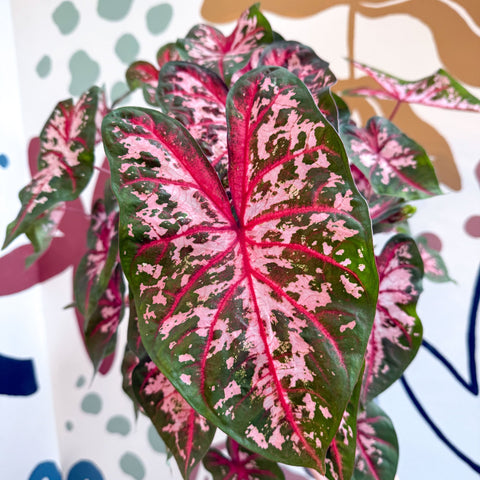
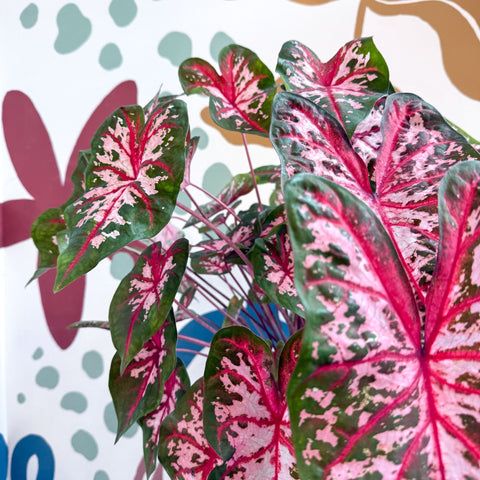
Caladium ‘Carolyn Whorton’ is one of the most popular fancy-leaf caladiums, grown for its large, heart-shaped leaves with rosy pink centres, vivid red veins, and contrasting green margins. This striking pink and green caladium has been a favourite since the 1950s, adding a tropical, colourful touch to homes and shaded summer displays outdoors.
Scientific Name
Caladium bicolor ‘Carolyn Whorton’ (two-coloured keladi plant, cultivar: Carolyn Whorton)
Reclassification or Naming History
Most ornamental caladiums, including Carolyn Whorton, are now grouped under Caladium bicolor. The genus name comes from the Malay keladi, meaning taro.
Common Name(s)
Elephant Ear, Heart of Jesus, Angel Wings, Fancy-Leaf Caladium, Pink Caladium
Origin
Cultivated variety derived from species native to the Amazon Basin in South America, particularly Brazil.
Light
Best in bright, indirect light indoors. A little gentle morning or evening sun in autumn and winter is fine, but avoid strong summer sun which may scorch the leaves. Outdoors, choose a shaded or part-shaded position.
Water
Keep soil evenly moist during the growing season, watering when the top third has dried. Reduce watering in autumn and winter when growth slows or the plant enters dormancy. Avoid waterlogging.
Humidity
Thrives in higher humidity. Mist the leaves, use a pebble tray, or place near a humidifier to prevent crispy edges.
Soil
A moisture-retentive yet free-draining mix is ideal. Rich, organic soil helps keep this caladium happy. Repot every 2–3 years in spring.
Food
Feed with a balanced fertiliser every 4 waters in the growing season, reducing to every 6 waters in autumn and winter.
Temperature
Keep between 18–30°C. Growth slows below 15°C, and dormancy may occur in cooler conditions. Protect from temperatures below 10°C.
Pet-safe
No – Caladium ‘Carolyn Whorton’ is toxic to cats, dogs, and humans if eaten.
Sprouts Top Tips
Like all caladiums, ‘Carolyn Whorton’ naturally dies back in autumn and winter. Store the tubers dry and dark, then replant in spring for a fresh display of pink-and-green foliage.