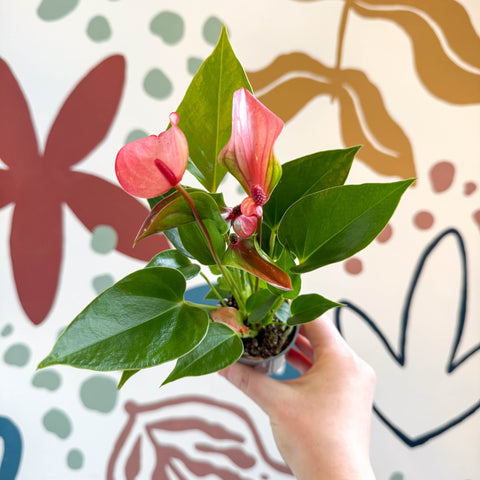
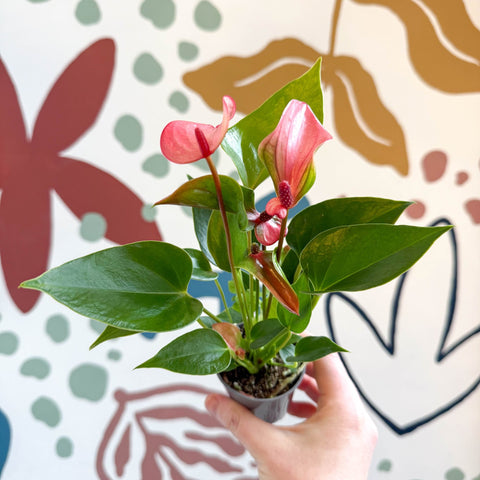
Anthurium andraeanum 'Matata' - Pink Flamingo Flower

Sprouts of Bristol
Size
This product is not available for pickup at any store
Regular price £10.00
Soil Mix Recommendation

This Flamingo Flower's waxy green leaves mirror the candyfloss-pink bracts around the flowers with their slimmer than usual pointed ovate shapes. The gorgeous colouring of this plant makes it great as a gift - especially since the flowers bloom almost year-round! In their natural habitats, these plants are epiphytic (they grow on trees) so they need to be well-drained rather than waterlogged at the root and benefit from above-average humidity. Don't worry if the roots seem to be climbing out of the pot - this is normal, it's just the plant looking for a tree, but it will be fine staying in its pot. Growing up to a foot (30cm) tall, Flamingo flowers are great compact flowering plants, and this variety's vibrant colours and narrower leaves and bracts help it stand out from the rest.

Scientific Name
Anthurium andraeanum

Common Name
Flamingo Flower, Tailflower, Laceleaf, Painter's Palette

Origin
Native to tropical areas in Colombia and Ecuador

Light
Likes a bright location with an hour of morning or evening sun; a north, noth-west or north-east facing windowsill will be ideal.

Water

Allow a third of the soil to dry out between waterings in spring and summer, and a little more in autumn and winter. Since flamingo flowers are epiphytic, they are not tolerant to waterlogging!

Humidity
Loves high humidity; will benefit from regular misting, especially where it gets a lot of light.

Soil
Plant in well-draining soil; a mix with added bark for drainage would complement its epiphytic nature. Look out for mixes designed for Anthuriums or Orchids. Repot every three years only if absolutely necessary.

Food
Feed every couple of weeks in spring and summer, reduce to every month in autumn and winter. Roots are sensitive so take care with fertilisers which pour directly into the soil.

Temperature
Likes warmer temperatures, aim for 18-28°C and make sure it doesn't drop below 12°C in winter.

Pet-safe
No, this plant is toxic to pets and small humans.

Sprouts Top Tips
When re-potting, divide crowded clumps for best results. A winter dormancy period where the plant is kept cooler will improve the bloom and growth in summer.

Check out The Sprouts Blog

Sprouts insights to house plants, gardening, our favourite brands and plant hire case studies.
We’re Growing – Welcome to Sprouts HQ! - Sprouts of Bristol
Sprouts of Bristol is expanding with the launch of Sprouts HQ – a new South Bristol premises that will house a dedicated packing space for online orders, an office, studio, and more room for rare and exciting plants. While the Kingsdown shop remains open as usual, the new HQ allows Sprouts to grow behind the scenes and offer even better service both in-store and online. This blog post shares the story behind the move, what customers can expect, and how to keep supporting this independent plant shop through the transition.
Jessy EdgarAugust 15, 2025
Terrarium & Wreath Workshops in Bristol – Autumn & Winter 2025 - Sprouts of Bristol
Join Sprouts of Bristol for terrarium, kokedama, and Christmas wreath workshops this autumn–winter. Creative, plant-filled fun in the heart of Bristol!
Jessy EdgarAugust 5, 2025
Build Your Own Terrarium: A Step-by-Step Guide from Sprouts - Sprouts of Bristol
Fancy creating your own tiny, self-contained world of green? Our DIY terrarium kits are the...

Jessy EdgarJuly 20, 2025