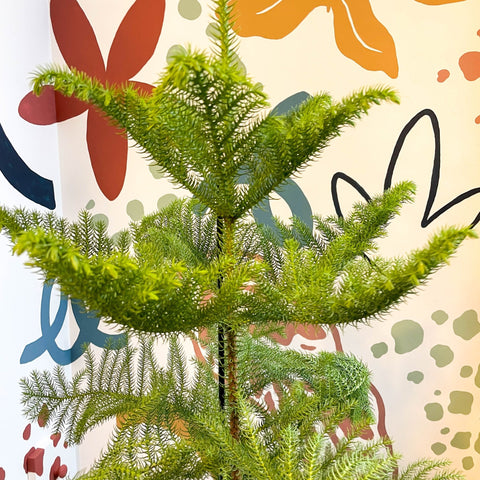
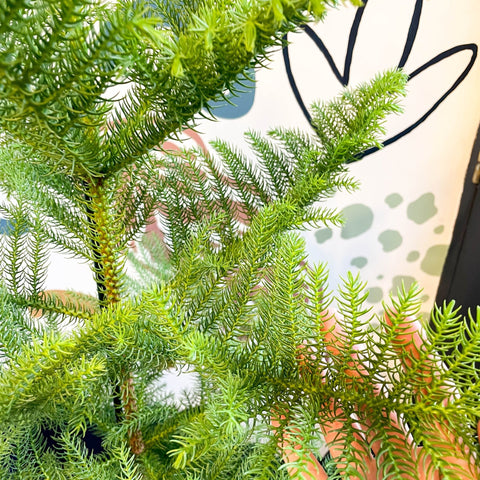
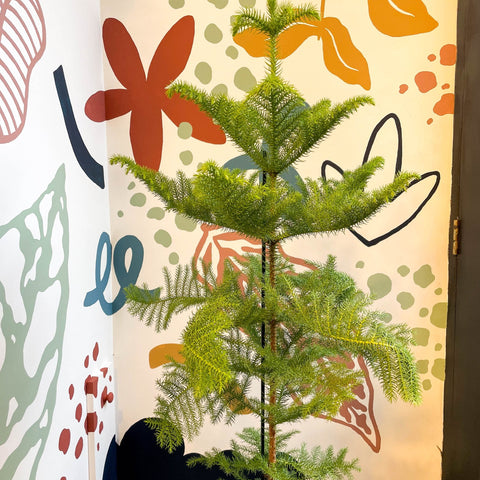
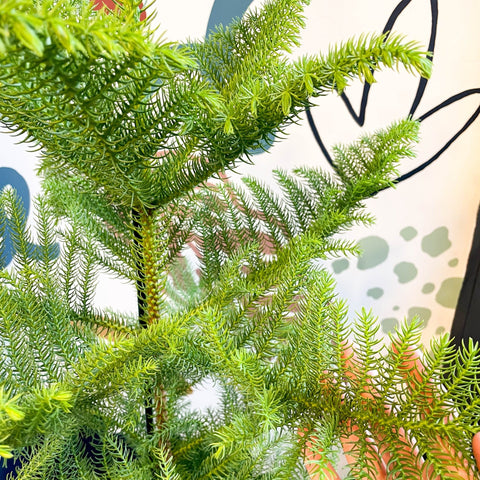
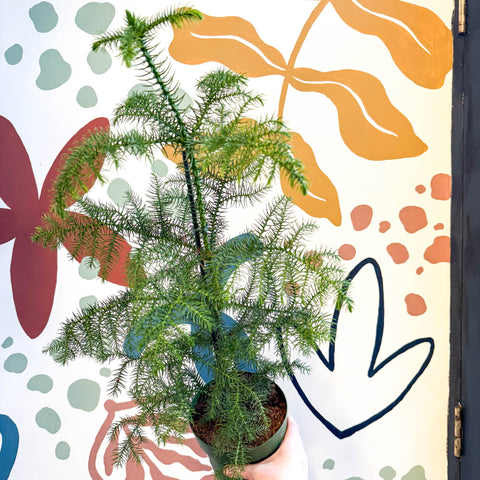
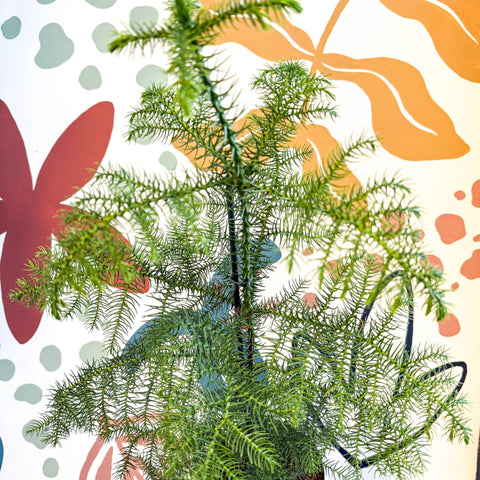
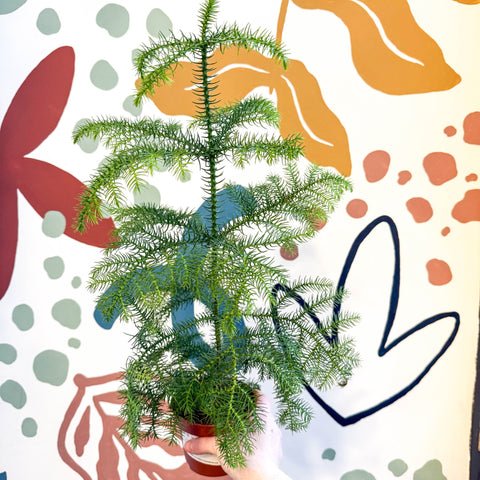
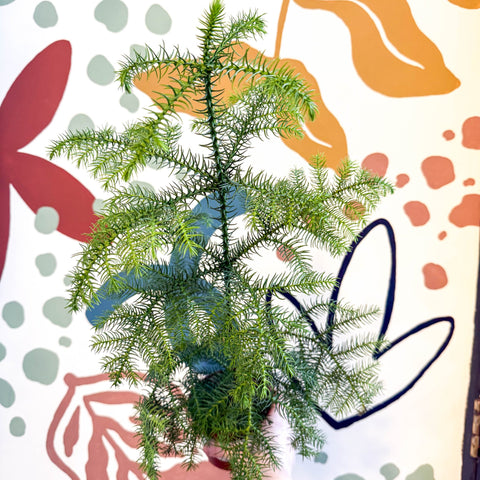
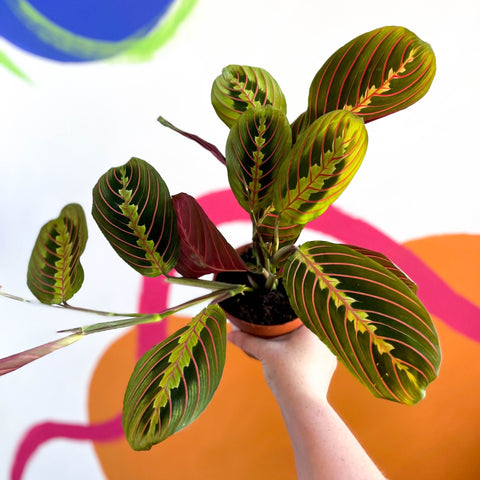
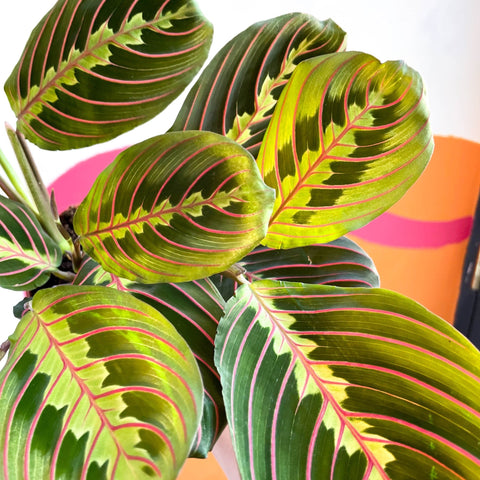
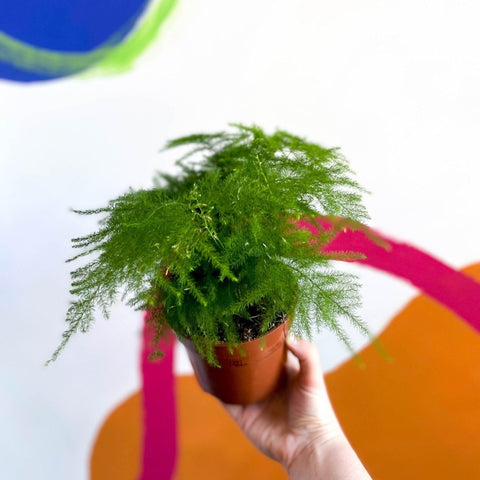
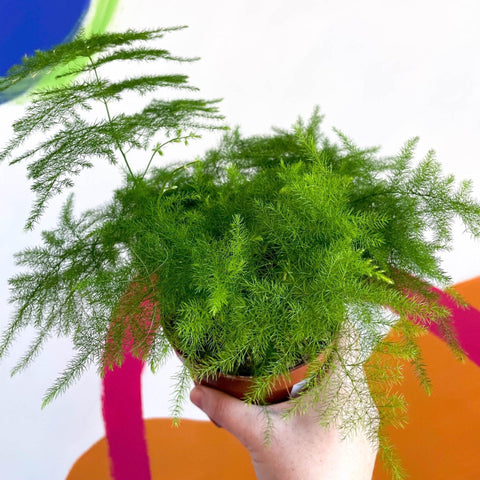
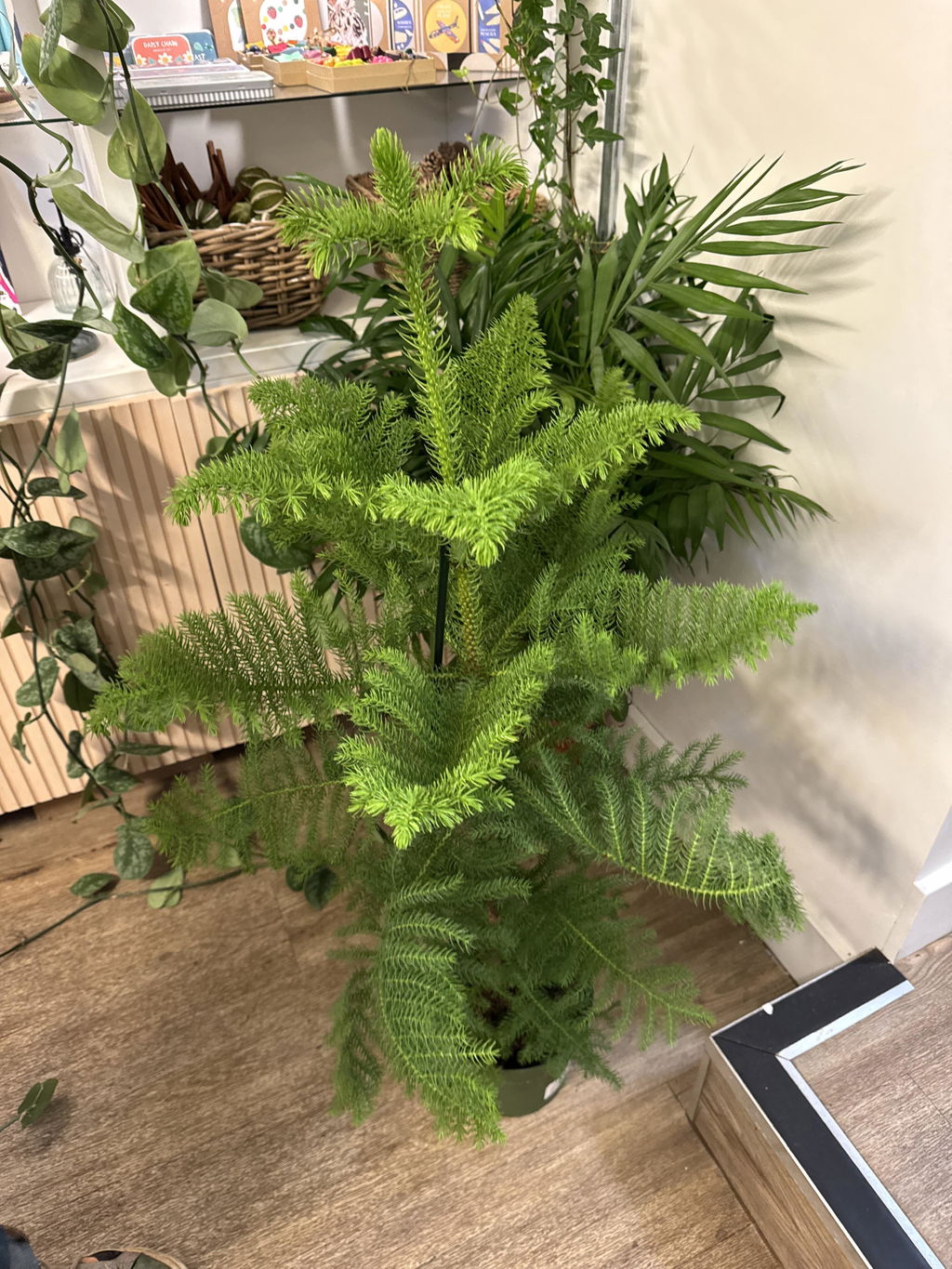
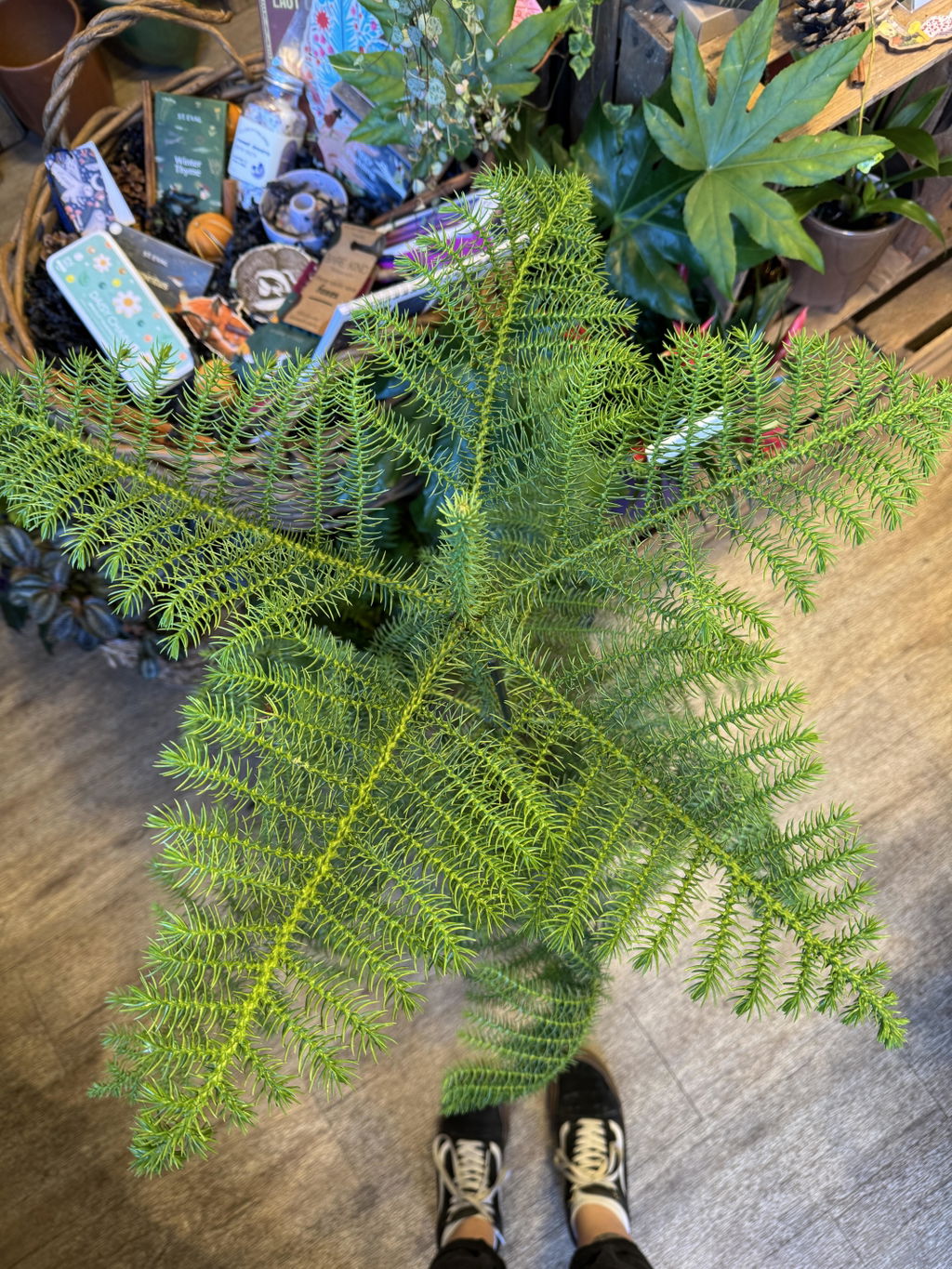
The Norfolk Island Pine is a lush indoor evergreen tree recognisable by its symmetrical, tiered branches and delicate, feathery green needles. It may technically not be a true pine, but it still brings those evergreen conifer foliage vibes indoors, and grows into an elegant focal point over time. Its adaptable nature and easy care make it popular as a year-round indoor tree or even as a living Christmas tree. Look out for these bright green needles and tiered branches as a fashionable houseplant and bauble-covered beauty this festive season and beyond.
Scientific Name
Araucaria heterophylla (different-leaved tree from Araucania)
Synonyms
Pinus columbaria, Abies columbaria, Eutassa heterophylla
This species was first published in a 1952 paper under this name, though it had been known by a handful of other names throughout the 19th Century.
Common Name(s)
Norfolk Island Pine, Australian Pine, Star Pine, Triangle Tree
Origin
Native to Norfolk Island, a small island in the Pacific Ocean in Oceania, between New Zealand and New Caledonia.
Light
Prefers bright, indirect light. This plant can adapt to lower light conditions, but growth will slow. Avoid harsh sun which can scorch its needles.
Water
Keep soil evenly moist but not soggy. Water thoroughly, allowing excess to drain, and let the top inch of soil dry out between waterings. Reduce in winter when growth will slow.
Humidity
Appreciates moderate to high humidity. Dry air can cause needle drop, so avoid placing near radiators or heaters. This plant will appreciate the introduction of a pebble tray to increase local humidity where necessary.
Soil
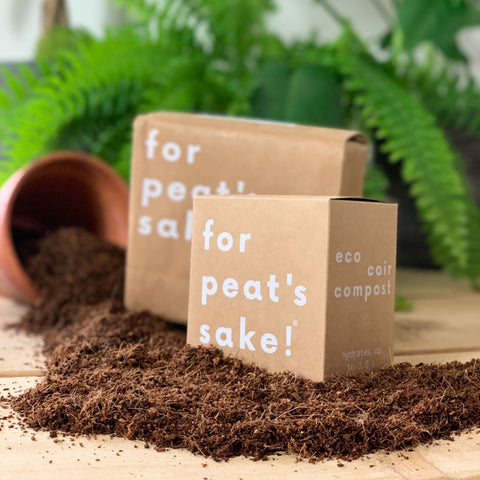
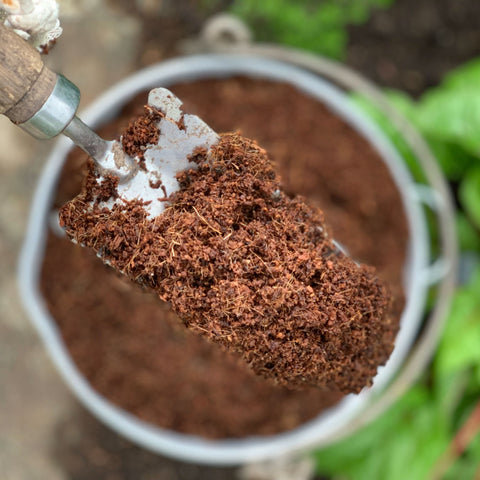
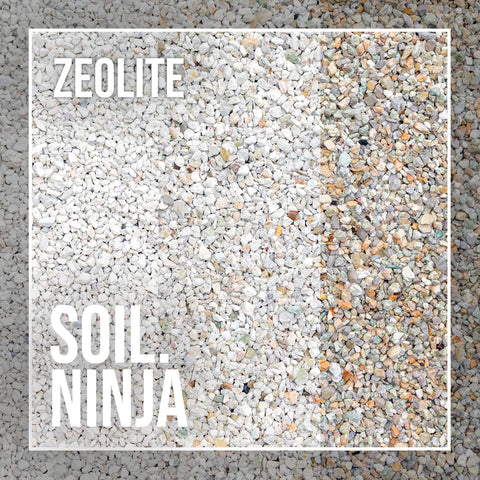
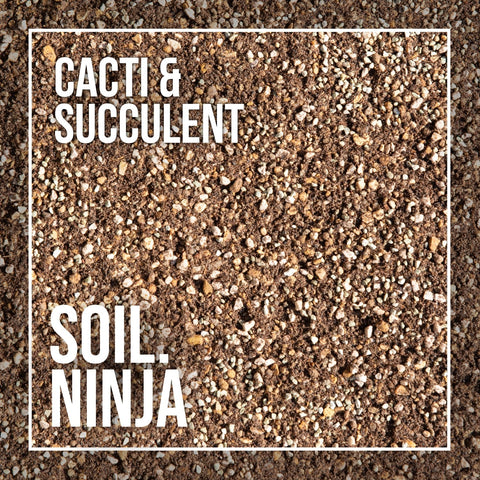
Use a well-draining, slightly acidic potting mix. A blend designed for indoor trees or cacti and succulents, with added sand and grit, should work well. Your tree will like to be slightly potbound, so repot only when necessary every few years into a pot only slightly bigger.
Food
Feed every 2-3 months in spring and summer with a balanced, water-soluble fertiliser. Stop feeding in autumn and winter when the plant isn't growing.
Temp
Prefers cooler indoor temperatures between 16-24°C. Make sure the temperature stays above 10°C, avoiding cold draughts or heater blasts.
Pet-Safe
No; while the plant is non-toxic, the needles can be sharp. Keep out of reach of curious pets.
Sprouts Top Tips
Rotate the plant regularly for even growth, as it will naturally lean towards the light. If needles start turning brown or dropping, it could be due to dry air or irregular watering - adjust humidity and water schedule accordingly.
Extras
As it grows taller, it may need occasional staking to keep it upright. In time, it can reach a height of 1.5-2 metres indoors.
Did You Know?
Norfolk Island Pines are actually closer relatives to ancient conifers than to true pines and are some of the last living species from the Jurassic period, making them living relics of Earth’s prehistoric forests.