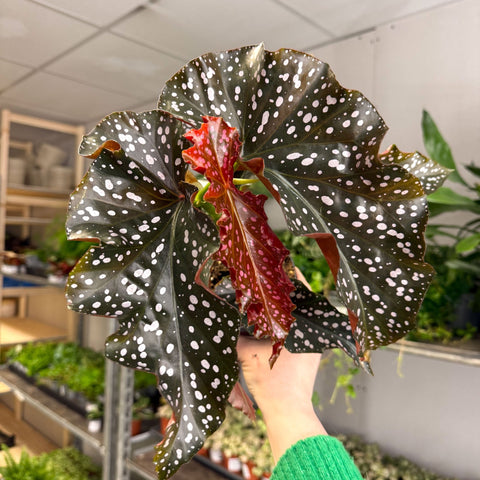
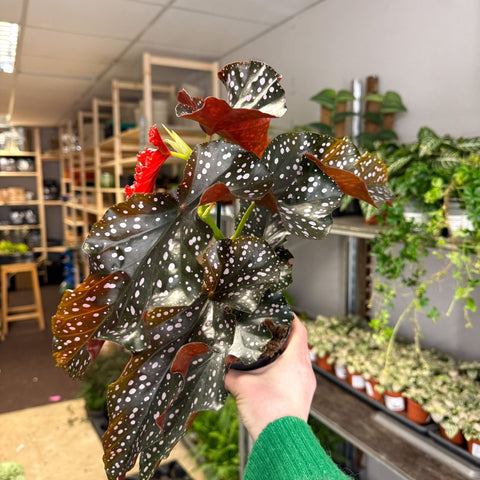
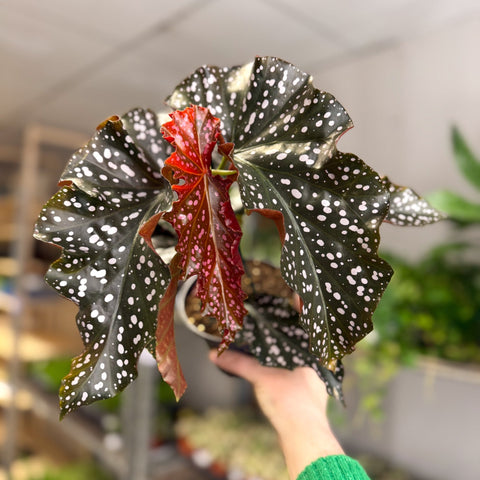
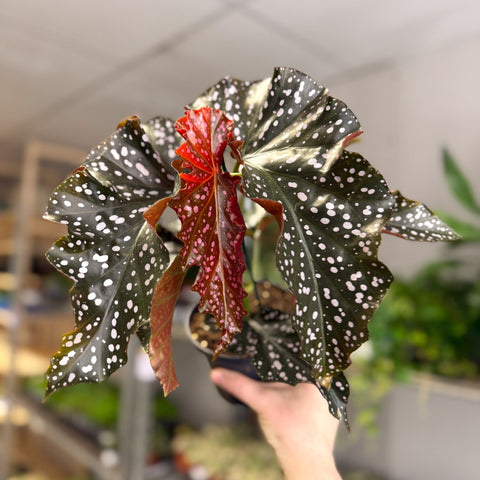
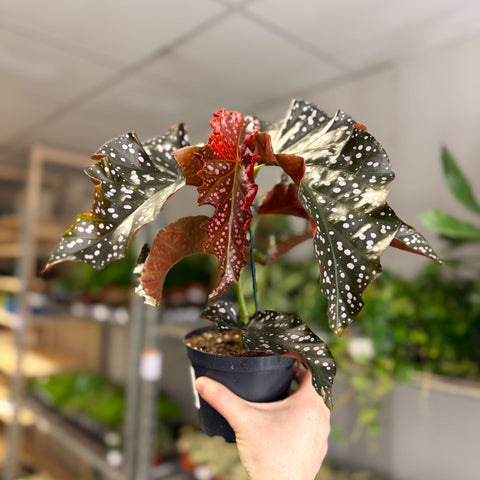
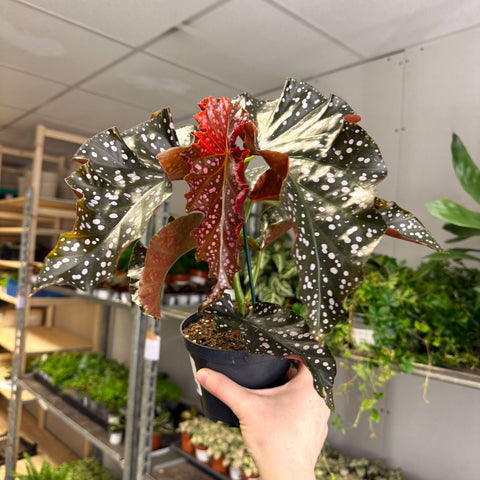
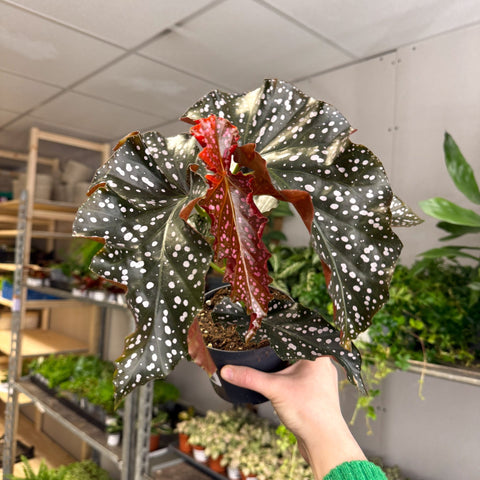
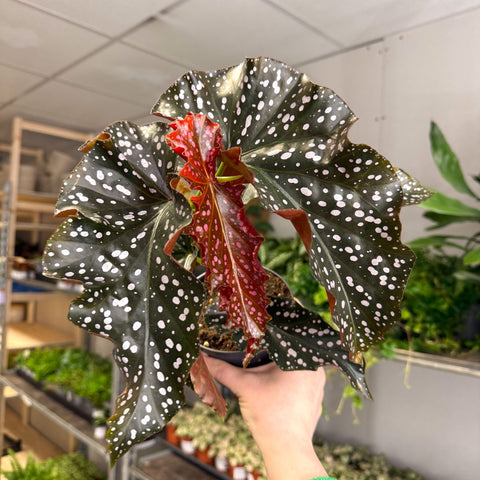
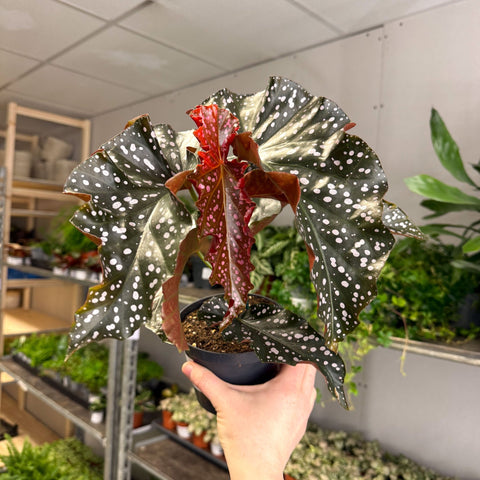
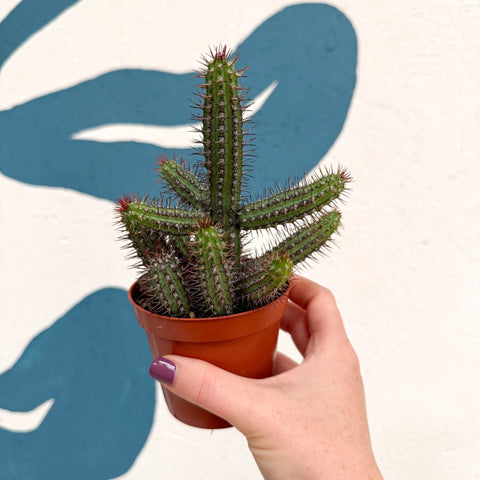
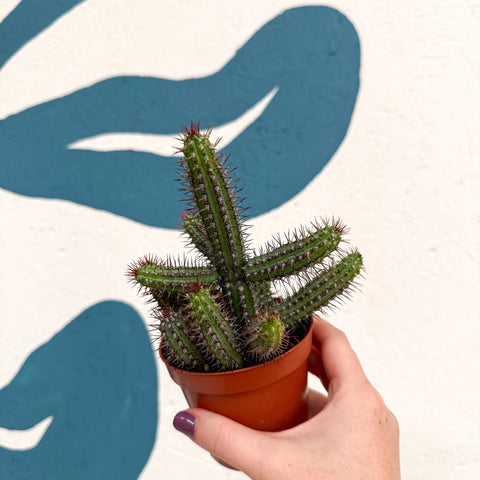
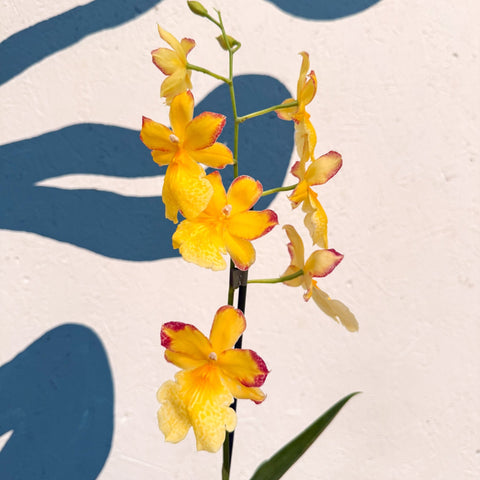
Begonia ‘Cracklin’ Rosie’ is a bold, textured foliage begonia with dramatically rippled leaves in deep bronze, plum and chocolate tones. The heavily crinkled surface gives the plant its “crackling” appearance, creating wonderful depth and movement. Compact and striking, it’s perfect for adding rich colour to shelves, desks or plant displays.
Scientific Name
Begonia (named after Michel Bégon, French patron of botany) ‘Cracklin’ Rosie’
Begonias sit within the Begoniaceae family. ‘Cracklin’ Rosie’ is a cultivated hybrid variety bred for ornamental foliage rather than occurring naturally in the wild.
Synonyms
Sometimes listed simply as Begonia ‘Rosie’ or Begonia Cracklin Rosie.
Common Name
Cracklin’ Rosie Begonia, Ripple Leaf Begonia
Origin
Hybrid cultivar. Parent species originate from tropical and subtropical regions of Central and South America, Africa and Asia, where begonias typically grow in humid forest understories.
Light
Prefers bright, indirect light. Too much direct sun can scorch the textured leaves, while low light may dull the colouring and slow growth. A position near but not directly in a bright window works well.
Water
Allow the top third of the compost to dry out between waterings. Keep the soil lightly moist but never soggy. Begonias dislike sitting in water, so ensure good drainage. Reduce watering frequency in winter.
Humidity
Enjoys moderate to higher humidity but avoid misting directly onto the leaves, as water sitting in the creases can encourage rot. A pebble tray or humidifier is ideal in drier UK homes.
Soil
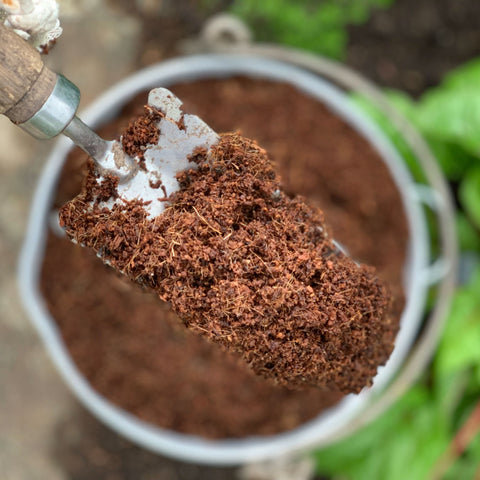
Use a free-draining houseplant compost with added perlite or bark to keep the root system aerated. Repot in spring if the plant becomes rootbound.
Food
Feed every 2–4 waters during the growing season (spring and summer) with a balanced liquid fertiliser. Reduce feeding in autumn and stop over winter.
Temperature
Thrives between 18–24°C. Avoid temperatures below 15°C and protect from cold draughts.
Pet-safe
Toxic if ingested. Keep out of reach of pets and children.
Sprouts Top Tips
Water around the base of the plant rather than over the foliage – keeping those crinkled leaves dry helps prevent mildew and leaf damage.