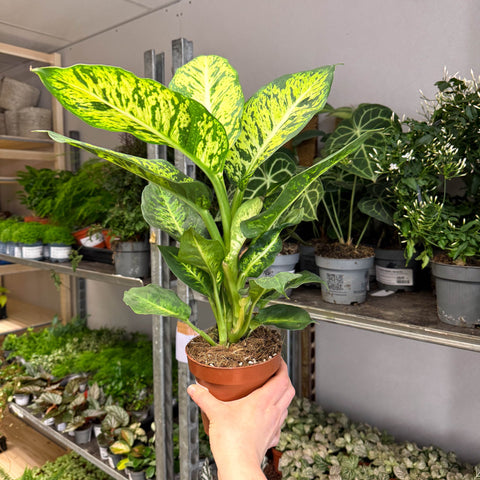
Dieffenbachia ‘Sublime’ is a bold, upright foliage plant with large, patterned leaves in soft green and creamy chartreuse tones. The striking markings create a speckled, almost animal-print effect – hence the preferred common name, Leopard Lily. With its architectural shape and lush tropical feel, this variety makes an excellent statement plant for bright indoor spaces.
Scientific Name
Dieffenbachia seguine (named after German botanist Ernst Dieffenbach) ‘Sublime’
Belongs to the Araceae family (the aroid family), alongside Philodendron, Monstera and Aglaonema. The species name seguine has historically been used interchangeably with closely related Dieffenbachia species as taxonomy evolved.
Synonyms
Sometimes listed simply as Dieffenbachia ‘Sublime’.
Common Name
Leopard Lily (Previously known by a derogatory common name, which is now widely avoided.)
Origin
The species Dieffenbachia seguine is native to tropical Central and South America, where it grows in warm, humid rainforest understories.
Light
Prefers bright, indirect light. It can tolerate moderate light levels, but growth may slow and leaf patterning may become less vibrant in lower light. Avoid direct sun, which can scorch the leaves.
Water
Allow the top third of the compost to dry out between waterings. Water thoroughly, ensuring excess drains away. Reduce watering frequency in autumn and winter when growth slows. Overwatering is far more problematic than slight dryness.
Humidity
Enjoys moderate to higher humidity but adapts well to typical UK household conditions. If leaves begin to brown at the edges, increasing humidity with a pebble tray or humidifier can help.
Soil
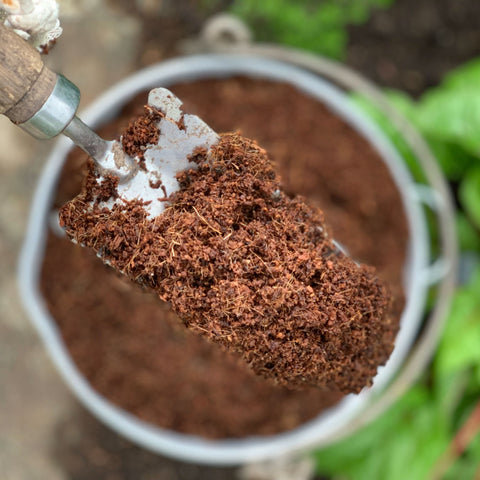
Use a free-draining houseplant compost with added perlite or bark for airflow around the roots. Good drainage is essential to prevent root rot.
Food
Feed every 2–4 waters during the growing season (spring to early autumn) with a balanced liquid fertiliser. Reduce feeding in autumn and pause in winter.
Temperature
Thrives between 18–27°C. Avoid temperatures below 15°C and keep away from cold draughts.
Pet-safe
Toxic if ingested due to calcium oxalate crystals. Keep out of reach of pets and children.
Sprouts Top Tips
If your Leopard Lily becomes leggy over time, don’t be afraid to prune – cutting back the stem encourages fresh, bushier growth from lower down.