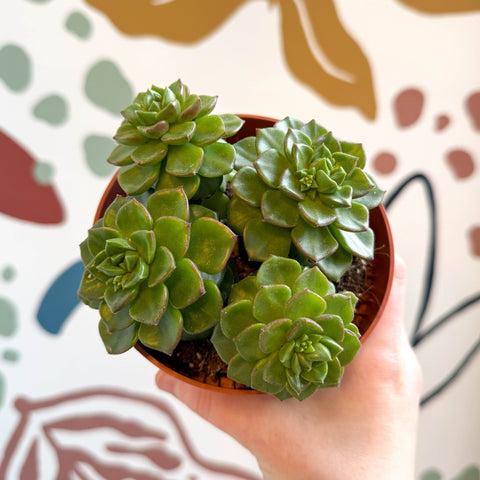
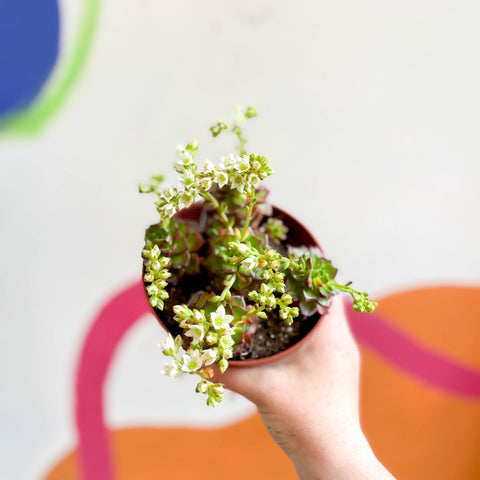
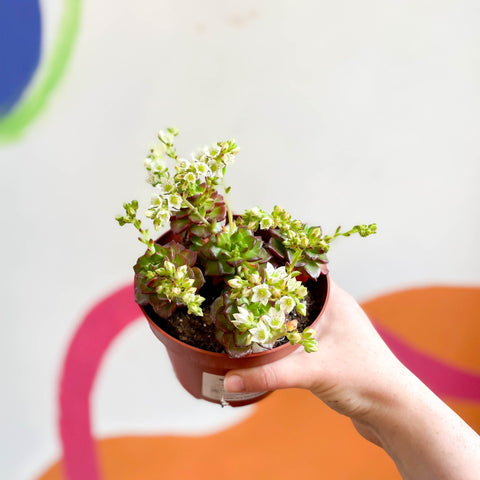
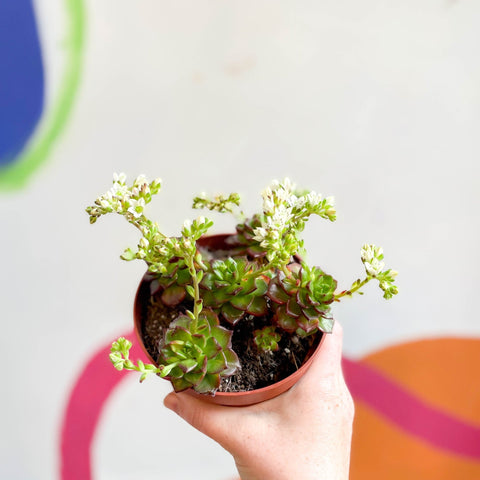
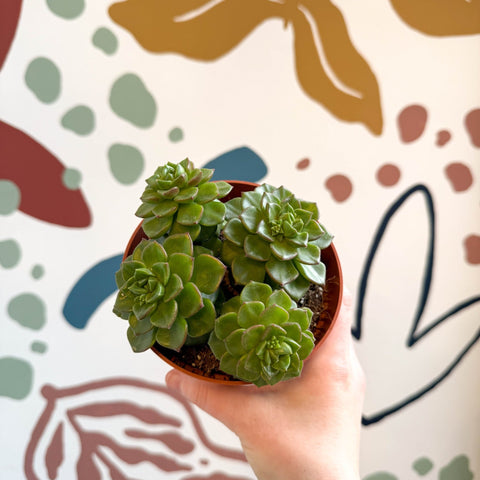
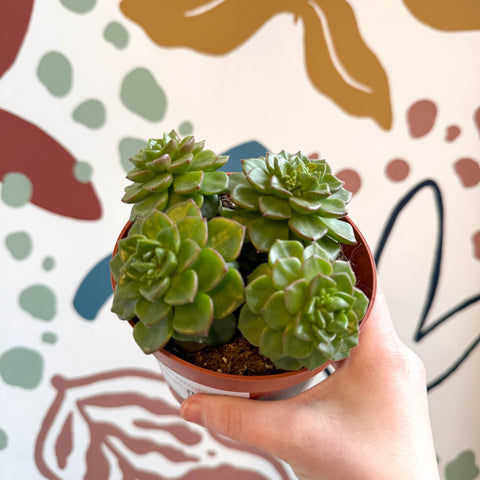
This succulent's rosette-like growth is highlighted by the red colour lining its leaf-tips and contrasting with the bright green of the foliage. In summer it might also give you flower spikes topped with beautiful white blooms. In each pot you'll get a group of individual plants; each one forms its own rosette shape and, grouped together, they look fabulous. This plant loves a sunny windowsill - and giving it enough sun will help bring out the colour and the flowers, keeping it beautiful in your home. Give your Echeveria a spot close to your window and it'll win its way to your heart with its compact, elegant foliage.
Scientific Name
Echeveria affinis (Echeverría's Plant, similar variety)
This species name was first published in 1958 and remains accepted and uncontested today.
Common Name(s)
Black Knight, Black Echeveria, Black Hens and Chicks
Origin
Native to Mexico, found in dry shrubland and desert areas
Light
Thrives in bright, indirect light to full sun. When grown indoors, a south or west-facing window is ideal. If you move it from a lower-light to higher-light spot, do so gradually to prevent scorching.
Water
Allow the soil to dry out completely before watering. Water thoroughly during the growing season (spring and summer) and reduce watering in autumn and winter, ensuring soil remains dry for longer periods.
Humidity
Prefers low humidity. Avoid misting and ensure good air circulation to prevent rot.
Soil
Plant in a well-draining cactus or succulent mix. Add sand or perlite for extra drainage, and ensure the pot has adequate drainage holes. Repot every couple of years as the plant grows.
Food
Feed every couple of months during the growing season with a diluted cactus and succulent fertiliser. Stop feeding in autumn and winter.
Temperature
Best kept in temperatures between 18-26°C but can tolerate as low as 5°C. Protect from frost and cold draughts.
Pet-safe
Yes, but too much nibbling won't be good for pets, small humans or the plant!
Sprouts Top Tips
To enhance its dark colouring, provide as much light as possible while avoiding scorching. Rotate the plant occasionally to encourage even growth and prevent leaning.
Extras
The intensity of its black foliage increases with exposure to sunlight and cooler nighttime temperatures, making it a great addition to sunny windowsills.
Did You Know?
Echeveria affinis’ flowers are known to attract pollinators like bees and hummingbirds in their natural habitat.