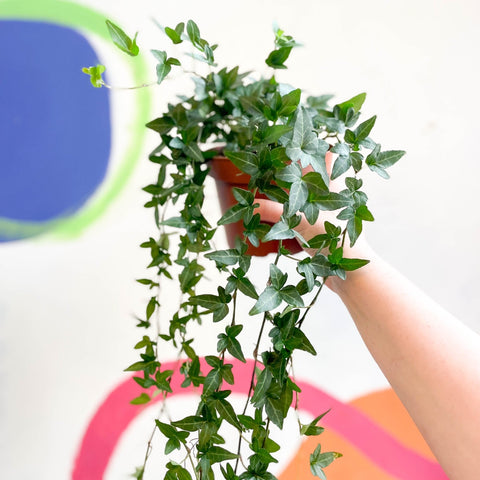
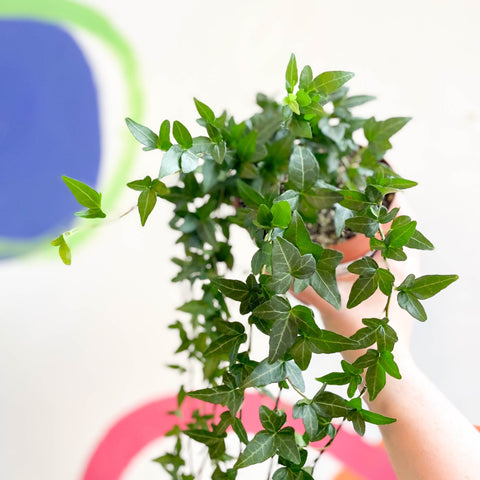
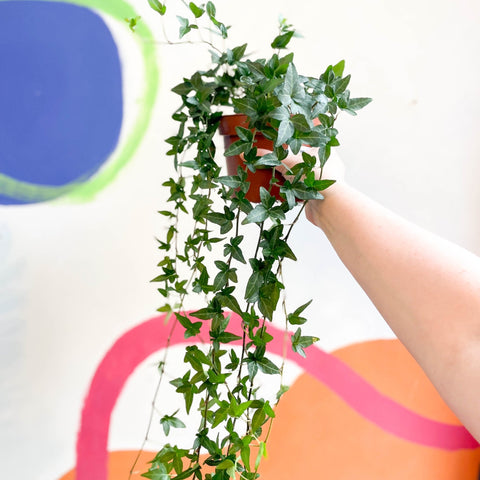
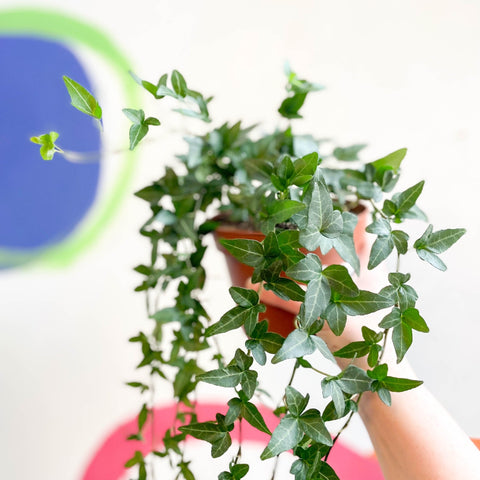
The humble Hedera helix will look very familiar- many varieties of ivy grow outdoors across the UK and beyond on walls, fences and anywhere they can take root. This ivy's distinctive three-pointed leaves are elegantly long and a deep forest-green; you might have seen something similar growing up your neighbour's wall. But have you ever thought of growing this classic foliage plant indoors? It can be a challenge, but if you have an unheated or draughty porch or conservatory area (or, like me, you love having the window open even in December), this is the perfect plant to green up that colder spot. Think of the shady side of the wall, where it grows, too - and how it gets plenty of rain! Since it grows here in the UK, it's easy to imagine the conditions ivy grows in in the wild - to help your ivy thrive(y), replicate this sort of environment indoors.
Scientific Name
Hedera helix 'Shamrock' (twisting ivy, cultivar: shamrock)
Common Name
Common Ivy, English Ivy, European Ivy, Ivy, Atlantic Ivy
Origin
Native to most of Europe and Western Asia
Light
Bright, indirect light is best- avoid sunny spots as this will burn your ivy. It can tolerate some shade indoors but ensure it's not too dark!
Water
Water once the top two inches of soil has dried out; ivy is not drought-tolerant but also does not like to sit in soggy soil. Make sure to water less frequently in a shady spot.
Humidity
Likes high humidity, but make sure the air around it circulates too. Misting or introducing a humidity tray will help, but if you're misting make sure not to leave the leaves damp for too long, especially in shadier spots.
Soil
Use a well-draining but moisture-retentive mix; one designed for ferns would work well for ivy's similar needs! Repot every three years in spring; adding grit will help keep those in shadier locations draining well.
Food
Feed every four waters in the growing season, and reduce to every six in autumn and winter.
Temperature
Can stand temperatures from -5 to 30°C. Just make sure it's not too hot in summer, and not too close to a radiator in winter.
Pet-safe
No, this plant is toxic to pets and small humans.
Sprouts Top Tips
For care tips, think about where ivy grows outside and mimic those conditions; make sure you have somewhere for it to grow along or hang down from as it grows longer!