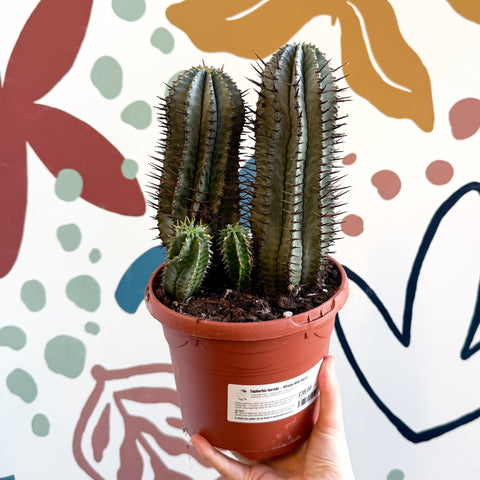
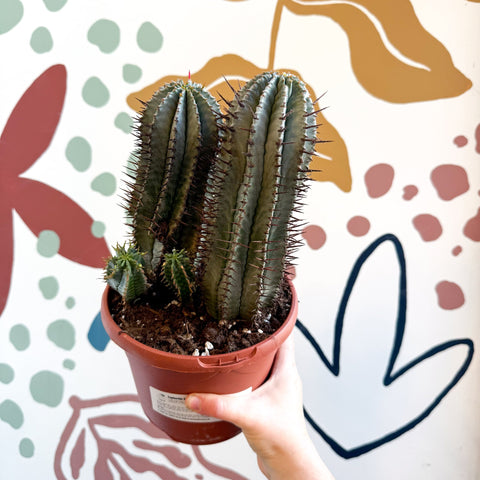
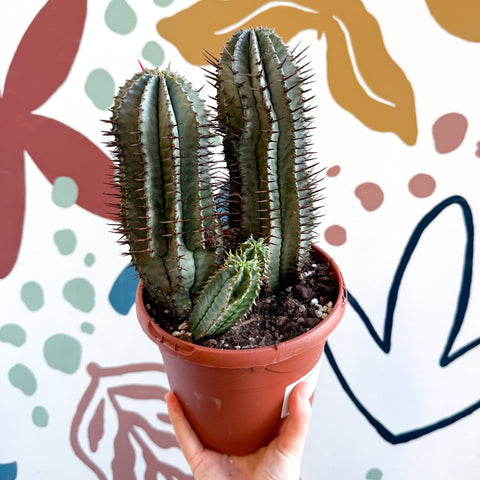
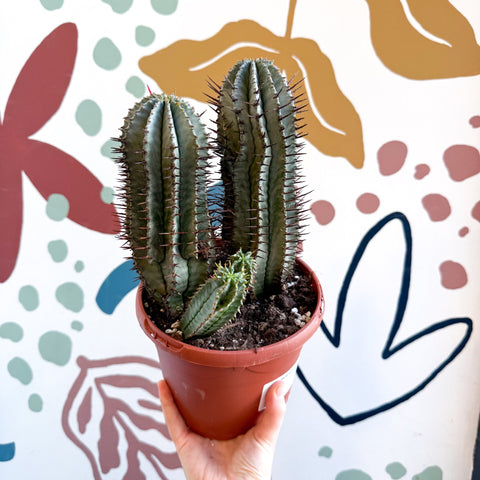
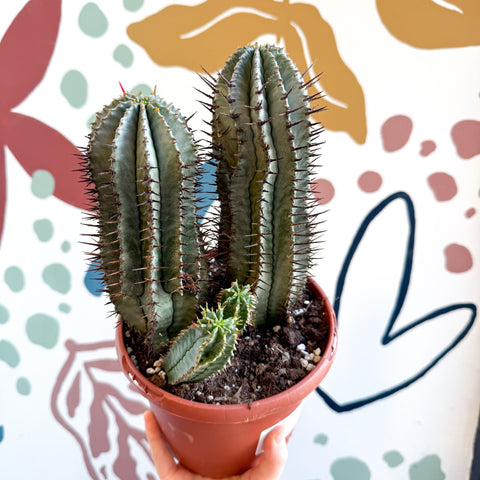
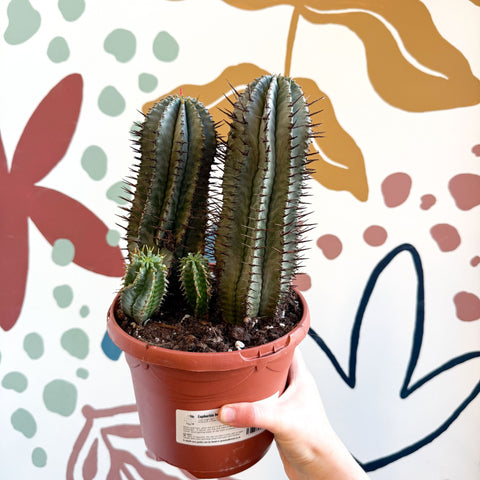
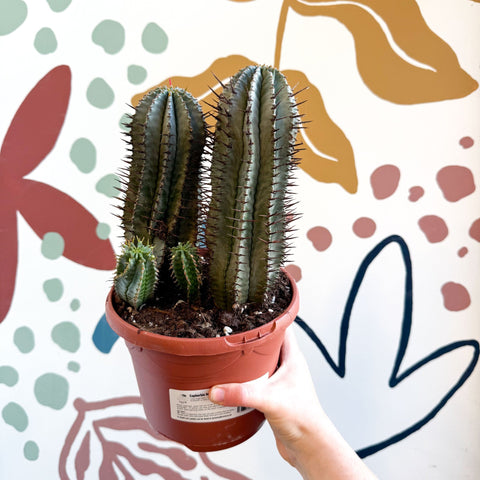
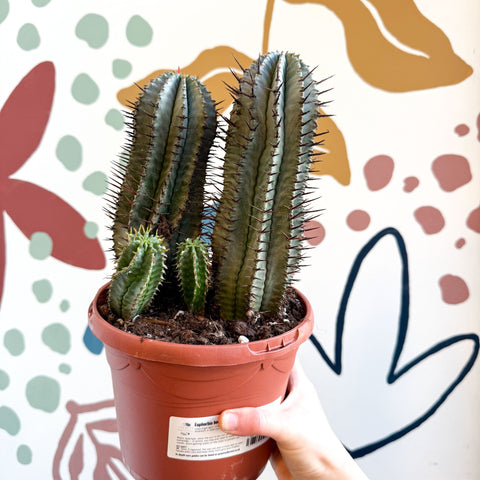
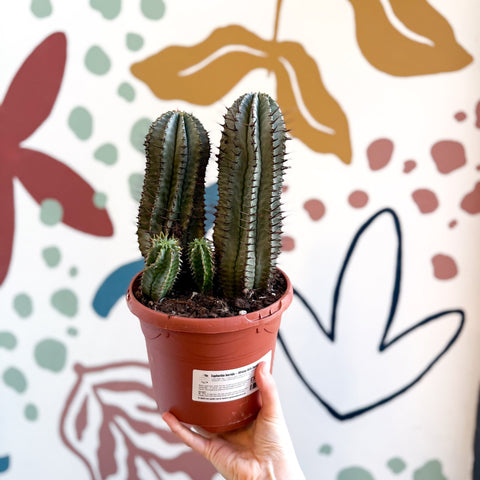
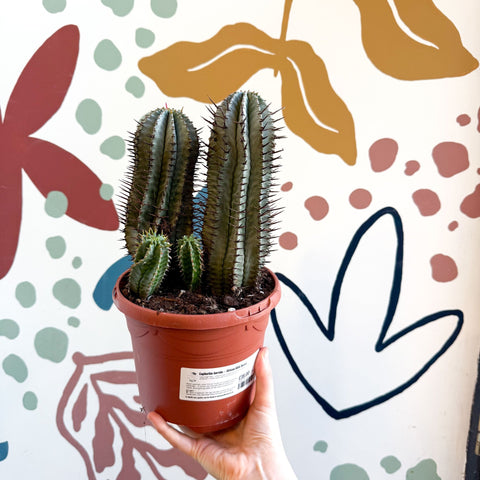
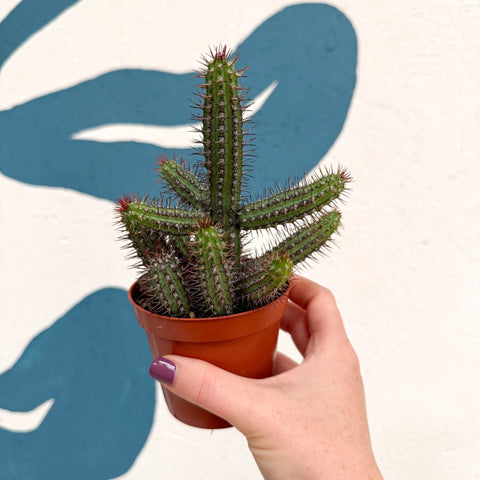
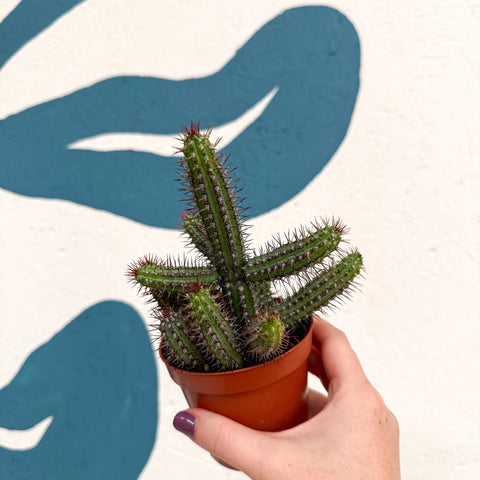
Spiky, sculptural, and strikingly similar to a cactus, Euphorbia horrida is a fascinating succulent with blue-green ridged stems and sharp spines along each edge. Native to South Africa, this plant is perfectly adapted to hot, dry conditions – and makes a bold, low-maintenance addition to any sunny windowsill. It’s sometimes called the “cactus euphorbia” due to its resemblance to cacti, though it’s actually a member of the Euphorbia family.
Scientific Name
Euphorbia horrida (bristly or rough Euphorbia)
Sometimes listed as Euphorbia horrida var. nana or var. striata to refer to natural compact or striped forms.
Common Name(s)
African Milk Barrel, Cactus Euphorbia, Horse Tooth Euphorbia (rare)
Origin
Native to arid regions of South Africa
Light
Loves bright light – a full sun spot is ideal. Place it on a sunny south- or west-facing windowsill, or under a grow light during darker months.
Water
Water sparingly. Allow the soil to dry out completely between waterings – in winter, you may only need to water once a month. Avoid getting water on the stem to prevent rot.
Humidity
Thrives in dry air. Do not mist or keep in high-humidity rooms such as bathrooms.
Soil
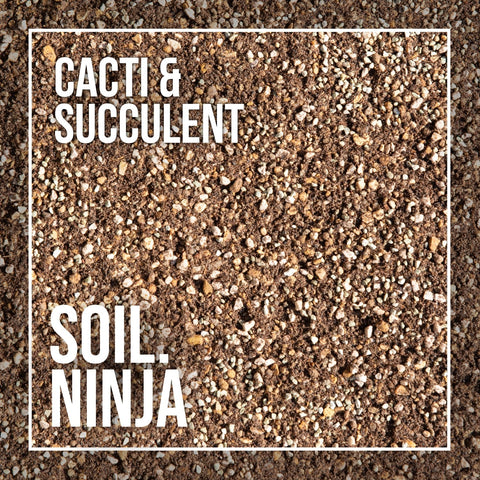
Needs very free-draining soil. Use a cactus and succulent mix with added sand or grit. Terracotta pots are ideal for airflow and evaporation.
Food
Feed once every 4–6 weeks during spring and summer using a diluted cactus fertiliser. No feeding needed in autumn or winter.
Temperature
Prefers temperatures between 18–27°C. Protect from cold – do not expose to temperatures below 10°C.
Pet-safe
❌ Toxic if ingested. The sap can also irritate skin or eyes – handle with care and keep away from pets and children.
Sprouts Top Tips
If the plant starts to lean or stretch, it’s likely not getting enough light. Move it to a sunnier position or supplement with a grow light to keep it compact and symmetrical.
Extras
The spines are modified leaf structures, and the plant exudes a milky latex sap if damaged – a classic trait of Euphorbias, not cacti.
Did You Know?
Despite its cactus-like appearance, Euphorbia horrida is more closely related to poinsettias than to true desert cacti. This is a prime example of convergent evolution in action!