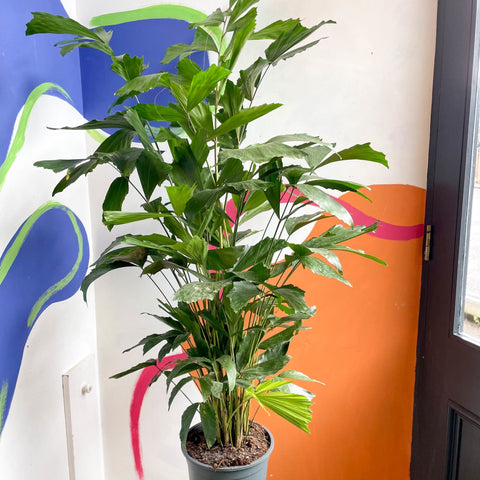
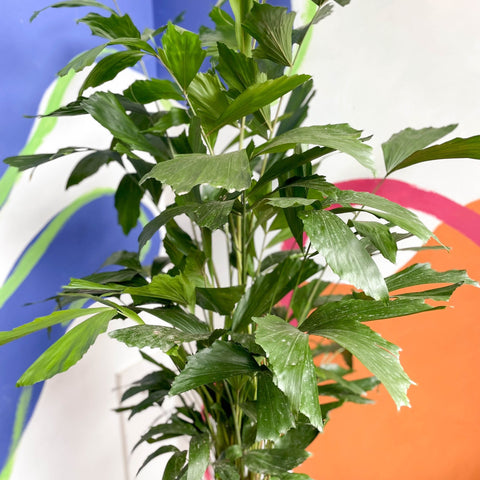
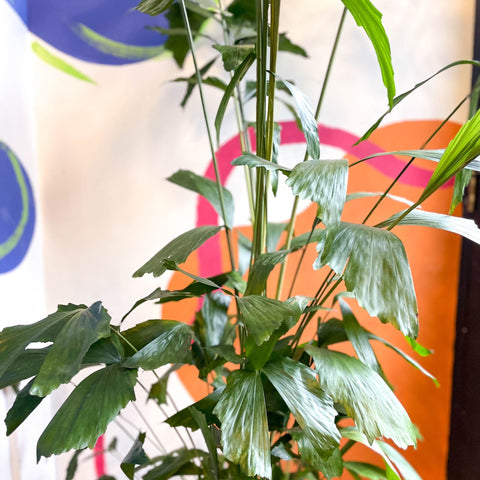
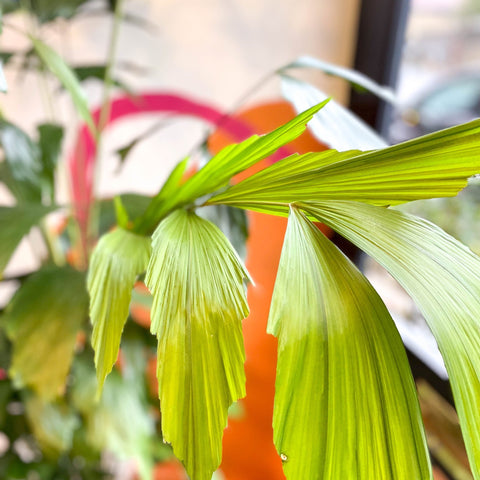
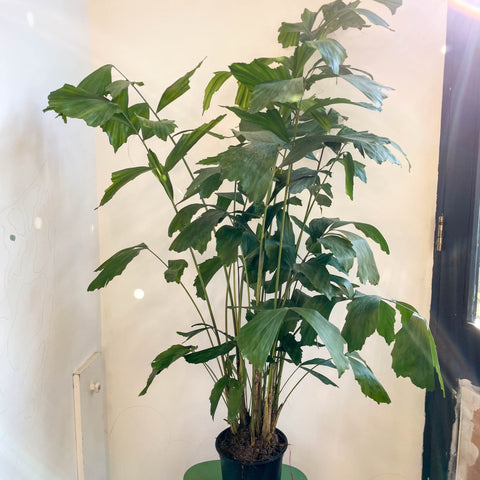
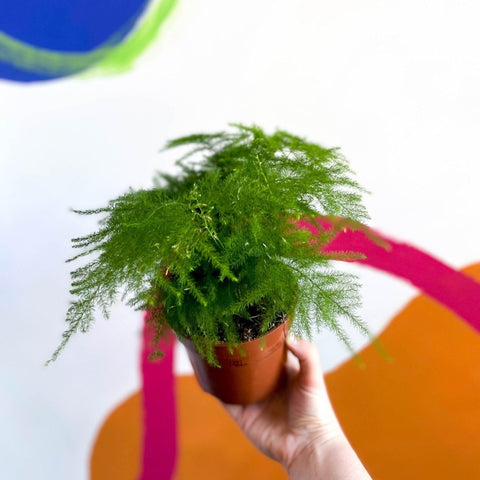
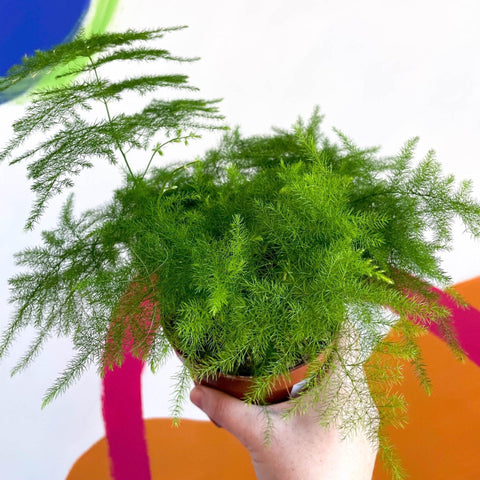
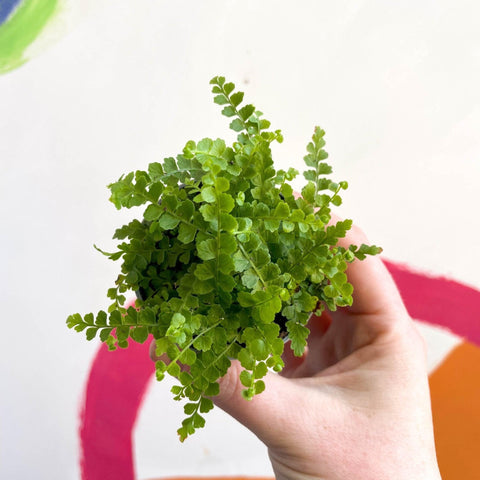
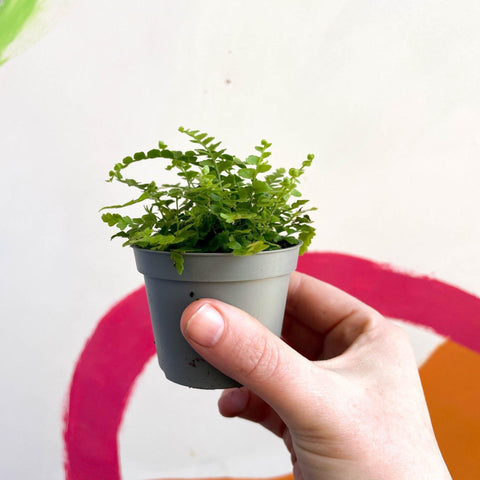
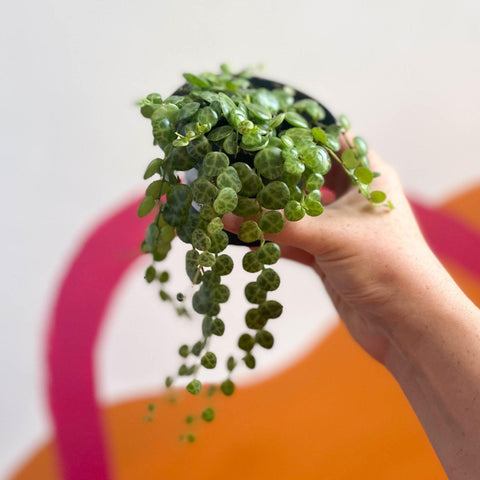
The fishtail palm makes a lovely statement plant. Its mid-green foliage is striking thanks to its unusual shape, seeming to mimic the delicate shape of a fishtail (or mermaid-tail!) with each pair of leaves. It is easygoing, just asking that you give it a bit of light, an occasional water, and lots of compliments. Okay, maybe it can do without the last one, but it can't hurt... In its tropical home, the fishtail palm can grow up to 8m high - but don't worry, as a houseplant it won't get much higher than 2m. Probably. Unless it's really happy and has loads of space to grow. Anyway, look after your Fishtails and they'll give you lots to admire in exchange for not too much maintenance.
Scientific Name
Caryota mitis (gentle nut tree)
Common Name
Fishtail Palm, Lesser Fishtail Palm, Wine Palm, Tufted Fishtail Palm
Origin
Native to tropical Asia, from India to Java to Southern China
Light
Bright, indirect light is best. Some direct light is fine, just be careful of hot afternoon sun scorching the leaves.
Water
Allow the top third of the soil to dry out in between waters; keep in mind it will need less watering in autumn and winter.
Humidity
This tropical palm loves a bit of humidity. A bathroom or kitchen can provide above-average humidity, or you can make a pebble tray around the plant to up the moisture surrounding it. In any case, make sure there are no operating radiators right next to it!
Soil
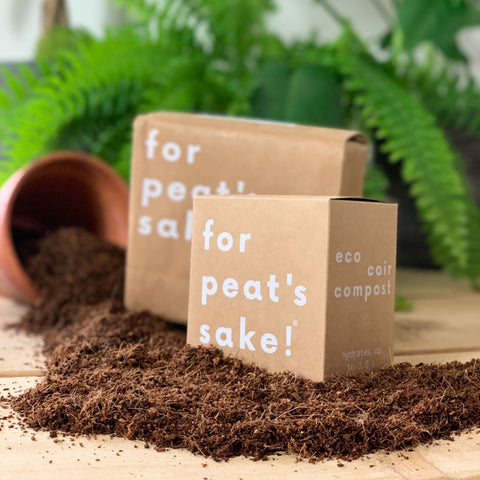
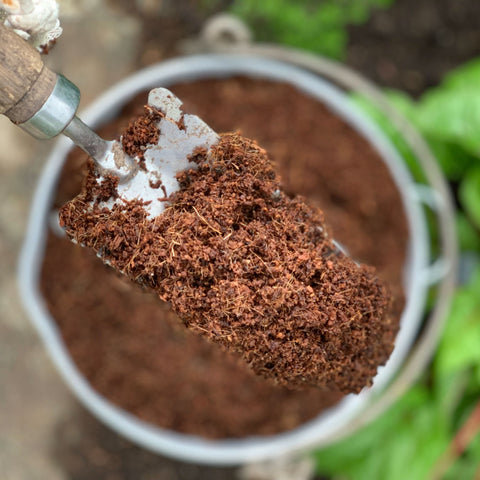
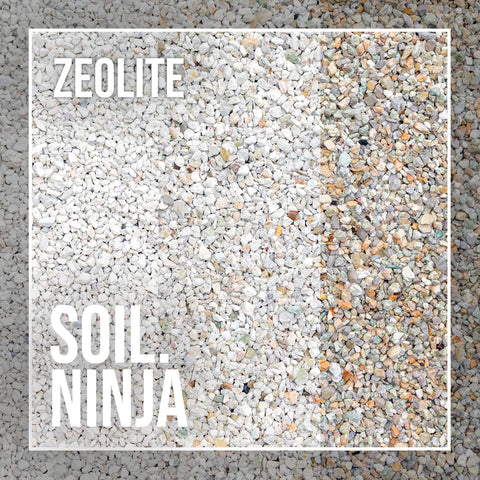
Use a mix that retains moisture well; components like coir, perlite and bark will ensure this, and adding some sand and zeolite will help it to drain extra water away. A mix designed for Ficus plants will work well here. Repot every three years as the plant grows; water 24 hours before moving to reduce the risk of transplant shock.
Food
Feed every four waters in the growing season, reduce to every six in autumn and winter. A fertiliser designed for palms, or a general houseplant feed, will work here.
Temperature
Average household temperatures of about 18-25°C are perfect- make sure it doesn't drop below 15°C in winter.
Pet-safe
No, this plant is toxic to pets and small humans.
Sprouts Top Tips
This plant can gather dust on its leaves, so clean these with a damp cloth to keep it clean and also maximise the light it gets - this is especially important in shadier spots.
Otherwise, the key is moisture; if it doesn't get enough water it will go dormant and stop growing, so it's important that you give it just enough water. If you notice crispy browning leaf tips with yellow halos, the humidity is probably too low; a pebble tray is a good low-maintenance way to raise the humidity around the plant.