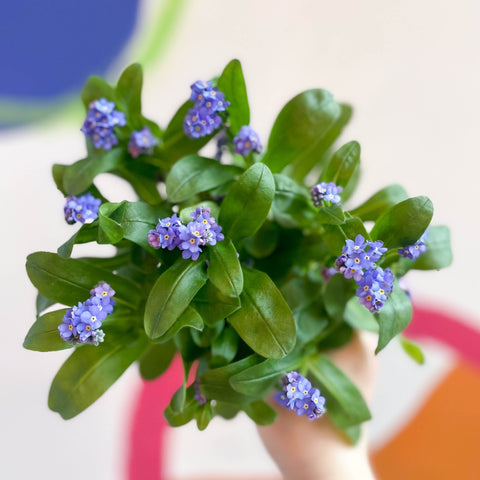
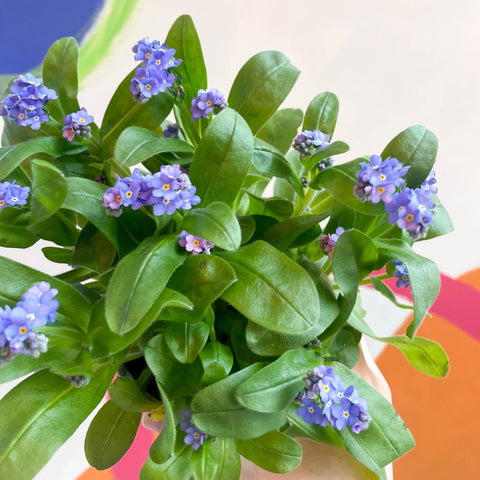
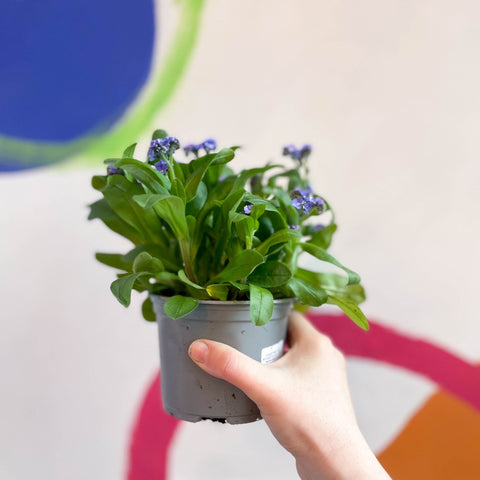
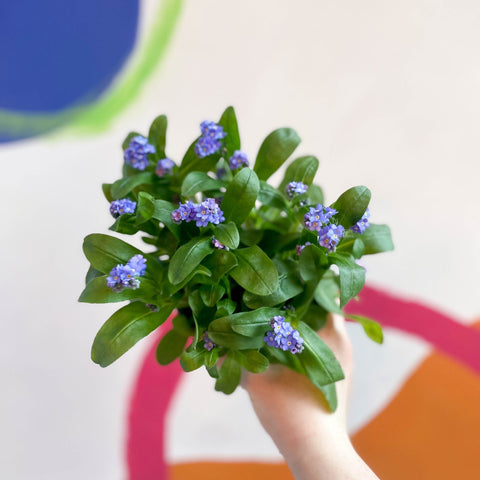
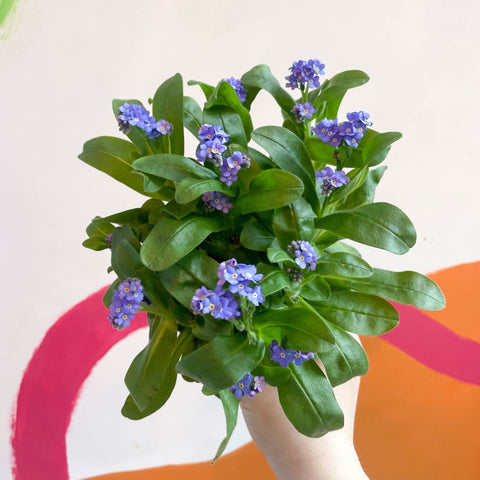
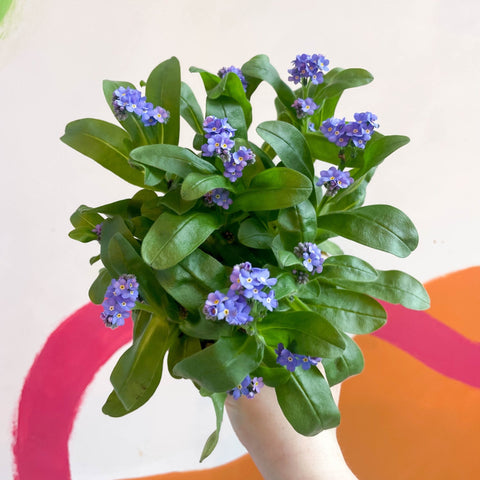
A compact forget-me-not, the tiny flowers on this variety are a traditional, spring-blooming powder blue. Hardy throughout the UK down to -20°C.
The gentle forget-me-not is popular in gardens across the UK. This variety's clusters of powder-blue flowers will bring that traditional beauty to your garden in spring, and with their ability to self-seed, will come back year on year. Growing either as biennials, blooming every other year, or short-lived perennials, blooming each year but needing to seed to really take root longer term, let this bloom naturalise for best results. Forget-me-nots are great for pollinators, too, providing pollen early in the year and feeding them for a few weeks while they bloom. With soft, distinctive flowers, lush green foliage and the ability to complement many other spring blooms, these are the perfect addition for your spring garden.
|
Biennial or short-lived perennial
|
Flower: Clump forming
|
Flowers March to May; foliage spring till autumn.
|
Scientific Name
Myosotis sylvatica 'Mon Amie Blue' (mouse-eared, forest-loving plant, cultivar: my friend, blue)
Common Name
Forget-Me-Not, Blue Forget-Me-Not, Garden Forget-Me-Not, Wood Forget-Me-Not
Origin
Native to parts of Europe and Asia, specifically: Great Britain, France, Italy, Switzerland, Belgium, the Netherlands, Germany, Denmark, Sweden, Austria, Hungary, Czechia, Slovakia, Poland, Romania, Ukraine, Türkey, Belarus, Bulgaria, the Baltics, Russia, Albania, Cyprus, Greece, Japan, Kyrgyzstan, Korea, Madeira, Nepal and Pakistan.
Pruning Tips
You can deadhead to promote blooming and stop it self-seeding, and pruning the foliage after flowering will keep it neat and tidy too. If you want it to self-seed, then don't prune after flowering - this allows seeds to develop, get themselves planted and feed the wildlife.
Wildlife Value
Supplies nectar for butterflies and nectar-drinking moths. Forget-me-nots are also attractive to bees and some other pollinators; they are in the RHS' Plants for Pollinators list, where they're recommended for hedges, shrub borders and woodland edges.
Positioning
Will do best in partial shade to full sun (position in partial shade if growing in a container); will grow well in both exposed and sheltered positions.
Water
Water in dry weather; your forget-me-nots will love having some soil moisture constantly, but make sure they aren't sat in a puddle.
Soil
Flexible with types of soil, make sure it has decent drainage and is moderately fertile.
Food
Make sure the soil is moderately fertile, or give your forget-me-nots a light feed before blooming in spring.
Pet-safe
Yes, forget-me-nots are non-toxic and safe for pets.
Sprouts Top Tips
Let some of your forget-me-nots self-seed to have the flowers return year on year.
While they can grow in containers, your plants will look best naturalised in borders or as part of a wildflower meadow.
Did You Know?
The yellow centres of forget-me-not flowers will fade to white once they've been pollinated - so you can see when your plant has been visited by the local wildlife!