Haworthia fasciata ‘Concolor’ – Concolor Zebra Plant
Buy with confidence
Everything we do is designed to get your order to you safely and happily.
🌿 Packed with care in Bristol, UK
⭐ Loved by thousands of happy Sprouts customers
📦 Royal Mail Tracked delivery
💚 Independent & Real Living Wage Employer
If your plant arrives damaged or unhappy, we’ll put it right. Find out more here
Every plant is carefully packed by our small, plant-loving Bristol team using protective, mostly plastic-free packaging.
Occasionally, you may find reused bubble wrap – this has been donated to us, and we encourage you to reuse it too.
Orders are usually packed and dispatched within 2–4 working days. We may occasionally delay dispatch during periods of extreme weather to protect your plants. We always prioritise plant health over speed of delivery.
Delivery is £5 for any number of items, or free on orders over £60. We deliver across the UK only.
We also offer local, bike-powered delivery in Bristol for £5 via Pedal Collective, a gentler option for plants and the planet.
We believe in paying people fairly, that’s why we’ve been a Real Living Wage Employer from the very beginning. We’re an independent Bristol business, packing every order ourselves.
Supporting us means supporting fair work.
Questions before ordering? Just drop us a message – we’re always happy to help.
Head to our contact page and fill in the contact form and one of the team will be in touch shortly
This striking succulent boasts a compact silhouette of spiny, spiky foliage speckled with raised, white markings characteristic of its species. The contrasting white on deep green colouring makes it an attractive addition for your houseplant collection - and it's pretty easygoing too! All you need is a bright spot with some direct sun, and remember to make sure the soil is dry before you water, and your plant will be plenty pleased with you. Choose this succulent for sculptural shape and just a splash or contrasting patterns, all in an easy-care package.
Scientific Name
Haworthiopsis fasciata 'Concolor' (like Haworth's plant, species with bundled stems, cultivar: with colour)
Synonyms: Haworthia fasciata, Aloe fasciata, Apicra fasciata, Catevala fasciata, Haworthia pumila subsp. fasciata
This plant was reclassified from the Haworthia genus (where it was known as Haworthia fasciata) in a 2013 paper, thanks to 21st Century DNA analysis.
Common Name(s)
Concolour Haworthia, Zebra Plant, Zebra Haworthia, Zebra Cactus, Fasciated Haworthia, Star Plant, Pearl and Star Plant
Origin
Native to the Eastern Cape Province of South Africa, where it grows in dry, rocky areas.
Light
Your Zebra Haworthiopsis will love a bright spot with maybe a couple of hours of direct sun; in its native South Africa it is used to some shade from rocks, so it can scorch in too much sun.
Water
Allow the soil to dry out completely between waters. Water thoroughly, ensuring excess water drains away, and never let the plant sit in standing water. During the active growing season (spring and summer), water moderately; reduce watering during autumn and winter when growth slows.
Humidity
Adapted to arid environments, this plant isn't fussy with dry air. Avoid high humidity environments, as excessive moisture can lead to root rot. An occasional hose down will keep its leaves free of dust, just make sure it dries thoroughly afterwards.
Soil
Plant in a well-draining succulent or cactus potting mix. One that contains sand or grit will work well. Repotting is typically needed every 2-3 years or when the plant outgrows its pot.
Food
Fertilise sparingly during the growing season with a balanced, water-soluble fertiliser diluted to half strength, about once every two months. Avoid fertilising during the dormant winter period.
Temperature
Thrives in temperatures between 18-26°C. Make sure the plant doesn't drop below 10°C overnight in winter.
Pet-safe
Yes, this succulent is generally considered non-toxic to pets and humans, making it a safe choice for households with animals and children.
Sprouts Top Tips
Rotate the plant periodically to ensure even growth and prevent it from leaning toward the light source. Keep the leaves free from dust by hosing it down and then letting it totally dry. Over time, Haworthiopsis fasciata may produce offsets (pups) that can be separated and replanted to propagate new plants; wait until they have at least four leaves to do this, giving them the best shot at establishing themselves.
Did You Know?
This species is distinguishable from the similar H. attenuata by the smooth upper surface of its leaves, where the other species has its freckles on both sides of the leaves.
Add a Pot & Care Essentials
Most customers add a pot or soil when purchasing this plant.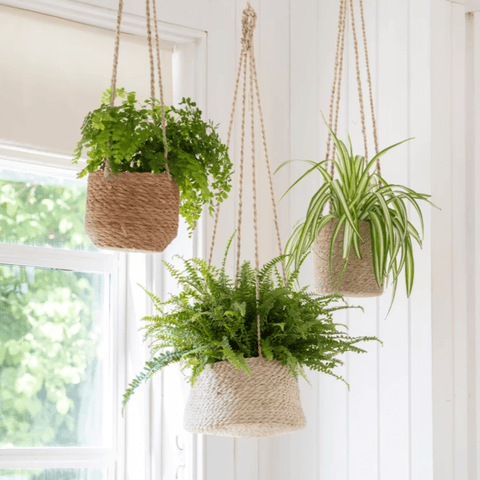









Great quality plants, all healthy and good specimens. Very pleased, thank you!!! 🙏
Check out The Sprouts Blog
Sprouts insights to house plants, gardening, our favourite brands and plant hire case studies.