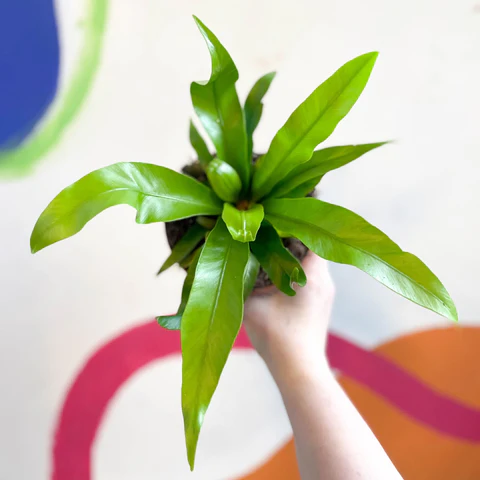
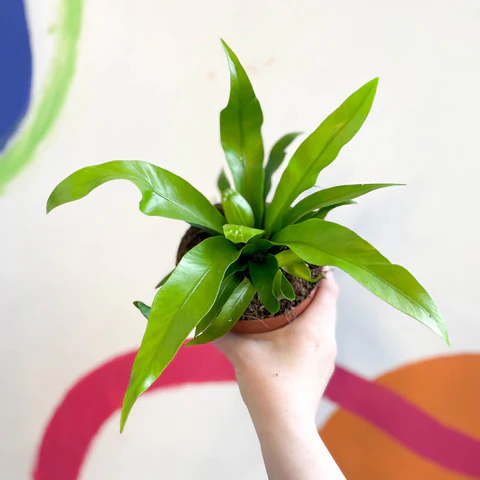
The Bird's Nest Fern is an explosion of greenery which will brighten whichever spot you keep it in. It likes brighter light than the ferns that grow in the UK, since it's evolved in the South Pacific, but still should be kept out of direct sun. It is an epiphyte, so it grows on trees or rocks rather than into soil; make sure its roots don't sit soggy and that plenty of air can get to them. This species' leaves are an aesthetically pleasing long, smooth, ovate shape and mature from paler to deeper right green. New leaves grow with their ends curled up, unfurling as they grow.
Scientific Name
Asplenium antiquum (ancient spleenwort)
Common Name
Japanese Bird's Nest Fern, Spleenwort
Origin
Native to Japan, Korea, China and Taiwan
Light
Likes bright, indirect light; a splash of direct sun in autumn and winter will help with its dormancy. Not suitable for low light where it is at higher risk of root rot.
Water
Allow the top third of the soil to dry out between waters; this will mean less frequent watering in less bright spots!
Humidity
Average humidity is fine for the Bird's Nest Fern; A humidity tray would be appreciated but misting can cause issues with the foliage. A hose down to clear it of dust every so often will be helpful as long as the leaves are able to dry out.
Soil
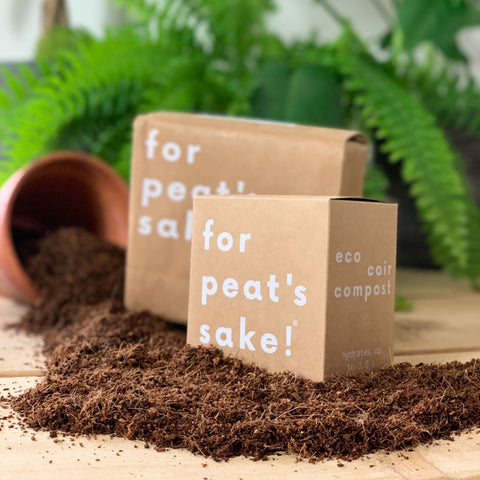
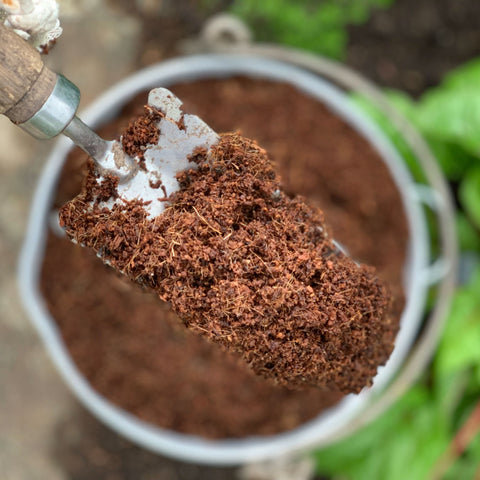
Use a well-draining soil mix, for example with added bark, to allow plenty of air to get to the epiphytic roots. Add bark or an Orchid blend to soil designed for Ferns for the perfect mix. Repot every few years in spring as the plant grows.
Food
Feed every four weeks with water in the growing season, reducing to every six in autumn and winter.
Temperature
Temperatures between 12-26°C are ideal for this plant. It can be brought outdoors in summer, but make sure it's in a shady spot, and watch for pests when bringing it back in!
Pet-safe
Yes, but too much nibbling won't be good for pets, small humans or the plant!
Sprouts Top Tips
Water into the soil directly to prevent extra water sitting on the leaf and causing issues. If the potting mix is drying out slowly, you can poke the soil with a chopstick or similar sized stick to allow more oxygen in and mimic the movement of insects.