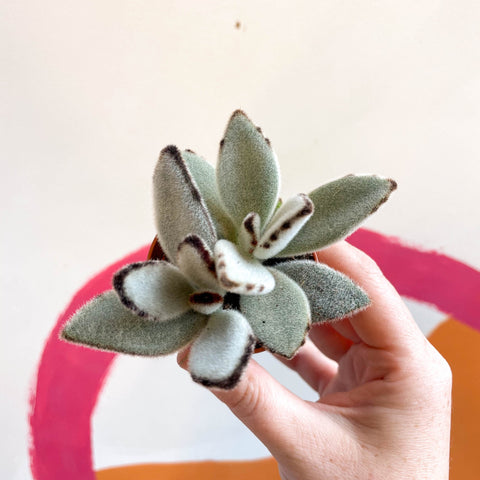
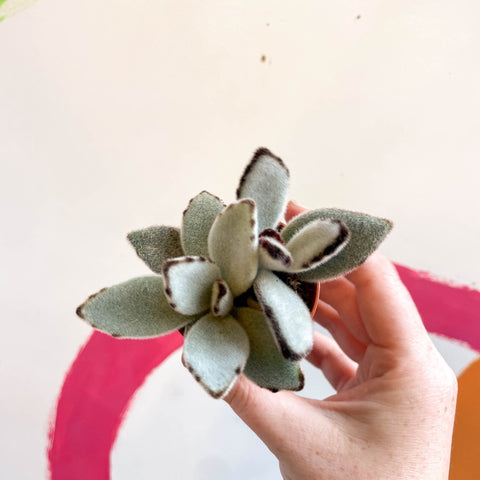
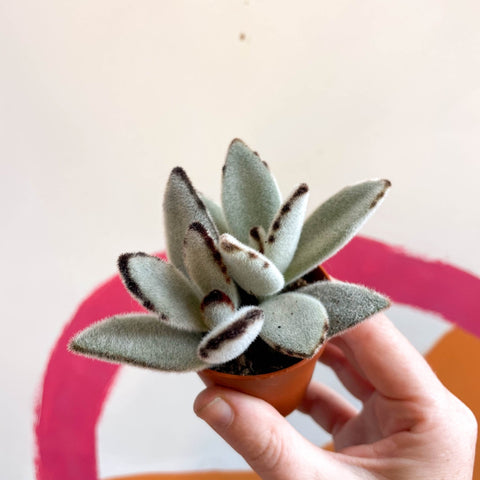
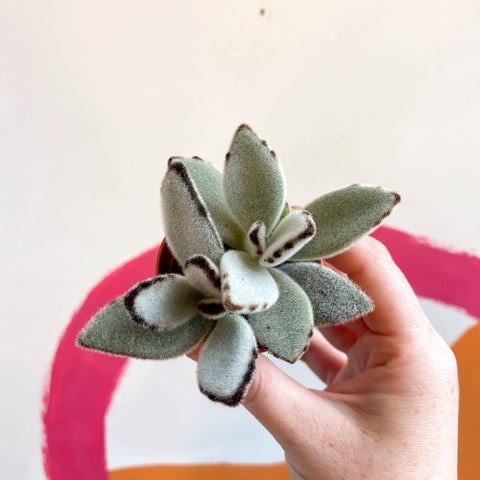
This plant is the fluffiest of bois! Okay, maybe not quite as fluffy as your fave pooch, but it's getting there... its tactile leaves are covered in tiny hairs which help it keep in moisture in its arid Madagascan home, and which turn the green of its foliage silvery in the light. The tips of its leaves are a deep brown, contrasting with the rest and adding further interest to this plant. In the wild, it can grow up to 3ft (90cm) tall, but you'll need a lot of patience to see this kind of height indoors! We love the texture and the colours, and we're sure you will too. Just make sure it has plenty of time for the soil to dry out between waters, and plenty of light, and it will thrive in your home.
Scientific Name
Kalanchoe tomentosa (hairy plant where the parts that fall grow)
Common Name
Panda Plant, Pussy Ears, Cat Ears, Donkey Ears
Origin
This species of Kalanchoe is native to the island of Madagascar
Light
Your Kalanchoe will love a splash of morning or evening sun, so look for an east or west-facing window. These plants suffer in low light, so making sure they get some sun is key!
Water
Let the soil dry out between waters. In its native Madagascar, it gets occasional downpours of rain with long dry spells in between, so try and match what it's used to!
Humidity
Low humidity is what these plants are used to, so anywhere in your home that isn't right next to an operating radiator OR really damp and humid will do just fine!
Soil
Use a well-draining mix with components such as sand and grit. A mix designed for cacti and succulents will work well here. Repot every three years in Spring as the plant grows.
Food
Feed every four waters in the growing season, reduce to every six in autumn and winter. A specific 'cactus' feed will do the best job here.
Temperature
Ideal temperature is between 15-25°C; make sure it does not get colder than 12°C in winter.
Pet-safe
No, this plant is toxic to pets and small humans.
Sprouts Top Tips
If you notice the centre of its leaves getting pale, your plant is probably not getting enough light; if the centre is soft and the foliage blackened, it is too wet and needs to dry out. Crispy brown edges of the leaves indicate too little water or too much sun.
These plants are also super easy to propagate; a fallen leaf, put onto soil, will start to root, and grow into its own whole new plant!