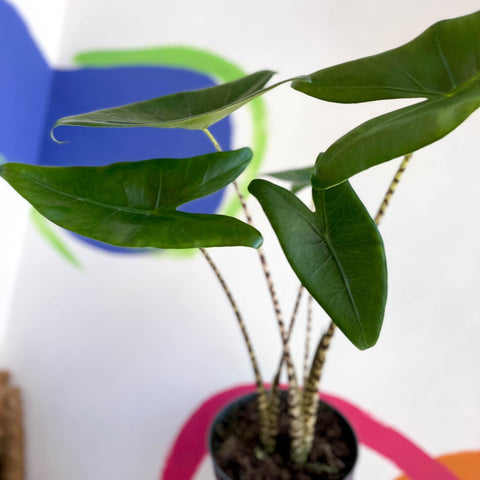
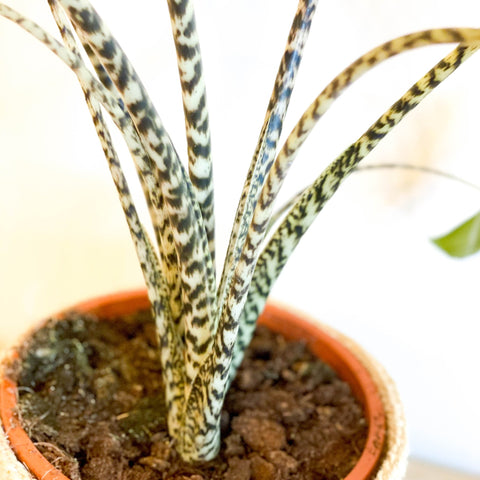
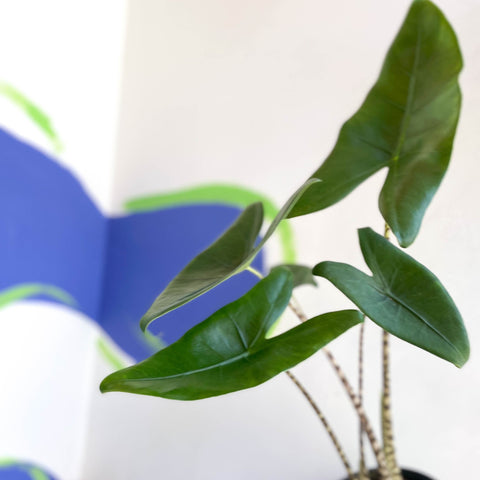
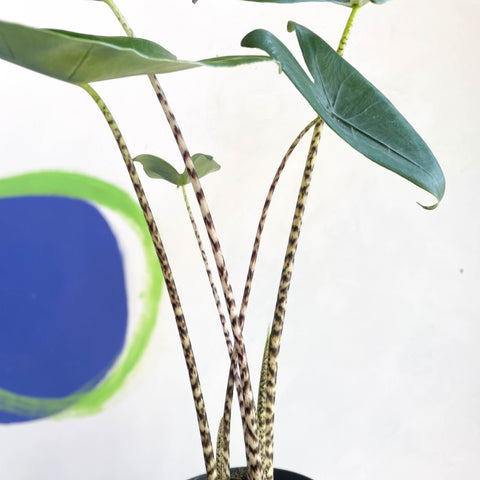
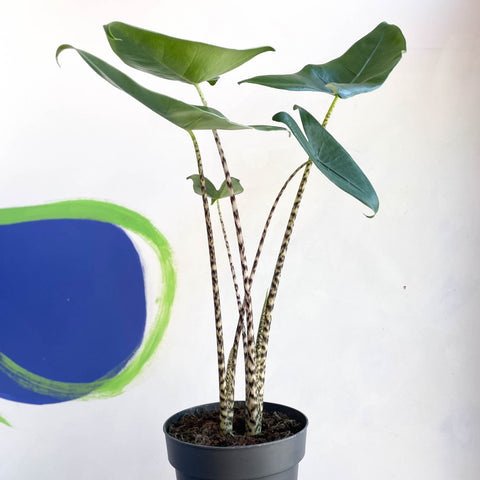
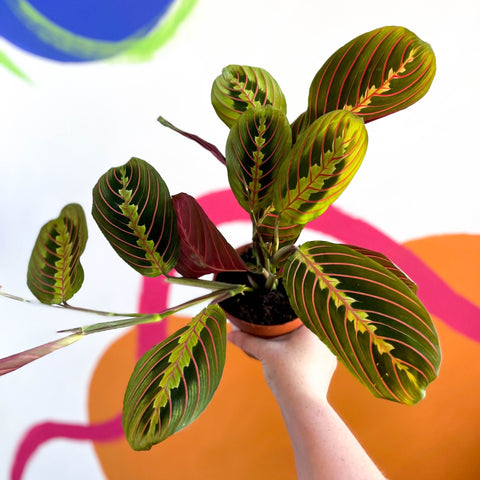
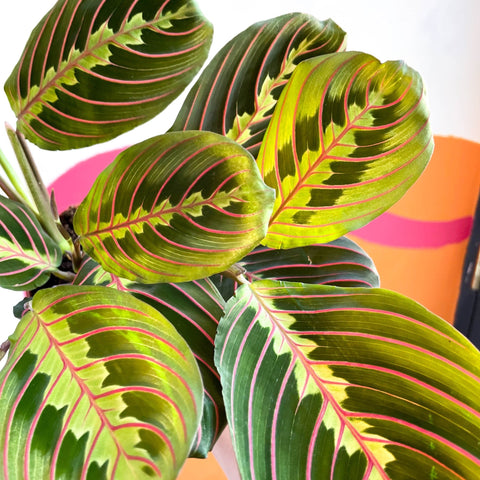
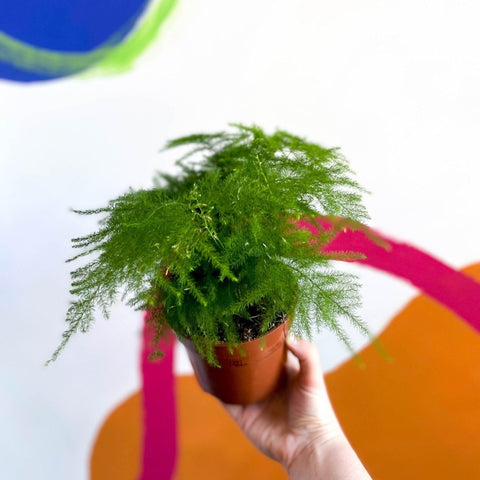
The Alocasia zebrina is visually stunning, making a real impact in your home with its gorgeous patterned stems and vibrant green arrowhead leaves. A good beginner Alocasia, the zebrina likes bright light and plenty of water, preferring to dry about half of its soil between waters compared to some of its relatives which need to totally dry out! Native to the Philippines, this tropical plant adapts well to growing indoors, even getting used to average humidity - just don't let it be dried out by your heating and you can enjoy their lush colour and zany pattern!
Scientific Name
Alocasia zebrina (not-colocasia with zebra stripes)
Common Name
Zebra Plant, Zebra Alocasia, Zebrina Alocasia
Origin
Native to tropical and subtropical forests in Southeast Asia, especially the Philippines.
Light
This plant will appreciate a couple of hours of morning or evening sun, so an east or west facing window is ideal. Too much harsh midday sun can wash out its leaves, while it needs its leaves regularly dusting and can struggle in a shadier spot.
Water
Let a third to a half of the soil dry out between waters. This plant is thirstier than other Alocasias but still doesn't like to sit soggy.
Humidity
Alocasias are jungle plants, but average household humidity will usually be fine for them. Keep them away from operating heaters and radiators, and out of draughts, which will dry them out too much. If you notice your zebrina's leaves getting brown and crispy round the edges, the plant may benefit from the introduction of a humidity tray to increase local humidity.
Soil
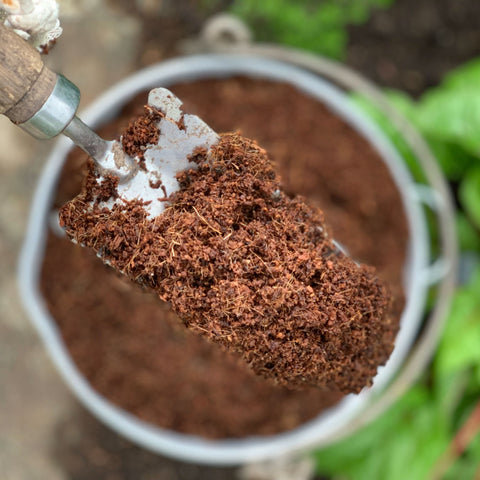
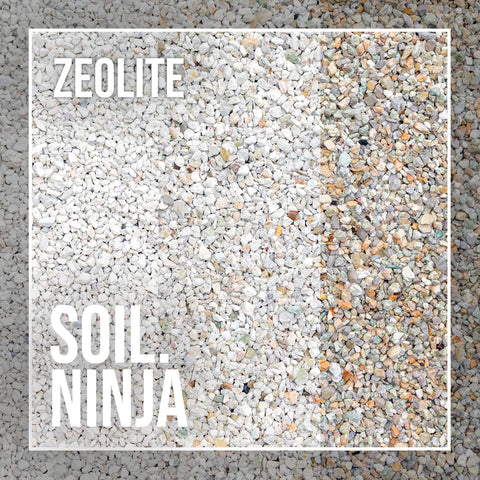
A chunky soil with plenty of elements to retain moisture (like coir and bark) alongside elements that aerate soil (like vermiculite and zeolite) will work well here. Look out for mixes designed for alocasias. Repot every couple of years as the plant grows; Alocasias prefer to be slightly root bound, so only repot when absolutely necessary.
Food
Feed every four waters in the growing season, reduce to every six in autumn and winter. Water before fertilising to prevent the fertiliser burning the roots.
Temperature
Likes temperatures of 15-30°C; don't let it get below 12°C in winter.
Pet-safe
No, this plant is toxic to pets and small humans.
Sprouts Top Tips
The most common issues you may have will result in browning leaf patches with yellow haloes. This can be caused by a few things:
Your plant may be in too dark a location, so that the soil isn't drying out quickly enough. Mould on the soil surface is an indication that this is the problem.
This Alocasia can also react badly to cold water or tapwater that has too many chemicals; make sure water is room-temperature and that tap water has sat for a day to calm the chemicals down. Check out our tapwater blog post for details on this!
If you haven't fed your Alocasia for a couple of months, it may just be suffering from lack of nutrition. regular feeding will help it keep looking its best!
Did You Know?
If you cook Alocasia corms (bulb-like structures these plants grow from) enough, they are edible! They go from causing temporary sight loss to providing lots of starch.