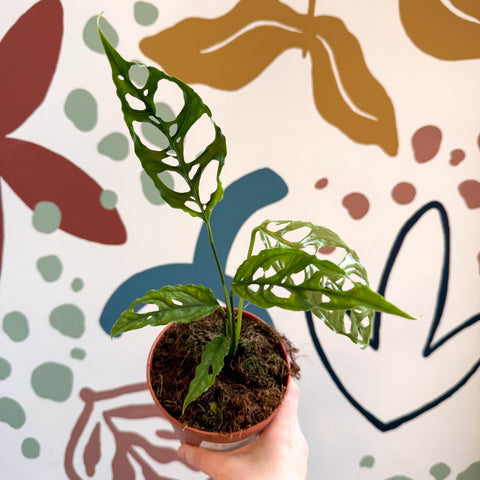
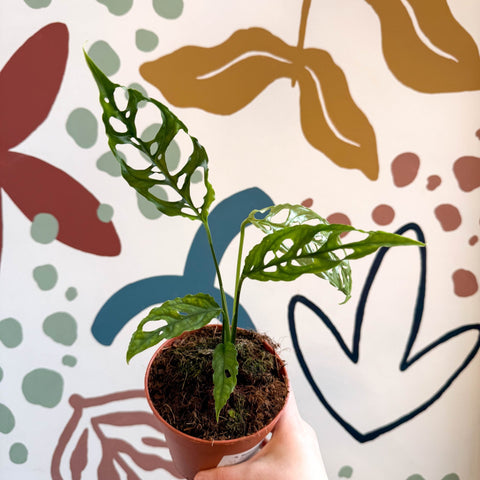
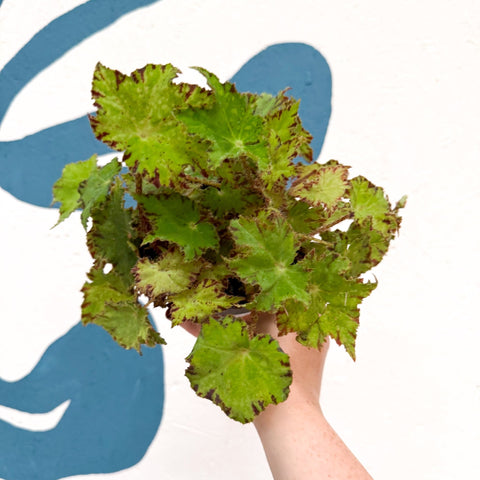
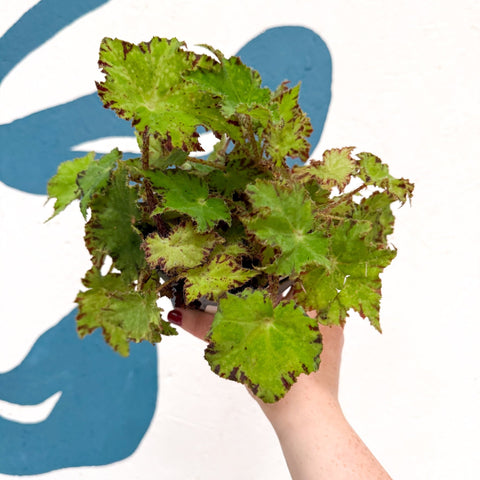
The delicate foliage on this Monstera is striking - chiefly because the fenestrations characteristic of the genus take up so much of the leaf space. Each mid-green leaf is a delicate lacework of green between large fenestrations, natural holes which open in the leaves as the plant ages. One common issue with this delicate foliage is low humidity, which can lead to brown patches on the edges of the leaf - an area which, in this species, constitutes most of the leaf. These sought-after aroids are sure to catch the eye and draw admiration amongst any houseplant collection for their unusual appearance -take this one on for a challenge with its distinctive, showstopping foliage.
Scientific Name
Monstera obliqua 'Peru' (lopsided monster, cultivar: Peru)
Synonyms: Heteropsis obliqua, Monstera expilata, Monstera falcifolia, Monstera fendleri, Monstera killipii, Monstera microstachys, Monstera sagotiana, Monstera snethlagei, Monstera unilatera
This name was published in 1845, and though other names have been used, it has remained the accepted scientific name for this species.
Common Name
Monstera Obliqua, Monstera Peru, Swiss Cheese Vine, Window-Leaf
Origin
Native to tropical rainforests in South America, in Bolivia, North Central Brazil, Colombia, Costa Rica, Ecuador, French Guiana, Guyana, Panama, Peru, Suriname, Trinidad-Tobago and Venezuela
Light
Prefers bright, indirect light. Too much direct sunlight can scorch its delicate leaves, while too little light may slow its already gradual growth. Artificial grow lights can be beneficial, especially in low-light environments.
Water
Keep the soil evenly moist but never soggy. Allow the top 1-2 cm of soil to dry slightly before watering. Use room-temperature, filtered, or rainwater to prevent leaf stress from chemicals in tap water.
Humidity
Requires extremely high humidity (80–90%). Best suited for terrariums, greenhouse cabinets, or enclosed spaces with controlled moisture levels. Without sufficient humidity, the leaves may crisp and fail to develop properly.
Soil
Needs a very airy, well-draining aroid mix. A combination of bark, perlite, and coir, or a mix designed for Monstera or Philodendrons, works best. Repot every few years as the plant grows; it is not a fast-grower, so make sure the roots have started to fill the pot before potting on.
Food
Feed every four waters in spring and summer; reduce to every six in autumn and winter when the plant will be growing more slowly.
Temperature
Prefers temperatures between 20-28°C. Keep it away from cold drafts and avoid long periods at temperatures below 15°C.
Pet-safe
No, this plant is toxic if ingested, so keep it out of reach on curious fingers and claws.
Sprouts Top Tips
Due to its slow growth and delicate nature, Monstera obliqua ‘Peru’ thrives best in high-humidity setups such as terrariums or humidity-controlled grow cabinets.
Extras
This plant is often confused with Monstera adansonii, the monkey mask, but M. obliqua has much thinner leaves, more extreme fenestrations, and a significantly slower growth rate. Mature plants can develop runners instead of climbing like other Monstera species.