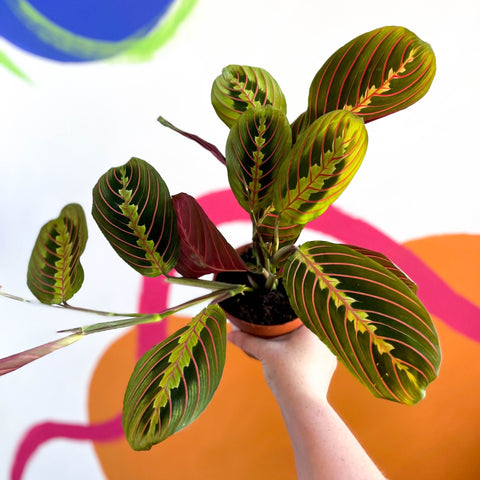
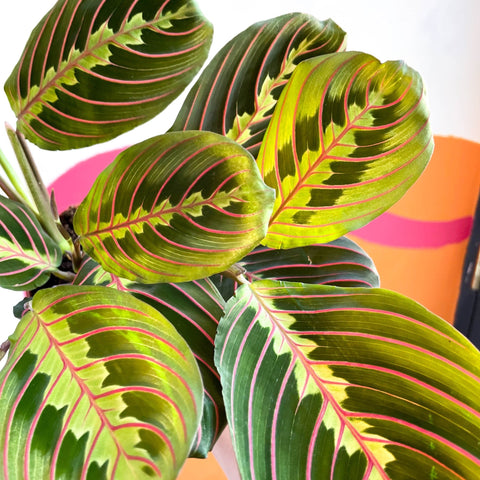
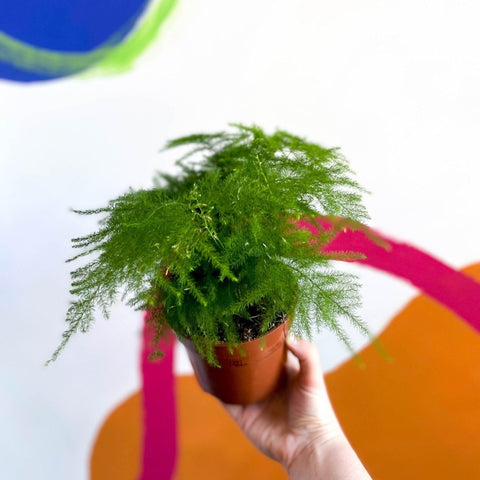
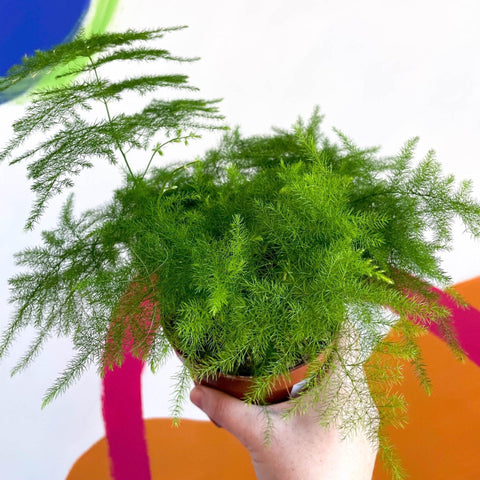
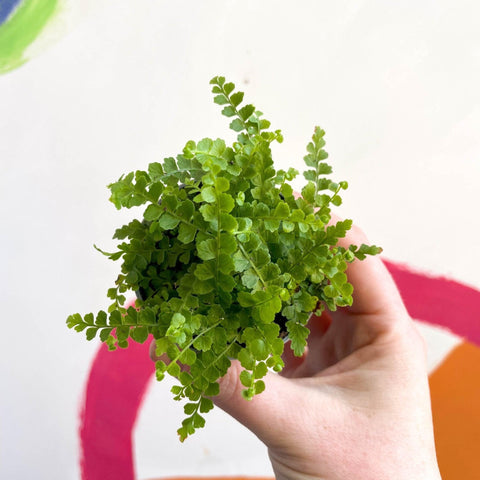
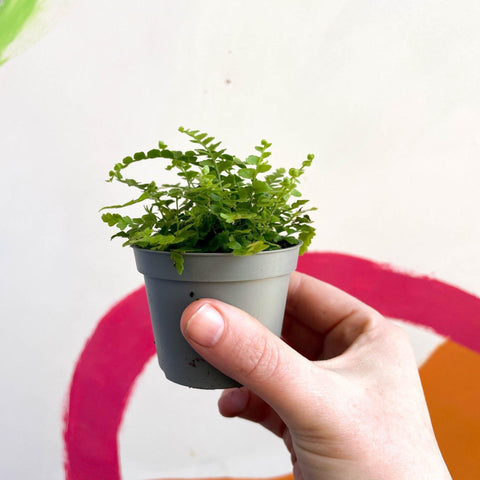
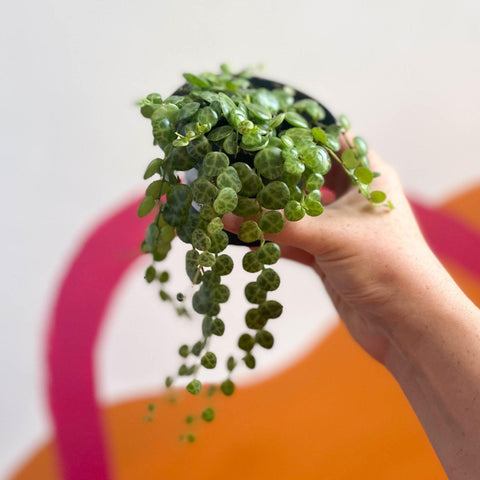
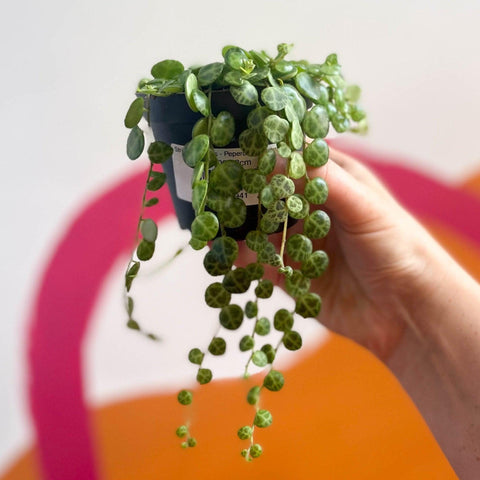
This succulent's round, scallop-shaped leaves with their splash of paler green variegation across the deep forest green of the leaves really catch the eye indoor and out. This plant can be grown both as a houseplant and outdoors as a deciduous perennial, and in either case it will thank you for well-draining soil, and bright light. In a sunnier spot, you may get a red tinge to the edges of the leaves, and towards the end of summer it might even show you a display of bright pink, star-shaped flowers! Choose this stunning succulent to add colour, vibrancy and interesting shape to your home.
Scientific Name
Sedum sieboldii (Siebold's sedum plant)/ Hylotelephium sieboldii (Siebold's distant-lover from the woodland)
The name Sedum sieboldii is listed as a synonym of Hylotelephium sieboldii in official taxonomic documentation.
Common Name
October Daphne, Stonecrop, October Plant, Siebold's Stonecrop
Origin
This plant is native to Japan
Light
Your Sedum will love a spot in bright light, and will benefit from a few hours of morning or evening sun.
Water
Allow the soil to totally dry out between waters; soggy or damp roots are no good for this succulent!
Humidity
This plant is adapted to low humidity, so will be perfectly fine in most household environments- just make sure it's not anywhere especially damp!
Soil
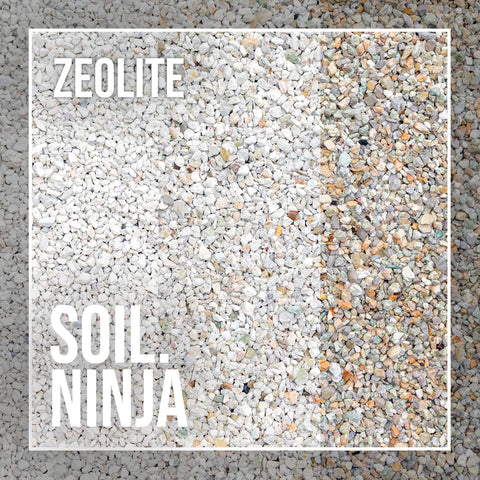
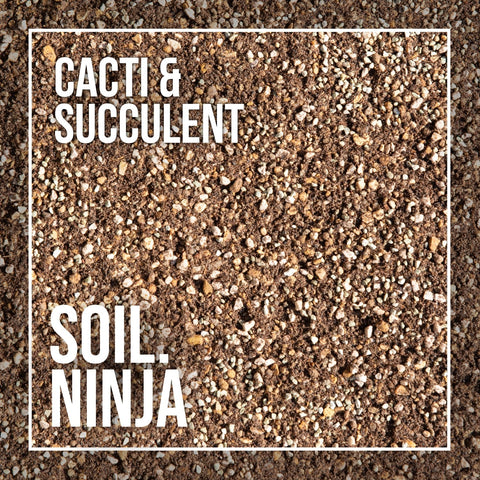
Use a soil mix with added grit and sand to make sure the roots get enough drainage; one designed for succulents or cacti will work especially well. Repot every few years in spring as the plant grows.
Food
Feed every two months in the growing season, reduce to every three in autumn and winter. A cactus-specific feed will be best, though generic houseplant fertiliser will work too.
Temperature
Temperature should ideally be between 15-26°C- make sure it doesn't drop below 10°C in winter indoors. Can be grown outdoors as a perennial (hardy down to -10°C), though it will die back over winter.
Pet-safe
Yes, but too much nibbling won't be good for pets, small humans or the plant!
Sprouts Top Tips
Red leaves are sunburn, which isn't a concern; yellowing, mushy leaves are a sign of overwatering, which definitely is! Make sure you are letting the soil totally dry out; if you aren't sure, the leaves will go slightly wrinkly when thirsty and perk up once watered (whereas if they get too soggy they will find it harder to recover!)