

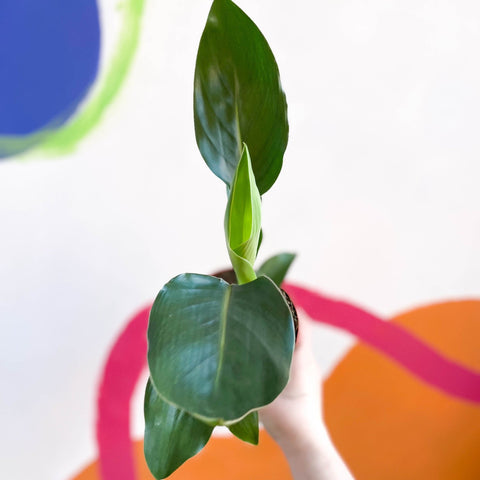
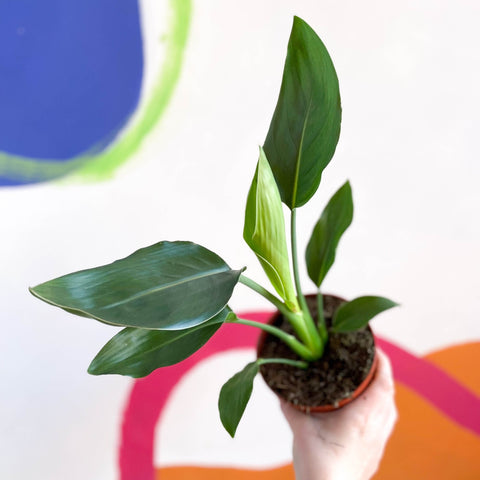
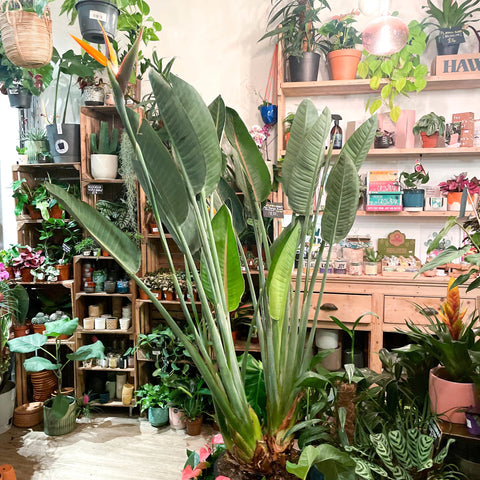
Strelitzia reginae - Orange Bird of Paradise
Buy with confidence
Everything we do is designed to get your order to you safely and happily.
🌿 Packed with care in Bristol, UK
⭐ Loved by thousands of happy Sprouts customers
📦 Royal Mail Tracked delivery
💚 Independent & Real Living Wage Employer
If your plant arrives damaged or unhappy, we’ll put it right. Find out more here
Every plant is carefully packed by our small, plant-loving Bristol team using protective, mostly plastic-free packaging.
Occasionally, you may find reused bubble wrap – this has been donated to us, and we encourage you to reuse it too.
Orders are usually packed and dispatched within 2–4 working days. We may occasionally delay dispatch during periods of extreme weather to protect your plants. We always prioritise plant health over speed of delivery.
Delivery is £5 for any number of items, or free on orders over £60. We deliver across the UK only.
We also offer local, bike-powered delivery in Bristol for £5 via Pedal Collective, a gentler option for plants and the planet.
We believe in paying people fairly, that’s why we’ve been a Real Living Wage Employer from the very beginning. We’re an independent Bristol business, packing every order ourselves.
Supporting us means supporting fair work.
Questions before ordering? Just drop us a message – we’re always happy to help.
Head to our contact page and fill in the contact form and one of the team will be in touch shortly
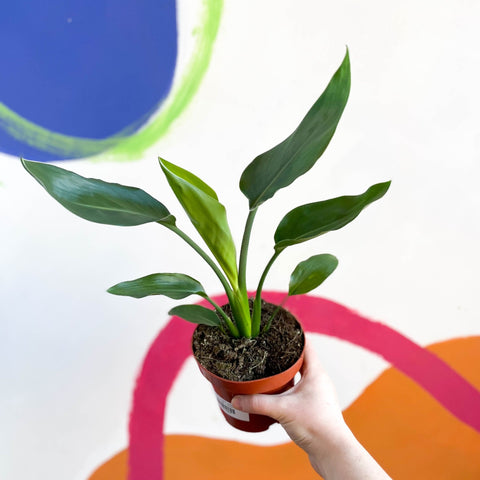
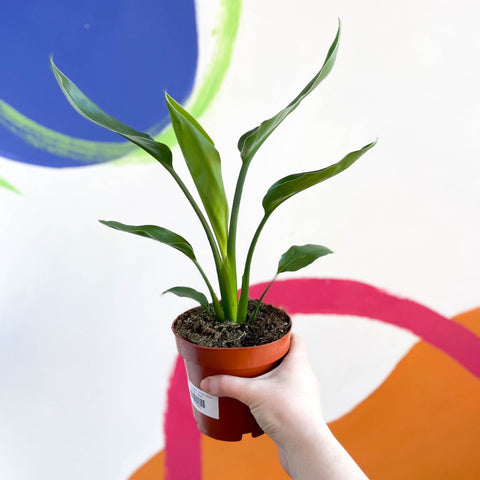
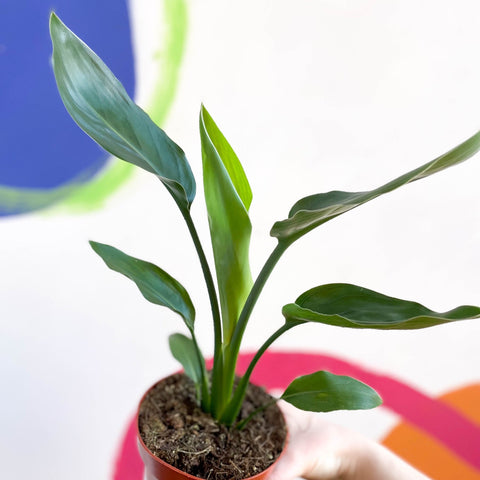
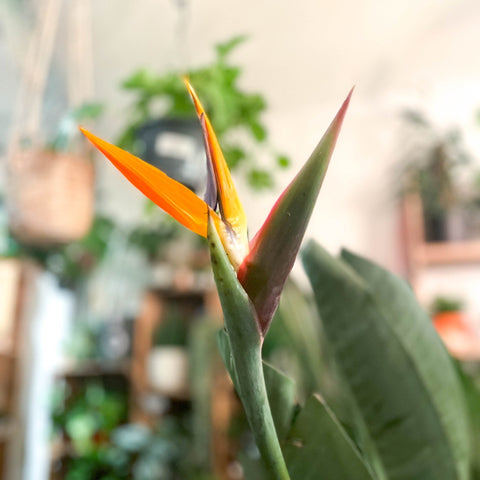
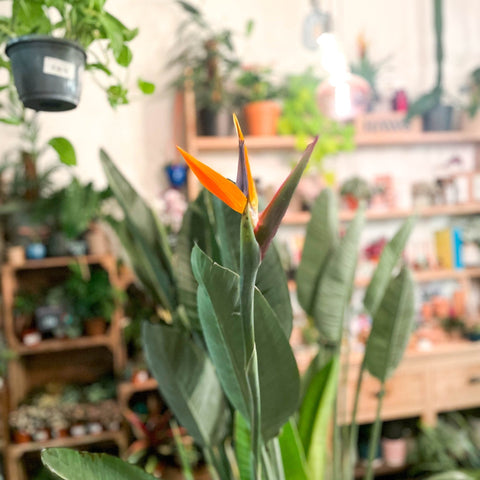
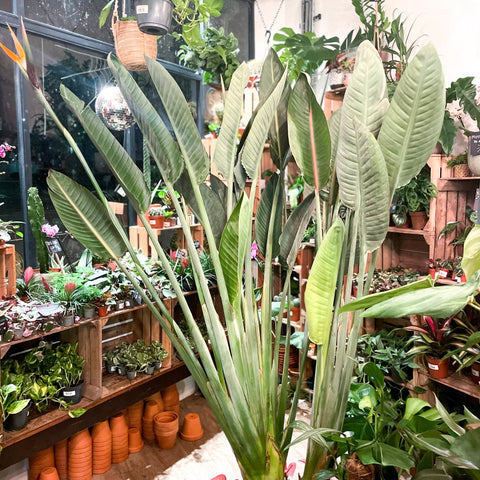
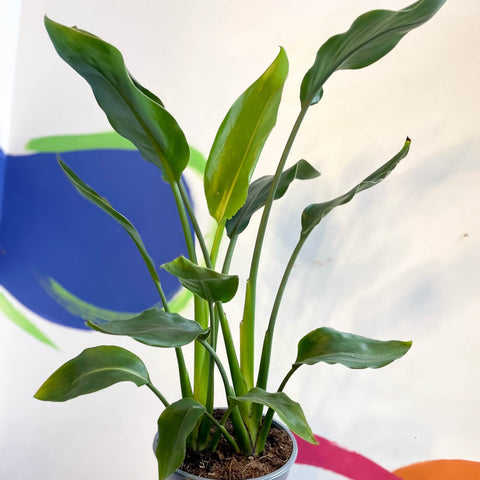
Strelitzia reginae, commonly known as the Orange Bird of Paradise, is a spectacular tropical plant admired for its bold, architectural foliage and extraordinary flowers. Its large, paddle-shaped leaves grow on long, upright stems, creating a lush, exotic appearance. When mature, the plant can produce striking orange and blue flowers that resemble the head of a tropical bird. With its sculptural growth habit and vibrant blooms, this beautiful Strelitzia makes a wonderful statement plant for bright indoor spaces, conservatories and sheltered gardens.
Scientific Name
Strelitzia reginae
Common Name(s)
Orange Bird of Paradise, Bird of Paradise, Crane Flower
Origin
Native to South Africa, particularly the Eastern Cape and KwaZulu-Natal, where it grows in warm, sunny environments, including coastal scrub and open woodland.
Light
Prefers very bright light with several hours of direct sunlight each day. A sunny south or west-facing window or bright conservatory is ideal.
Plenty of sunlight is essential for healthy growth and encourages mature plants to produce their spectacular flowers. Although it can tolerate bright, indirect light, insufficient sunlight may result in slower growth and reduced flowering.
Introduce plants gradually to strong direct sunlight to prevent scorching, particularly if they have previously been grown in lower-light conditions.
Water
Water thoroughly when the top few centimetres of compost have dried, allowing excess water to drain away.
During spring and summer, keep the compost lightly moist without allowing it to become waterlogged. Reduce watering during autumn and winter, allowing more of the compost to dry between waterings.
Established plants can tolerate occasional dry periods, but prolonged drought may cause leaf curling and brown edges.
Humidity
Prefers moderate humidity but generally adapts well to average household conditions.
Keep away from radiators and drying draughts, which can contribute to brown leaf edges. Occasionally wiping the large leaves with a damp cloth helps remove dust and keeps the foliage looking its best.
Soil
Use a rich, well-draining, peat-free houseplant mix with added perlite and fine orchid bark.
Strelitzias develop substantial root systems and appreciate a growing medium that retains some moisture while allowing excess water to drain away freely.
Food
Feed every 2–4 weeks during spring and summer with a balanced liquid fertiliser to support healthy growth.
For mature plants receiving plenty of sunlight, a fertiliser suitable for flowering plants can help support flower production.
Reduce or stop feeding during autumn and winter when growth slows.
Temperature
Prefers temperatures between 18–28°C but can tolerate warmer conditions with adequate watering and airflow.
Protect from frost and prolonged temperatures below 10°C. In the UK, plants can be moved outdoors to a sunny, sheltered position during summer but should be brought inside before temperatures drop in autumn.
Pet-safe
No. Strelitzia reginae is considered toxic to cats and dogs if ingested, particularly the flowers and seeds, and may cause digestive upset or other symptoms. Keep out of reach of pets and children.
Sprouts Top Tips
The Orange Bird of Paradise loves sunshine, so give it the brightest position available. Plenty of direct light is particularly important if you’re hoping to encourage flowering.
Don’t worry if the leaves develop natural splits or tears. In their native environment, these help the foliage withstand wind without becoming badly damaged.
Strelitzias also appreciate being slightly snug in their pots, so avoid moving them into unnecessarily large containers when repotting.
Extras
Strelitzia reginae develops a clumping growth habit, producing new leaves from thick underground rhizomes. Mature plants typically reach around 1–2 metres tall, making them more compact than their larger relative, Strelitzia nicolai, the White Bird of Paradise.
Its spectacular flowers feature vivid orange sepals and contrasting blue petals, emerging from a distinctive boat-shaped bract. Each flower resembles the head and beak of an exotic bird.
Flowering generally begins once the plant reaches maturity, often after several years. Indoor plants require excellent light and suitable growing conditions to bloom, and flowering is not guaranteed.
Established clumps can be divided during repotting, although plants may take time to settle and resume vigorous growth.
Did You Know?
The genus Strelitzia was named in honour of Queen Charlotte, wife of King George III, who was born into the royal house of Mecklenburg-Strelitz.
The species name reginae means ‘of the queen’, making this plant’s botanical name a tribute to royalty.
In its native South Africa, the Orange Bird of Paradise is pollinated by birds that perch on its flowers. Their weight helps expose the pollen, which is transferred as they visit other blooms.
Add a Pot & Care Essentials
Most customers add a pot or soil when purchasing this plant.








I was so excited to find an orange variety and it’s in great condition with a new leaf starting to unfurl 💚 love it!
Great smaller bird of paradise to compliment the larger ones I also purchased from Sprouts.
Check out The Sprouts Blog
Sprouts insights to house plants, gardening, our favourite brands and plant hire case studies.