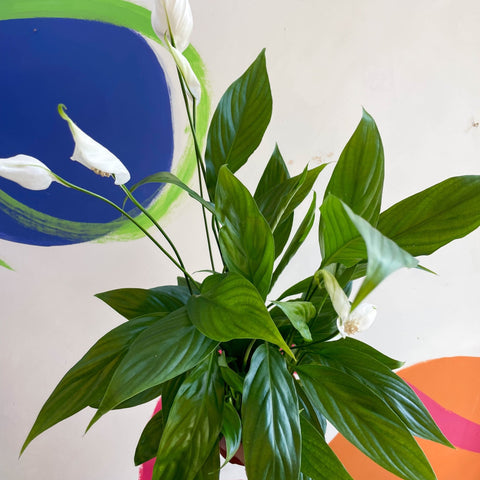
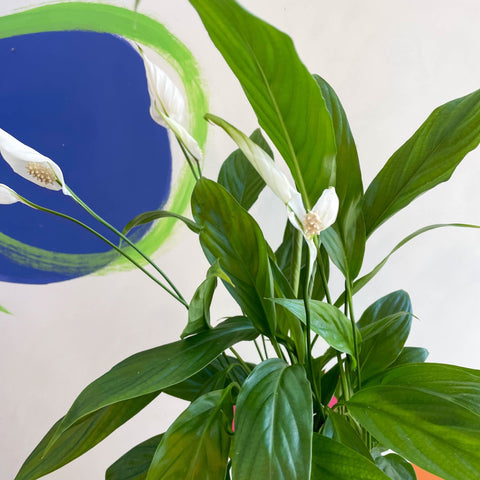
This cultivar's glossy, dark green leaves contrast with the white flowers, and make it a popular choice as a houseplant. Growing up to a metre in height when grown in ideal conditions, you can really make a statement with this cultivar. Peace Lilies are also handy thanks to their tendency to dramatically wilt when thirsty - a good reminder to those of us who are occasionally forgetful that this is a thirsty plant! Make sure you keep it out of direct sun, which will scorch the leaves, and in above-average humidity where possible. Add a touch of class with this gorgeous houseplant and it will reward your care with stunning foliage an gorgeous blooms.
Scientific Name
Spathiphyllum 'Alana' (sword-leaved plant, cultivar: Alana)
This plant has been bred in cultivation to grow well as a houseplant; it may be a hybrid of more than one species in the Spathiphyllum genus.
Common Name
Peace Lily, Alana Peace Lily
Origin
This genus is native to tropical areas in South and Central America, as well as Malesia and the Western Pacific.
Light
Thrives in bright, indirect light but can tolerate lower light conditions. Avoid direct sunlight, which can scorch the leaves.
Water
Make sure at least the top third dries out between waters. if it gets too thirsty, the lily will droop dramatically; this is much easier for it to recover from than being overwatered though, so don't panic, just give it a water! Use tepid water when the plant is blooming as cold water can shock the plant and damage the flowers. Peace Lilies are good candidates for self-watering pots.
Humidity
Peace Lilies like high humidity and will benefit from the introduction of a humidity tray. If its leaves start to go brown, curled and crisp at the edges this is probably a sign that the air is too dry.
Soil
Use a well-draining, moisture retentive soil (something suitable for Calatheas will also work here!). Repot every couple of years in spring as the plant grows. We wouldn't recommend potting directly into a terracotta pot as these can keep the roots a little too cold!
Food
Feed every four waters in spring and summer; reduce to every six in autumn and winter. A fertiliser high in potassium is useful when the plant is flowering to help sustain the blooms.
Temperature
Temperature should ideally be between 15-25°C- make sure it doesn't drop below 10°C in winter.
Pet-safe
No, this plant is toxic to pets and small humans.
Sprouts Top Tips
They may be thirsty plants, but Peace Lilies are likely to react badly to soggy soil, so keep an eye out for overwatering symptoms like foliage going brown or lower leaves going yellow, brown spots on leaves, stunted growth, or wilting. If you spot any of these and your soil is wet to touch, you probably need to water less frequently! Make sure the soil has plenty of time to dry out before you next water it, and check the roots to make sure they are tinged with yellow and not going brown or mushy. Keep an eye on this especially in cooler or shadier spots.