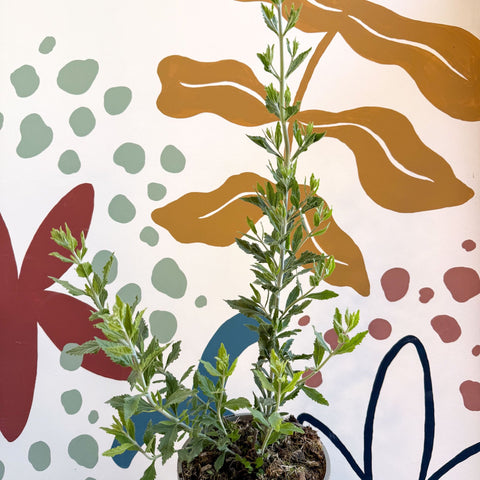
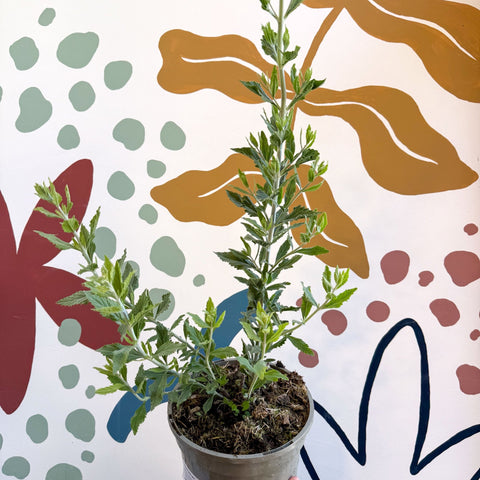
A striking, architectural perennial with upright, silver-grey stems and finely divided aromatic foliage, Perovskia atriplicifolia ‘Blue Spire’ is prized for its tall spires of hazy lavender-blue flowers that bloom for weeks in late summer. Its open, airy structure makes it ideal for adding height, movement, and a touch of silver to sunny borders and gravel gardens.
Perovskia atriplicifolia ‘Blue Spire’, commonly known as Russian Sage, is drought-tolerant and thrives in dry, poor soils, making it a brilliant choice for low-maintenance, Mediterranean-style planting schemes.
Perennial
Woody-based, Flowering, Summer–Autumn Interest
Flowers: July–October
Foliage: Spring–Autumn
Scientific Name
Perovskia atriplicifolia ‘Blue Spire’ (named after V. A. Perovsky, a 19th-century Russian general; atriplicifolia = foliage like Atriplex / orache)
Synonyms
Salvia yangii ‘Blue Spire’ (recent reclassification – Perovskia is now considered part of the Salvia genus, but ‘Perovskia’ is still widely used horticulturally)
Common Name
Russian Sage
Origin
Native to Central Asia – including Afghanistan, Tibet, and western China
Pruning Tips
Cut back hard in early spring to just above the woody base (around 15–20cm). This encourages strong new growth and helps maintain a tidy shape.
Wildlife Value
Excellent nectar source for bees, butterflies, and other pollinators.
Positioning
Full sun is essential – thrives in hot, exposed spots. Best at the back or middle of borders where its tall stems can sway gently in the breeze.
Water
Drought-tolerant once established. Water during the first growing season and then only in prolonged dry periods.
Soil
Well-drained soil is crucial. Prefers poor to moderately fertile soils – avoid heavy clay or overly rich composts which can reduce flowering and cause flopping.
Food
Generally doesn’t need feeding. Too much fertiliser encourages leggy growth. A mulch of gravel or sand around the base improves drainage and supports upright stems.
Pet-safe
Non-toxic and safe for pets.
Sprouts Top Tips
Plant alongside echinops, sedums, and grasses for a naturalistic, pollinator-friendly border that thrives on neglect and sun.