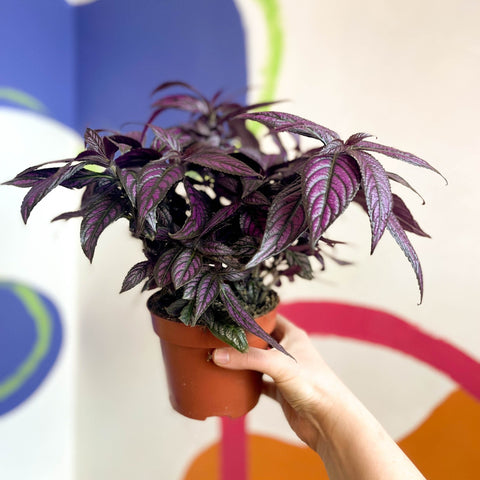
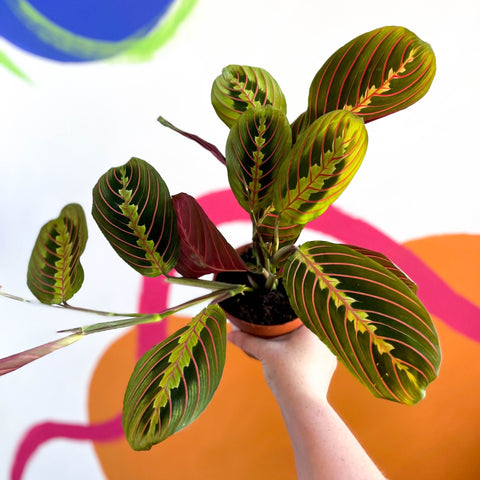
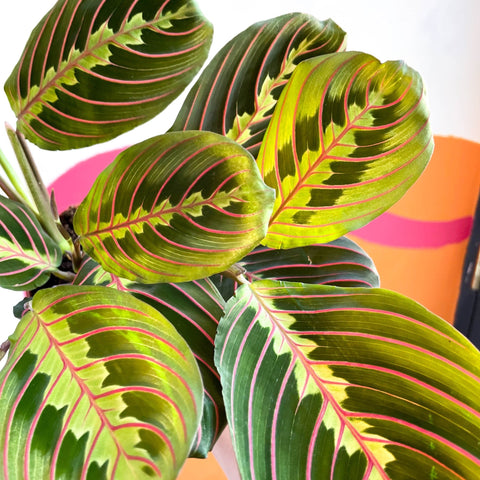
Famed for its shimmering, iridescent foliage, Persian Shield is a true statement houseplant. Its elongated leaves display a striking mix of metallic purple, silver, and deep green, with vivid veining that almost appears hand-painted. Grown indoors, it brings rich colour and drama to bright rooms and works beautifully as a feature plant or grouped with greener foliage for contrast.
Scientific Name
Strobilanthes dyeriana (named in honour of Sir William Turner Thiselton-Dyer, former director of Kew Gardens)
No major reclassifications. The species has remained within the Strobilanthes genus, part of the Acanthaceae family.
Common Name
Persian Shield
Origin
Native to Myanmar (Burma), where it grows in warm, humid forest environments.
Light
Bright, indirect light is ideal. Some gentle morning or late afternoon sun can enhance leaf colour, but strong direct sunlight may scorch the foliage. Low light will cause colours to fade.
Water
Keep the compost lightly moist during the growing season, allowing the top layer of soil to dry slightly between waterings. Reduce watering in autumn and winter, but do not allow the soil to dry out completely.
Humidity
Prefers higher humidity. Thrives in bathrooms or kitchens, or with the help of a pebble tray or regular misting, especially during the heating season.
Soil
Use a rich but free-draining houseplant compost, ideally with added perlite for airflow. Repot annually in spring to refresh the soil and encourage bushy growth.
Food
Feed every 2 waters during the growing season with a balanced liquid houseplant fertiliser. Pause feeding in winter.
Temperature
Ideal temperature range is 18–26°C. Avoid temperatures below 12°C and keep away from cold draughts.
Pet-safe
Toxic if ingested. Keep out of reach of pets and children.
Sprouts Top Tips
Pinch back the growing tips regularly to encourage a fuller, bushier plant and prevent it becoming leggy indoors.
Extras
Persian Shield can be grown outdoors as a seasonal plant in summer, but must be brought back indoors well before temperatures drop.
Did You Know?
The metallic sheen of the leaves is caused by specialised cells that reflect light, helping the plant maximise light capture in shaded forest conditions.