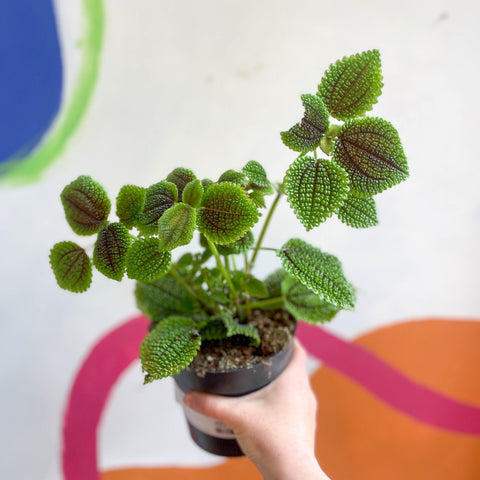
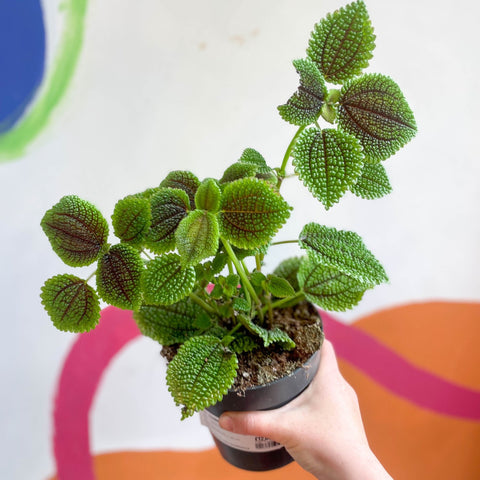
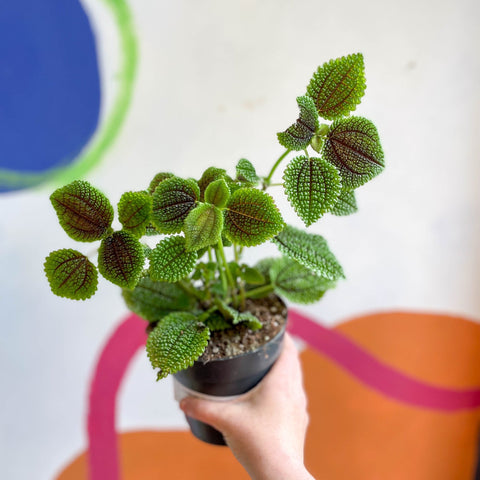
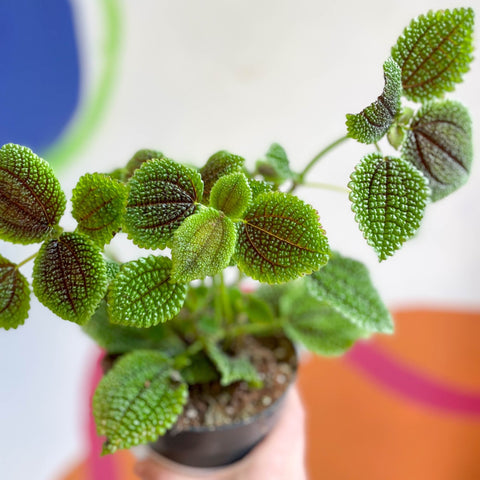
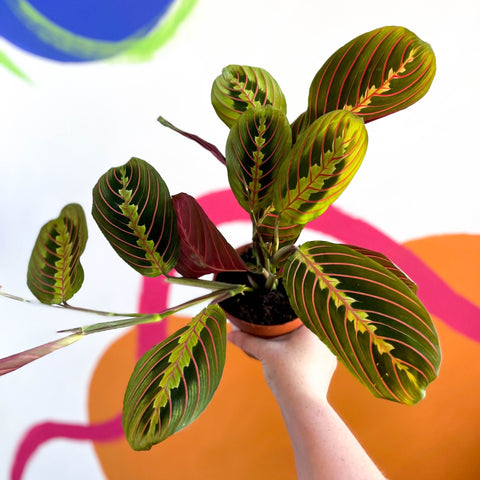
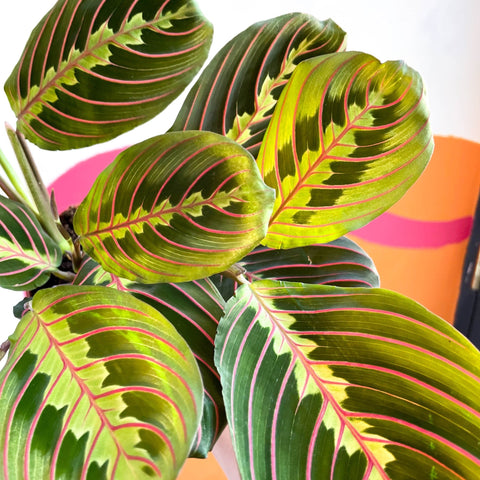
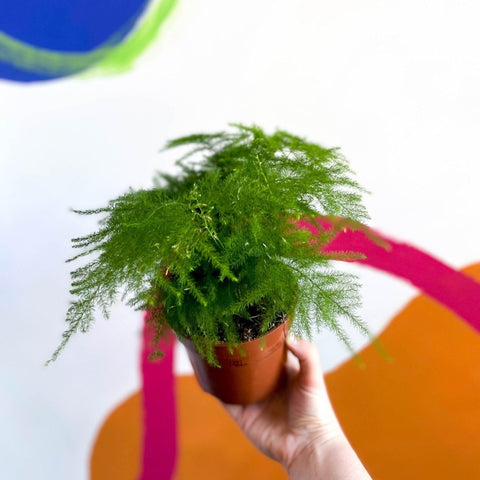
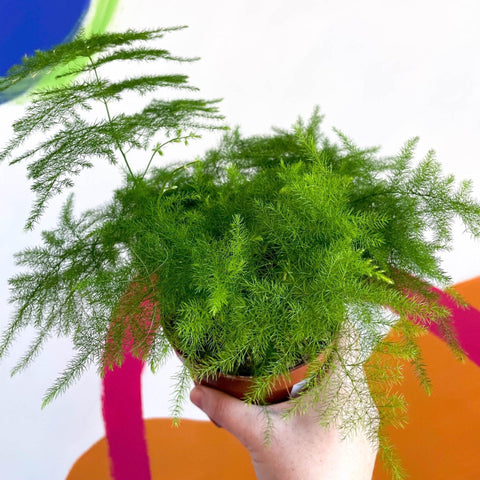
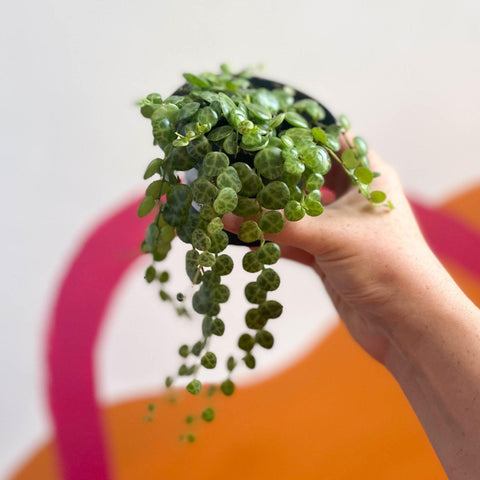
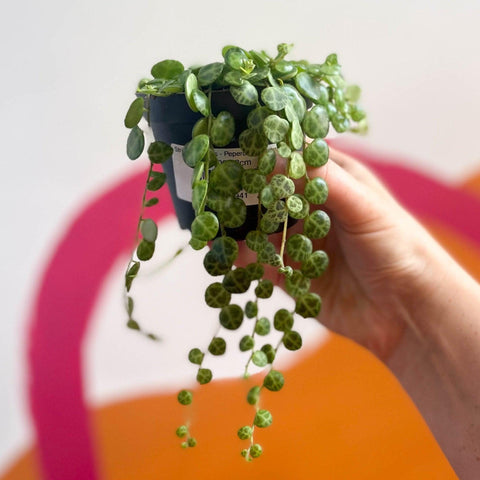
The Friendship Plant's texture is sure to catch the eye straight away. Its bumpy leaves look velvety, and its bright green is contrasted by the maroon shades in the middle of each leaf. Give it a humid spot, with bright light and not too much water, and it will reward you with bright, colourful growth and attention-stealing texture. And why is it called a friendship plant? Because it is easy to propagate and share with your friends! Just divide offshoots at the root and pot into their own space, and you've got a whole new plant to share!
Scientific Name
Pilea mollis 'Moon Valley' (soft plant with leaves like felt caps, variety: Moon Valley)
Common Name
Friendship Plant, Moon Valley Pilea
Origin
Native to Central and South America
Light
Bright, indirect light is best for your Friendship plant, though it can cope with a slightly shadier spot too.
Water
Allow the top third of the soil to dry out between waters; as the plant grows quite low down, its leaves can easily become too soggy and rot if the soil is kept wet! Reduce watering further in winter.
Humidity
This plant likes consistent high levels of humidity; misting or a pebble tray will be very helpful, especially in winter when heaters are operating. If the air is too dry you might notice the edges of the leaves going brown and crispy.
Soil
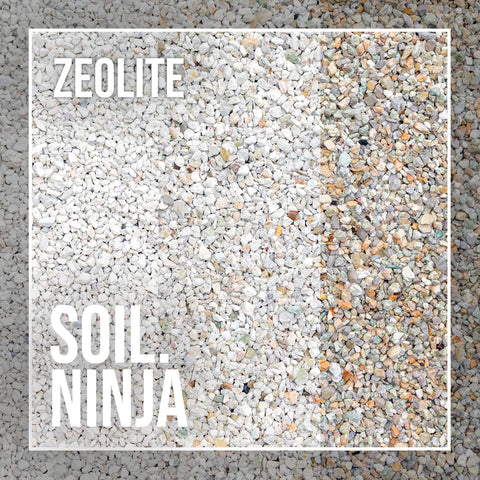
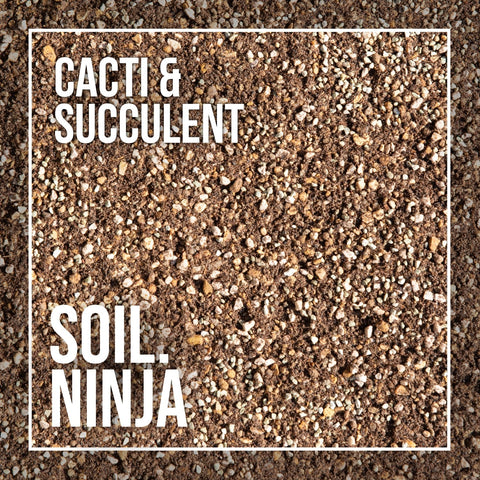
Use a well-draining soil; added perlite and sand will help keep it draining well. Repot once or twice a year as the plant grows.
Food
Feed every four waters in the growing season, reduce to every six in autumn and winter.
Temperature
Average household temperatures of about 18-24°C are fine- make sure it doesn't drop below 12°C in winter.
Pet-safe
Yes, but too much nibbling won't be good for pets, small humans or the plant!
Sprouts Top Tips
The most common issues with the Friendship Plant come down to water: crispy brown edges mean it's not humid enough; crispy dying leaves are often caused by too little water; and the most common is overwatering, which can cause the oldest leaves to rapidly yellow and die.