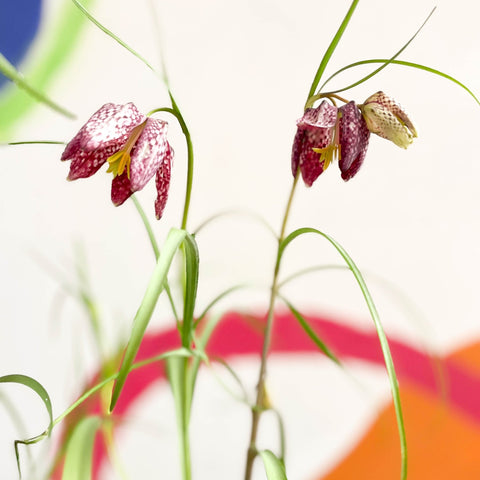
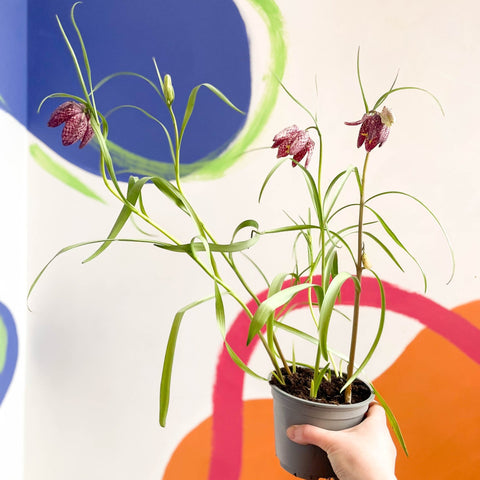
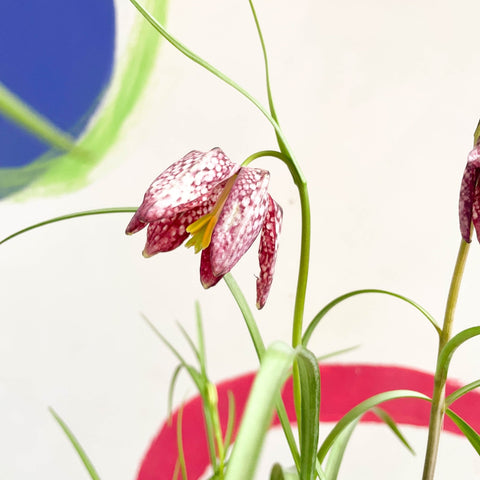
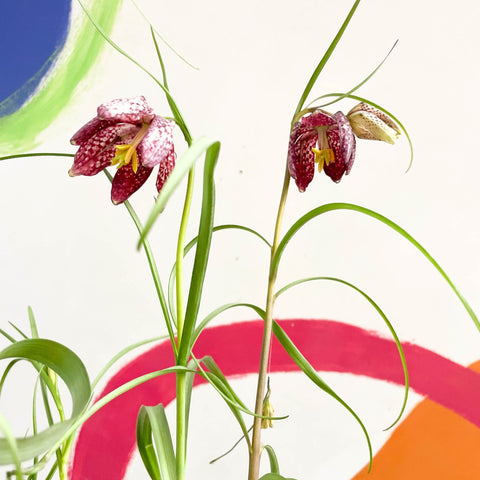
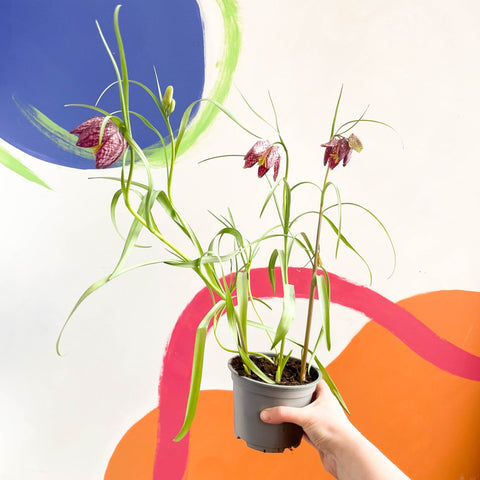
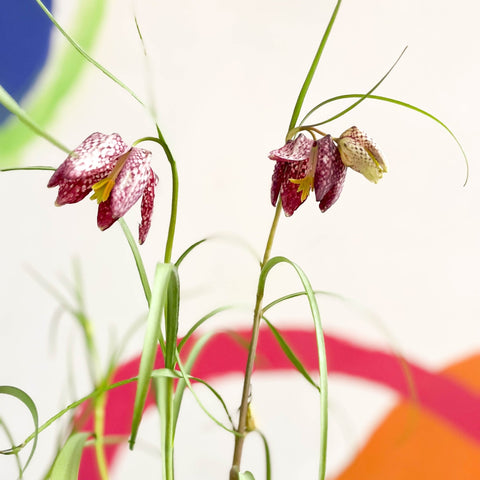
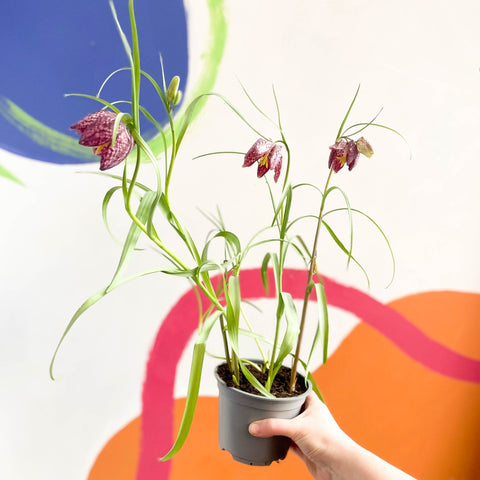
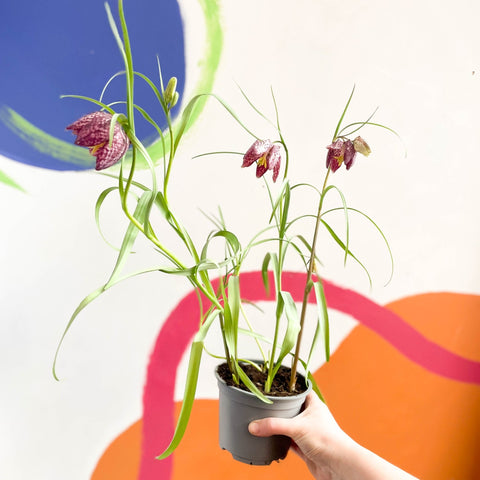
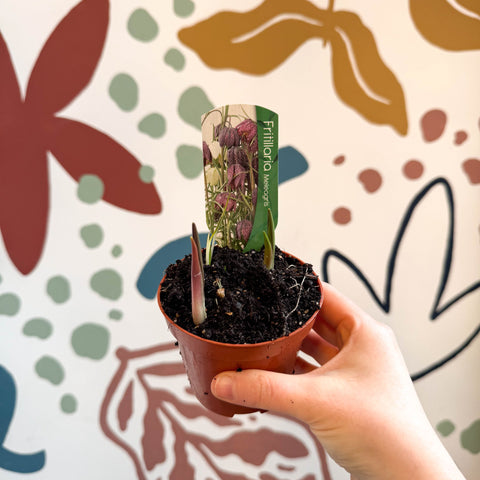
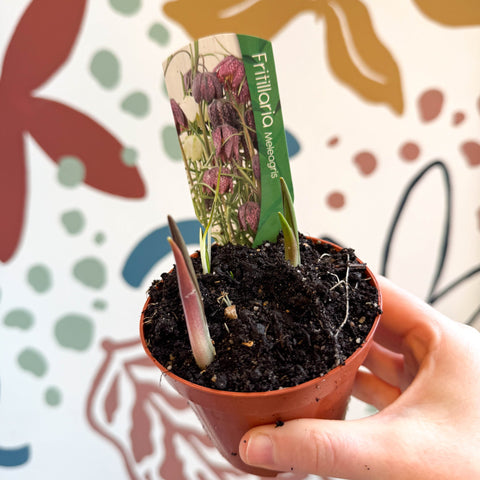
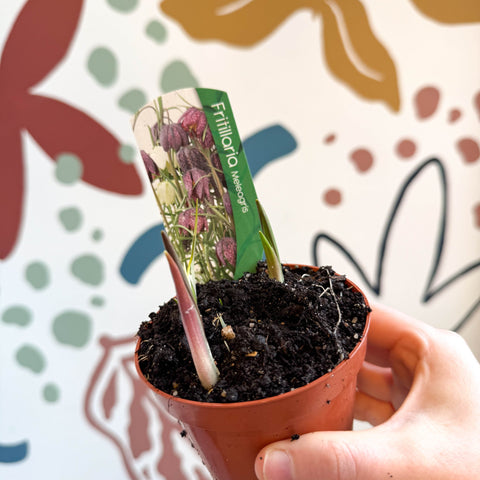
The striking flowers on this bulbous perennial are a gorgeous deep purple - with patterning like snakeskin! Hardy throughout most of the UK, down to -15°C.
Bring a bit of fashion to your garden with these snake-print blooms. Their striking deep maroon-purple colouring is elevated by the subtle and unusual patterning across each petal. If their Latin name is anything to go by, the Romans thought they looked more like a dice-board - so whether you're a fan of Yahtzee or reptiles, there's something for you. Flowers grow from bulbs atop tall stems, curving towards the ground and nodding in the breeze. Give them a bit of sun and you'll get some distinctive, striking spring flowers.
|
Bulbous perennial
|
Flower: columnar upright
|
Flowers in Spring
|
Scientific Name
Fritillaria meleagris (dice-box with spots like a guinea-fowl)
Common Name
Snake's Head Fritillary, Chess Flower, Chequered Lily, Guinea-Hen Flower, Frog-Cup, Chequered Daffodil, Drooping Tulip, Snake Heads, Leper Lily
Origin
Native across most of continental Europe, from France to Belarus, Romania, Poland and Italy, to name a few, as well as Russia. Extinct in Belgium.
Pruning Tips
No pruning required; dying back naturally after flowering is best for these blooms.
Wildlife Value
This Fritillary is known for attracting bees, especially bumblebee queens, with its nectar & pollen-rich flowers.
Positioning
Full sun to partial shade, Fritillaries are happy in spots both exposed and sheltered from wind.
Water
Prefers moist but well-drained soil in spring, and doesn't want to dry too much over summer. Avoid overly dry conditions while in growth, but ensure bulbs do not sit in waterlogged soil over winter.
Soil
Ensure soil is humus-rich, fertile and well-drained; Fritillaries are not fussy on the base type of soil or the pH.
Food
Mulch with compost in autumn, and this should be enough nutrients for these plants.
Pet-safe
No, this plant is toxic for many pets.
Sprouts Top Tips
For a naturalistic look, plant in groups and allow them to naturalise over time. Pairs well with other spring wildflowers. Suitable for containers, borders and wildflower meadows.
Extras
This plant has been given the RHS' prestigious Award of Garden Merit for its stellar all-round performance in the garden.