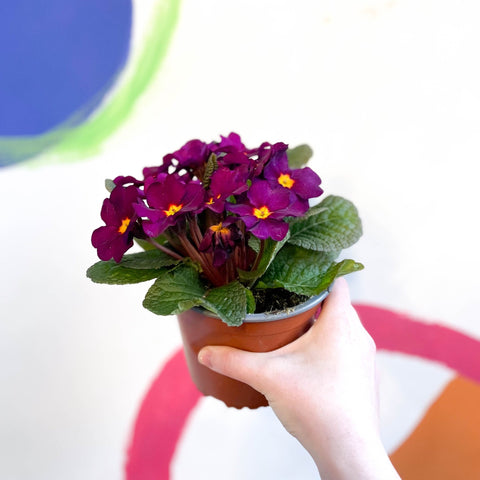
A perennial flower which grows in a variety of colours, these blooms sit on a bed of bright green, evergreen foliage. Hardy throughout the UK down to -20°C.
These bright flowers grow in a rainbow of colours, in bright contrast to their evergreen foliage. Cheerful blooms, they will appreciate a spot with good drainage and a splash of sun, and will reward your garden with a bright, fragrant display in early Spring each year! They are also able to seed and naturalise in your garden, so you can let them reseed year after year. This variety is bred to be more hardy, so it may keep its foliage better in mild winters than other varieties.
Perennial
|
Flower: clump forming habit
|
Flowers March - May, foliage throughout spring and summer.
|
Scientific Name
Primula vulgaris (Common primrose) 'Obsidian'
Common Name
Primrose, Common Primrose, English Primrose
Origin
Native to Eurasia, including the UK
Wildlife Value
Nectar for butterflies; on the RHS' list of plants for pollinators
Positioning
Full sun to partial shade is preferred by the primrose; they will be happy in most positions as long as they aren't totally overshadowed!
Water
Likes fairly moist soil when in bloom, but doesn't like to be soggy or sat in a puddle. Make sure the soil drains well and you shouldn't need to worry about watering extra except in drought conditions!
Soil
Primroses aren't too fussy with the type of soil, as long as it drains well so that the plant isn't in a puddle everytime it rains.
Food
Generally will be fine as long as there are some nutrients in the soil. They will benefit from annual mulching of compost to add this, or from the addition of tomato feed (feed high in potash) when they start to flower.
Pet-safe
No, this plant is toxic to cats, dogs and horses.
Sprouts Top Tips
Gardener's World recommends covering the plants annually with compost, known as 'mulching'. This aids growth and improves the soil around your plants!