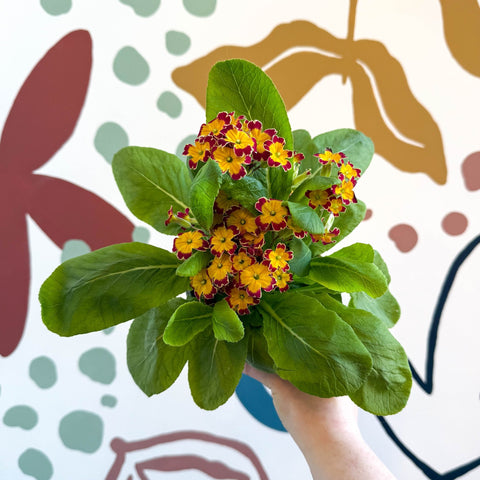
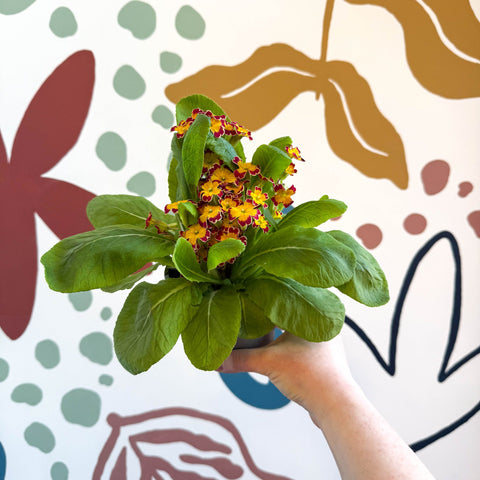
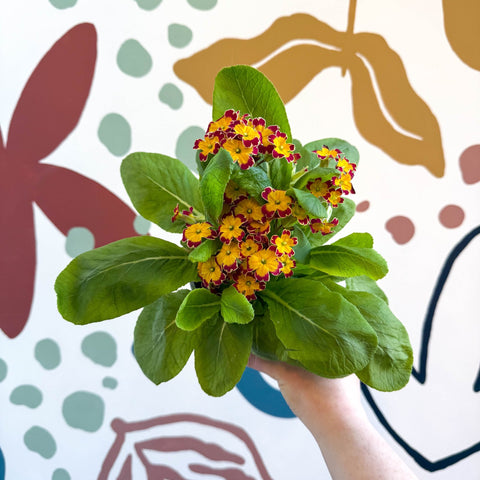
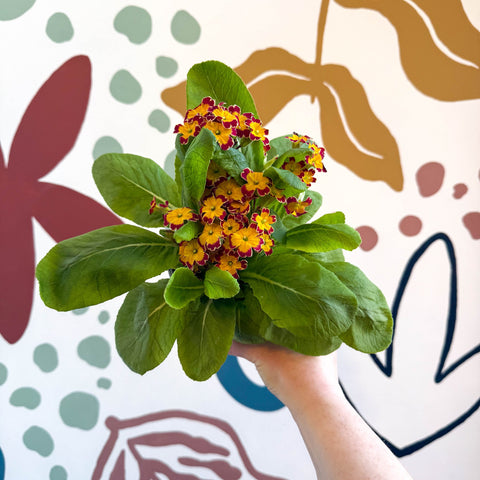
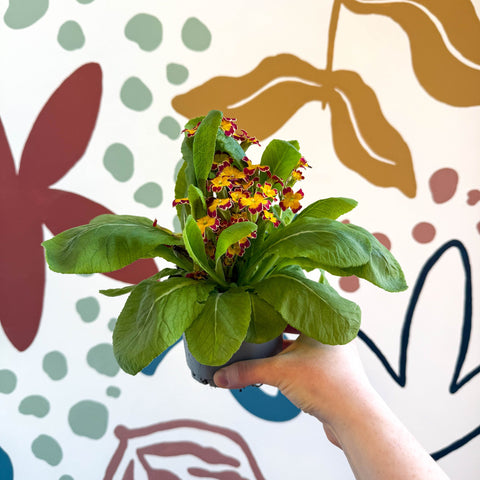
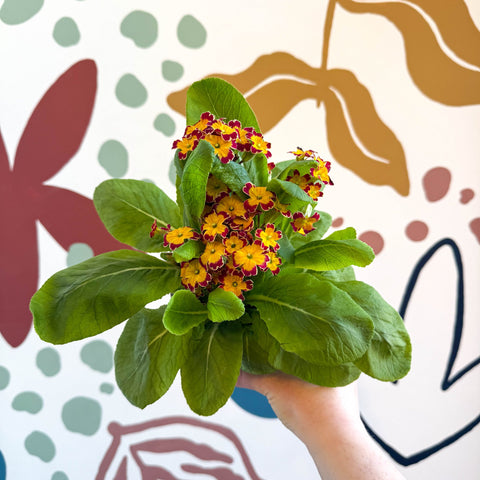
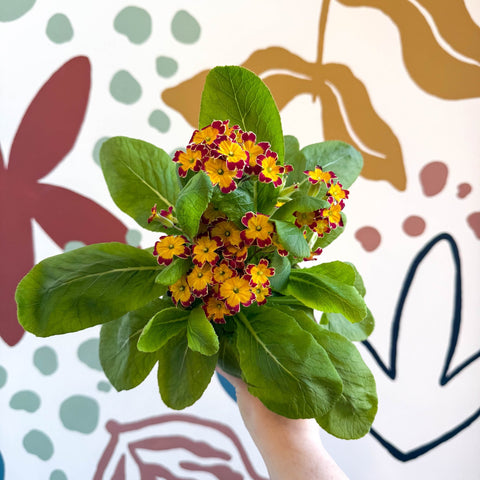
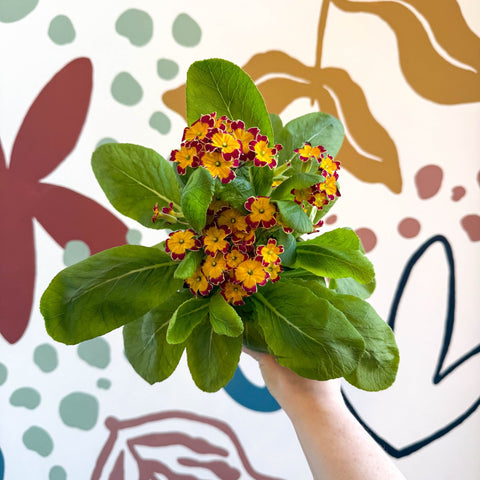
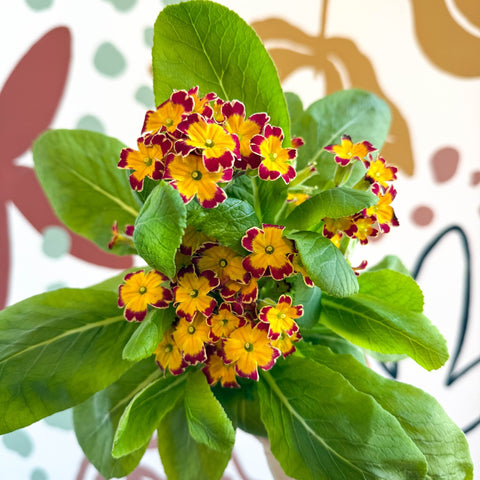
This beautifully detailed perennial produces rich crimson to deep red blooms, each edged with fine golden or pale red lacing and centred with a bright yellow eye. Primula × polyantha ‘Red Laced’ brings classic heritage charm to spring displays, flowering in neat clusters above tidy rosettes of green foliage. Its bold colour and ornate edging make it a perfect choice for both borders and potted displays.
Primula × polyantha ‘Red Laced’, commonly known as the Red-Laced Primrose, is celebrated for its traditional Victorian looks and reliable spring flowering. With its compact habit and velvety, eye-catching blooms, it pairs beautifully with other laced and polyanthus varieties in cottage gardens and formal spring displays.
Perennial
|
Spring-Blooming, Traditional Variety
|
Flowers: April – May
Foliage: Semi-evergreen
|
Scientific Name
Primula × polyantha ‘Red Laced’ (a hybrid of P. vulgaris × P. veris)
Synonyms
Red-Laced Primula, Laced Polyanthus
Common Name
Red-Laced Primrose
Origin
Cultivated variety bred in the long-standing tradition of 18th–19th century ‘laced’ primulas
Pruning Tips
Deadhead faded flowers to encourage further blooms. Remove old or damaged leaves in autumn or early spring to maintain plant health and appearance.
Wildlife Value
An early source of nectar for bees and other spring pollinators.
Positioning
Prefers partial shade and cool, sheltered conditions. Ideal for borders, alpine beds, containers, or planting beneath deciduous shrubs.
Water
Keep soil consistently moist but well-drained. Avoid watering the crown and water at the base to prevent rot.
Soil
Thrives in fertile, humus-rich soil with a neutral to slightly alkaline pH. Improve heavy or dry soil with compost or leaf mould before planting.
Food
Apply a balanced fertiliser in early spring. A light feed after flowering can support healthy foliage into summer.
Pet-safe
Mildly toxic if ingested – best kept out of reach of pets and children.
Sprouts Top Tips
For the best flower display, grow in groups or in individual clay pots, especially in auricula theatres or shaded patio spots where their rich colours and ornate edges can be admired up close. Divide clumps every 2–3 years to keep plants healthy and floriferous.