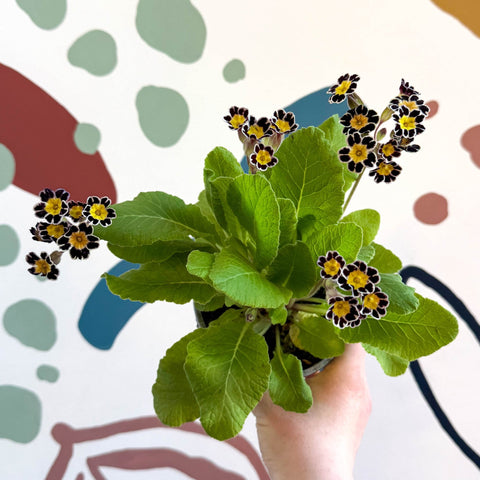
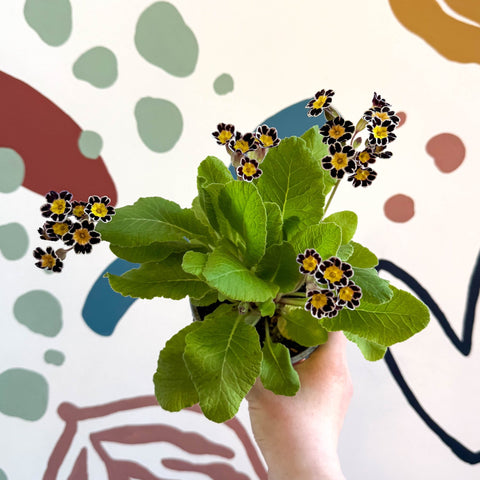
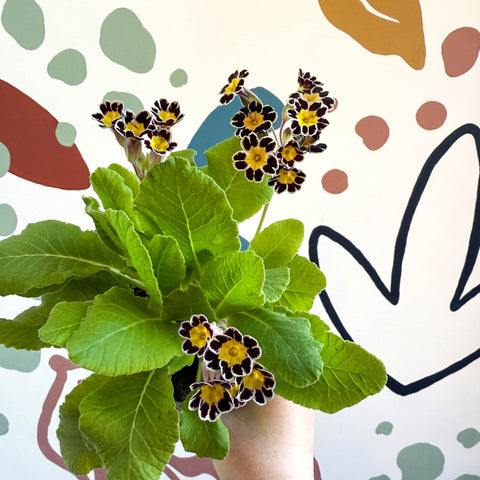
This striking spring-flowering perennial produces deep mahogany to near-black blooms with silvery-white edges and a bright golden eye. Each flower is carried in clusters above neat rosettes of green foliage, creating a high-contrast, heritage-style display that brings elegance and drama to borders, containers, and shaded corners.
Primula × polyantha ‘Silver Laced’, commonly known as the Silver-Laced Primrose, is celebrated for its velvety blooms and antique charm. A standout in auricula theatres and cottage garden displays, it pairs beautifully with other laced and polyanthus types for a rich, traditional spring palette.
Perennial
|
Spring-Blooming, Traditional Variety
|
Flowers: April – May
Foliage: Semi-evergreen
|
Scientific Name
Primula × polyantha ‘Silver Laced’ (a hybrid of P. vulgaris × P. veris)
Synonyms
Silver-Laced Primula, Silver Edged Primrose
Common Name
Silver-Laced Primrose
Origin
Cultivated variety developed in the tradition of 18th–19th century ‘laced’ primulas, bred for their distinctive edging and flower form
Pruning Tips
Deadhead regularly to prolong blooming. Remove old or damaged leaves in autumn or early spring to keep the rosette healthy and tidy.
Wildlife Value
Provides valuable early nectar for bees and other pollinators.
Positioning
Thrives in partial shade with cool conditions. Ideal for borders, alpine troughs, containers, and display in auricula theatres.
Water
Keep the soil consistently moist but well-drained. Avoid overhead watering to protect the flower display and prevent crown rot.
Soil
Prefers humus-rich, moisture-retentive soil with a neutral to slightly alkaline pH. Improve soil with compost or well-rotted organic matter before planting.
Food
Feed with a balanced fertiliser in early spring and again after flowering to support healthy foliage and root growth.
Pet-safe
Mildly toxic if ingested – best kept out of reach of pets and children.
Sprouts Top Tips
Grow in individual terracotta pots or in small groups at the front of a shady border to fully appreciate the ornate flower markings. Divide clumps every 2–3 years to maintain vigour and avoid overcrowding.