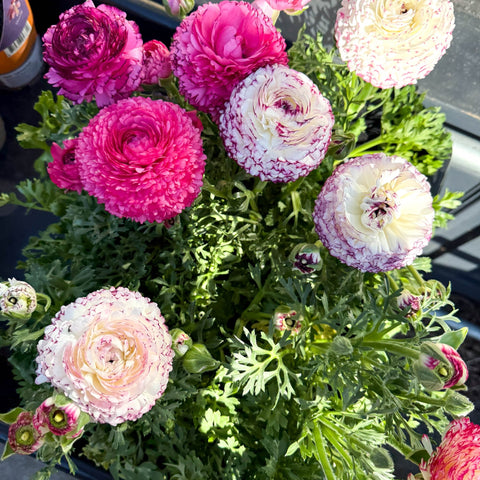
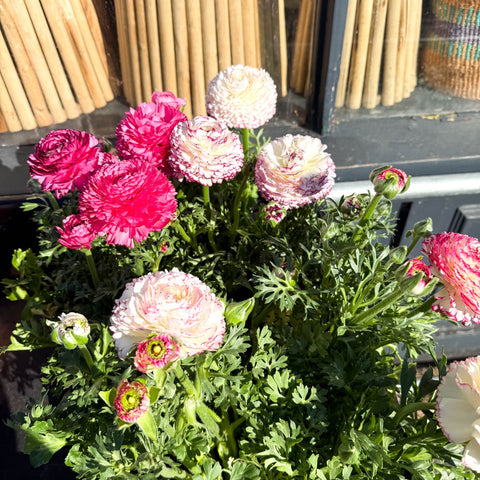
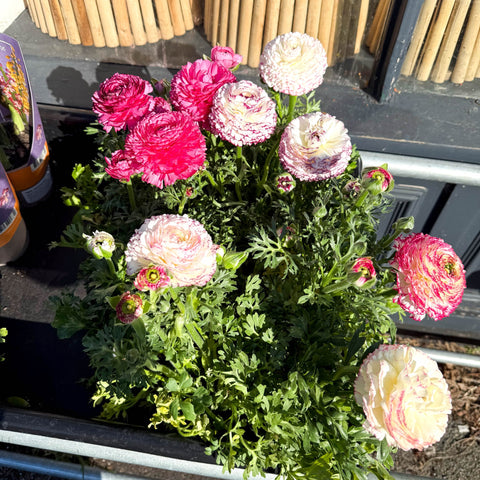
Brimming with petals and double colours, these Persian Buttercups add brilliant spring colour to your garden. Hardy through most of the UK down to -10°C.
Each beautiful flower on these Persian Buttercups is two-toned, with mixes of tones of pink, purple and white that draw the eye and look fabulous in any garden. Bursting with petals and overflowing with colour, these rose-like blooms bring summer cheer to your garden. Contrasting with mid-green forked leaves, the blooms really stand out, looking gorgeous and lush for the season. They can be difficult to re-flower as they can suffer in cold winters, so are often grown as annuals. Be sure to make the most of them this summer, and enjoy your Persian buttercup!
|
Perennial, often grown as annual in the UK
|
Flower with bushy foliage growth
|
Flowers and foliage in late spring into summer. |
Scientific Name
Ranunculus asiaticus 'Sprinkles Bicolor' (little frog plant, from Asia, cultivar: sprinkles two-colour)
Common Name
Persian Buttercup, Persian Crowfoot, Bedding Ranunculus
Origin
As its name suggests, this plant is native to the Near East, originating in Greece and the Aegean, Cyprus, Egypt, Iran, Iraq, Lebanon, Syria, Palestine, Libya and Turkey.
Pruning Tips
Your Ranunculus won't need pruning - just deadhead when flowers are spent to keep tidy and prolong blooms.
Wildlife Value
May occasionally be visited by bees, but isn't particularly attractive to pollinators here in the UK.
Positioning
Shelter from cold winds and make sure it gets lots of sun.
Water
Water in dry weather whilst it's growing; it will benefit from a dry dormancy period in summer so don't worry about watering once it's done blooming.
Soil
Sandy or loamy soils will keep your Ranunculus happiest; make sure they drain well.
Food
When they start growing in spring, a feed will give them a boost. This is more important with plants growing in borders or in containers; those by ponds or in meadows won't need the feed.
Pet-safe
No - like many members of the buttercup family, this plant is toxic to pets.
Sprouts Top Tips
For the best display, plant tubers in groups and mix with other spring bulbs like tulips and anemones. In colder regions, lift and store tubers after the foliage has died back, then replant the following spring.