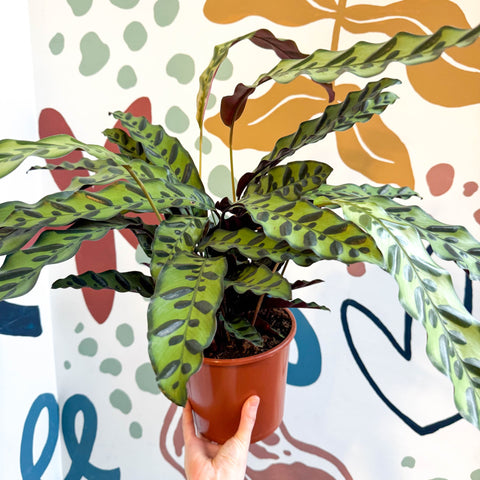
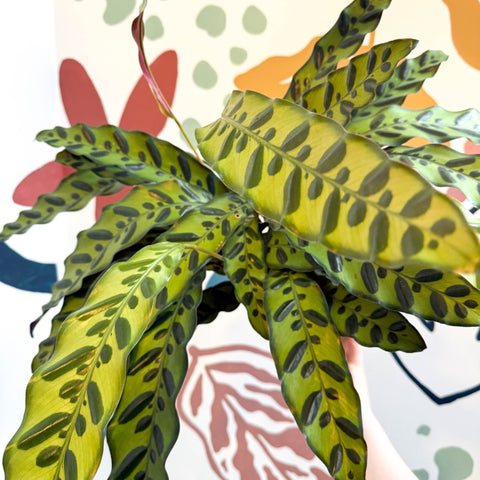
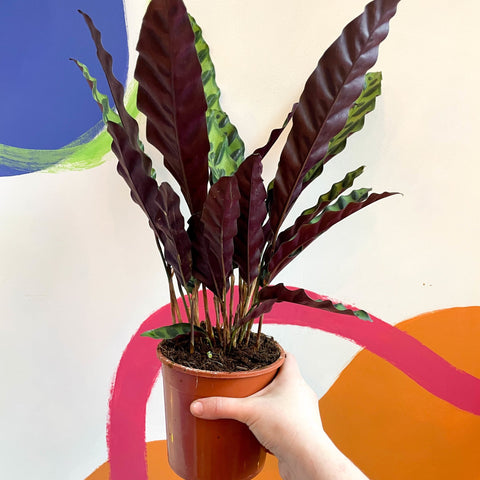
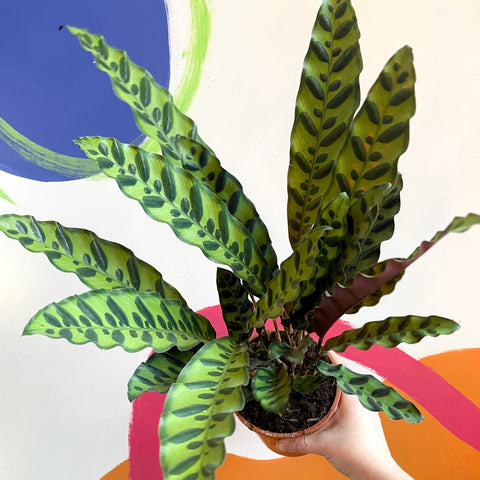
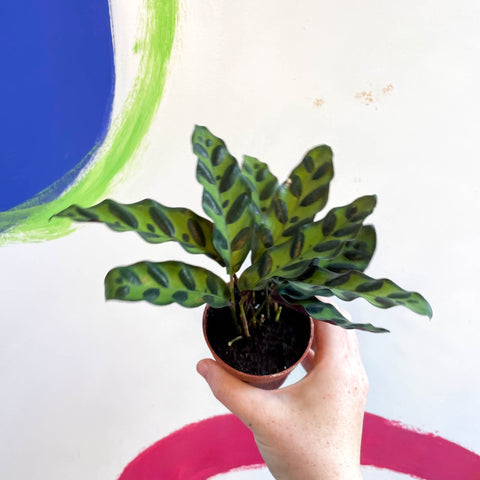
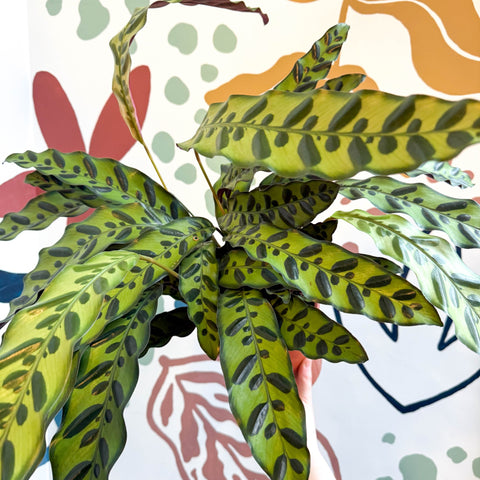
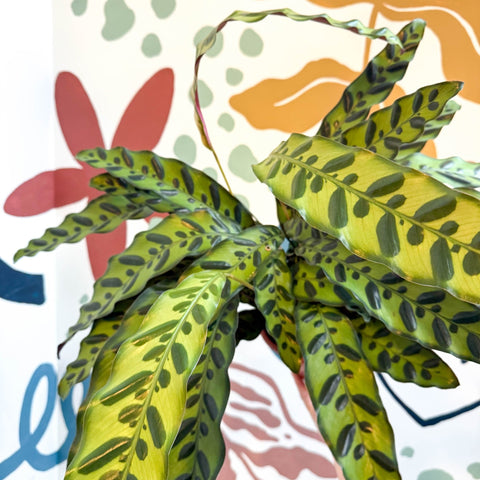
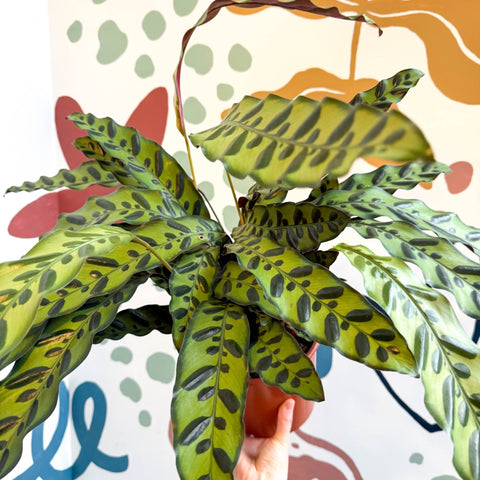
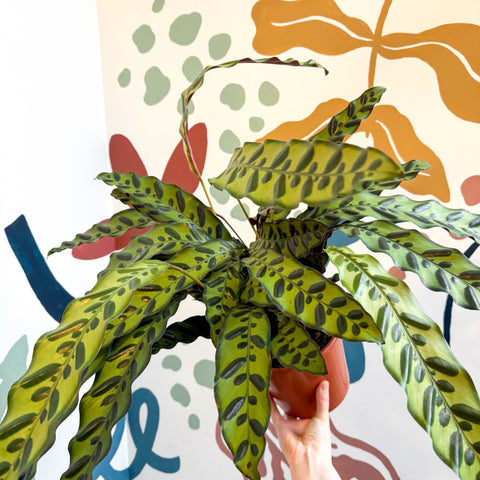
This striking foliage plant easily draws attention thanks to the bold patterns on its long, narrow leaves. Each mid-green leaf is bordered by deep forest green and patterned with regular deep green spots which resemble the stripes you might find on a snake. The undersides of the leaves are a deep purple which not only adds to the aesthetic value of the plant but also means that it can grow well in shadier spots - this dark colour helps it absorb as much light as it possibly can. As a type of prayer plant, your Calathea will raise and lower its leaves with the daylight, a process called nyctinasty, so keep an eye out for this clever adaptation! Make sure this plant gets high enough humidity and not too much light and it will reward you with plenty of stunning foliage.
Scientific Name
Calathea lancifolia (lance-leaved basket plant)
Synonyms: Goeppertia lancifolia (current classification), Goeppertia latifolia, Thalia latifolia, Alpinia latifolia, Calathea insignis
This plant has recently changed Genus, so the scientific name is now technically Goeppertia lancifolia, though Calathea is still most commonly used
Common Name
Rattlesnake Plant, Rattlesnake Calathea
Origin
Native to South American rainforests, this species is found in Colombia, Ecuador, Panama, Venezuela and Trinidad-Tobago
Light
This plant is tolerant of shade, but will do best in bright but indirect light. Think bright enough to read by without being in the sun. If the leaves move overnight, this is a good indication that it's getting enough light.
Water
Water when the top of the soil starts to feel dry. This thirsty plant likes its soil to be consistently moist, but do make sure it's not sat in a puddle as this can still rot the roots.
Humidity
High humidity is key for this plant, ideally around 60-80% humidity. You can keep it in a group of plants, or pop it in a humidity tray to increase local humidity around the plant. It will prefer to be away from operating heaters which would dry it out, and can do well in a bright bathroom where humidity tends to be higher.
Soil
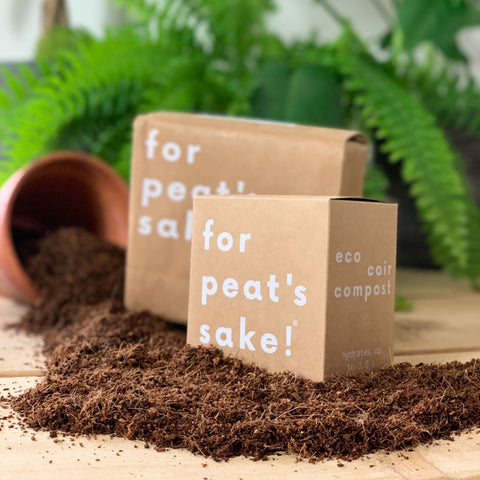
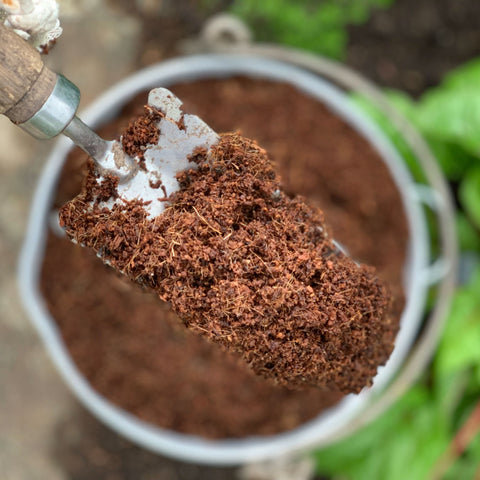
Use a moisture-retentive but well-draining soil mix. A mix designed for Calatheas like this one, or one containing plenty of coir and perlite, will work well here. Repot every two years in spring as the plant grows.
Food
Feed every four waters in spring and summer while the plant is growing the most; reduce to every six over winter when growth slows.
Temperature
Ideal temperature is around 20-26°C; make sure it does not get colder than 12°C in winter.
Pet-safe
Yes, Calatheas are non-toxic. Too much nibbling won't be great for the plant or the pet, though.
Sprouts Top Tips
Calatheas can be fussy, so make sure you choose your location well to keep it in above-average humidity. To keep leaves looking their best, wipe them gently with a damp cloth to remove dust and improve photosynthesis. Avoid placing near heating vents or air conditioners, as fluctuating temperatures can stress the plant and dry the air.
Extras
Small swollen nodules will grow along Calathea roots- this is healthy and they are used to store water and nutrients, so don't cut them off when you're repotting!
Did You Know?
The name 'calathea', from the Greek καλαθος ('basket'), comes from the use of the plant's waxy leaves to make waterproof baskets and transport fish in South America.