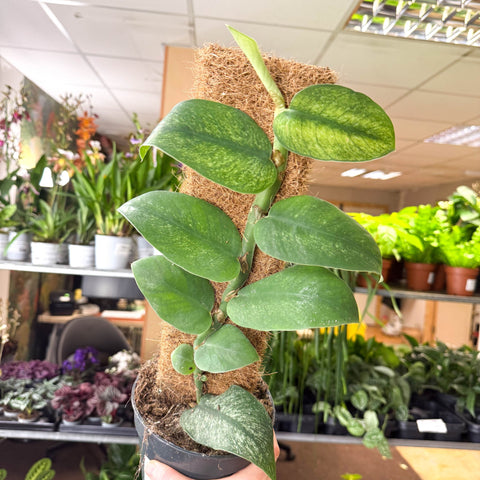
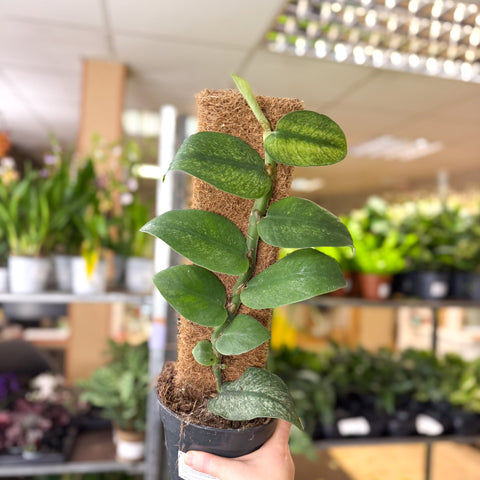
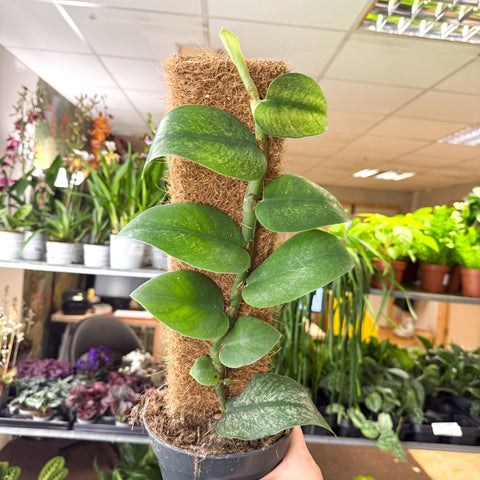
This striking variegated climber is known for its flattened, heart-shaped leaves that naturally press themselves against surfaces as it grows. The variegation appears as soft marbling, splashes, or sectors of creamy white to pale yellow against fresh green foliage, making each leaf completely unique. When given support, this plant creates a beautiful living wall effect, perfect for adding texture and interest to shelves, walls, or moss poles.
Scientific Name
Rhaphidophora hongkongensis ‘Variegata’ (needle-bearing, Hong Kong Rhaphidophora)
Part of the Rhaphidophora genus within the Araceae family. Often confused with Rhaphidophora cryptantha, another shingling species, but R. hongkongensis has larger, more elongated leaves and a more vigorous growth habit.
Common Name
Shingle Plant, Variegated Shingle Plant
Origin
Native to Southeast Asia, including southern China, where it grows as a climbing aroid in warm, humid forests.
Light
Bright, indirect light is ideal. Variegated forms need good light to maintain their pattern, but direct sun can scorch the paler areas of the leaves.
Water
Allow the top few centimetres of soil to dry out between waterings. Water less frequently in winter when growth slows. Avoid leaving the plant sitting in water.
Humidity
Prefers moderate to high humidity. Thrives in kitchens, bathrooms, or near a pebble tray, though it will tolerate average household humidity.
Soil
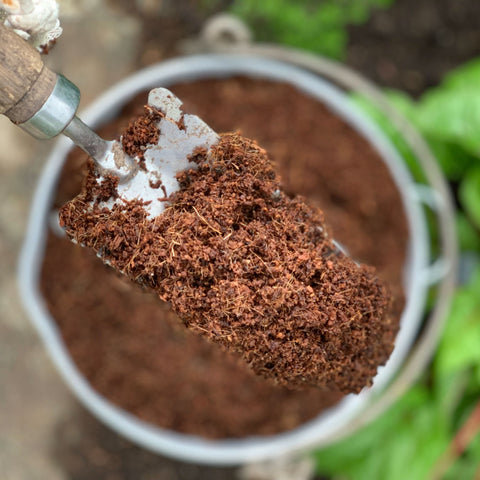
Use a well-draining aroid mix with plenty of airflow, such as compost combined with bark, perlite, and a little coco coir. Repot every 1–2 years as needed.
Food
Feed every 2–3 waters during the growing season with a balanced houseplant fertiliser. Reduce feeding significantly in autumn and winter.
Temperature
Ideal temperature range is 18–26°C. Avoid cold draughts and temperatures below 12°C.
Pet-safe
Toxic if ingested. Keep out of reach of pets and children.
Sprouts Top Tips
Provide a flat support such as a moss pole, wooden board, or wall surface to encourage the leaves to “shingle” properly – without support, growth will be looser and less dramatic.
Extras
This plant will produce noticeably larger leaves as it matures and climbs, especially when humidity and light levels are consistent.
Did You Know?
Shingling plants grow this way to maximise light capture on tree trunks in dense forests, pressing their leaves flat against surfaces rather than trailing freely.