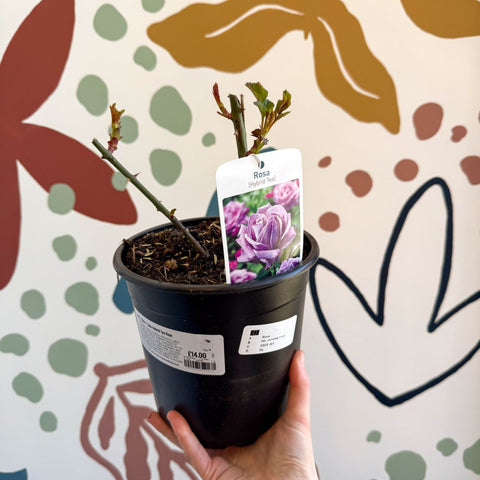
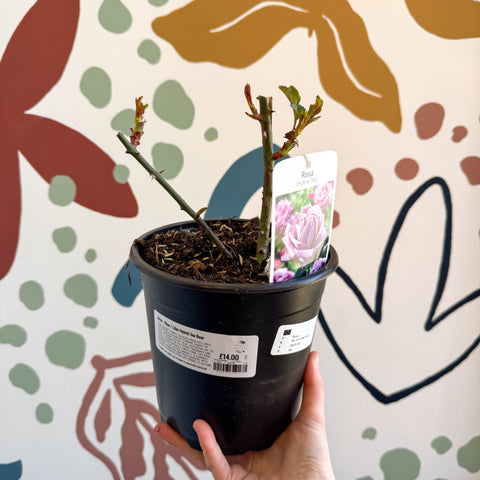
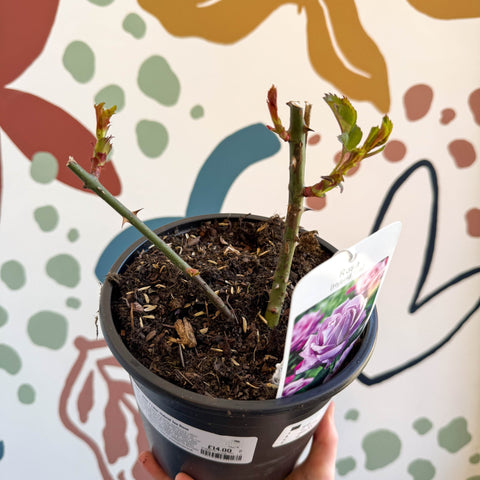
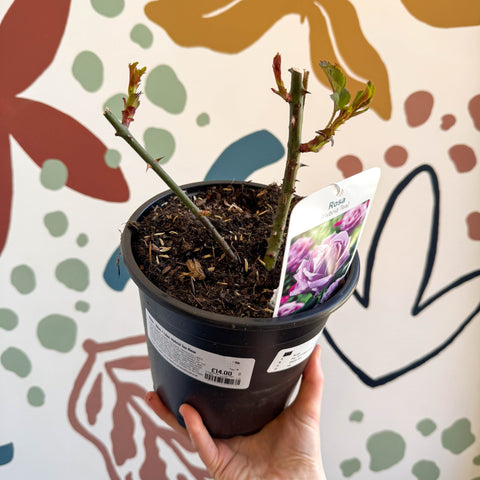
The stunning lilac blooms on this hybrid rose are a beautiful addition to your summer garden. Hardy throughout the UK down to -20°C.
These hybrid roses have been bred to produce masses of double flowers, once they've got established and grown a few more stems. This cultivar grows each bloom on its own stem, and grows in a in upright, vase-like shape. The unusual lilac colour of this rose will add extra colour and interest to your garden throughout the summer; look after your rose and you can enjoy an abundance of flowers for years to come. The shape and growth habit of these roses makes them ideal for arranging as cut flowers, so you can enjoy that colour in your garden or home.
|
Deciduous perennial
|
Flower, bushy growth habit
|
Summer & autumn flowers, usually in three flushes; foliage spring to autumn.
|
Scientific Name
Rosa x hybrida (hybrid rose)
Common Name
Hybrid Tea Rose, Blue Moon Rose, Lilac Rose, Purple Rose
Origin
This hybrid rose was bred in cultivation; you'll find species roses native to most countries in the northern hemisphere.
Pruning Tips
Prune in late winter as your rose is just starting to grow again (this may be mid-February in the south, but wait until March in northern and colder areas). A reasonably hard prune will help these grow more vigorously - see the RHS' page here for more detail.
Wildlife Value
These roses are gorgeous due to the density of their petals, but it does make their pollen less accessible to insects and pollinators, They will be attractive to pollinators but may not be ideal for providing nectar and pollen.
Positioning
Plant in full sun; your rose will be fine in both sheltered and exposed positions.
Water
Water your rose in very dry weather; it won't like soggy soil, so make sure not to overdo it and don't plant it anywhere too boggy.
Soil
Your Tea Rose won't be fussy about the type of soil as long as it drains well and is rich in humus.
Food
Ensure soil is fertile; adding a yearly mulch will help keep it fed and happy.
Pet-safe
Yes; this plant is not toxic, however do be aware that it has thorns which can be painful for curious fingers and paws.
Sprouts Top Tips
To get plenty of blooms, make sure your roses are well-fed. An annual mulch is good, and an extra feed in spring and in summer will help too. You can look for specific rose fertilisers if you want to go very specialist.