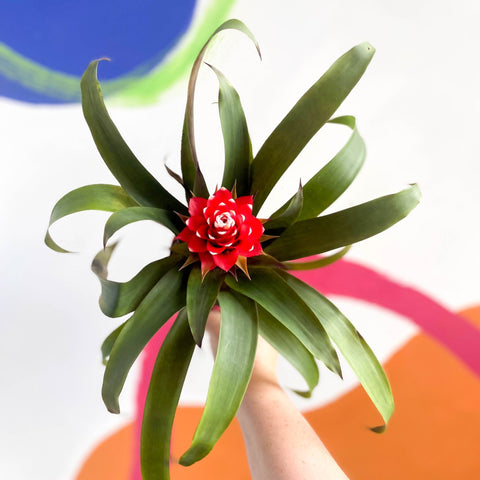
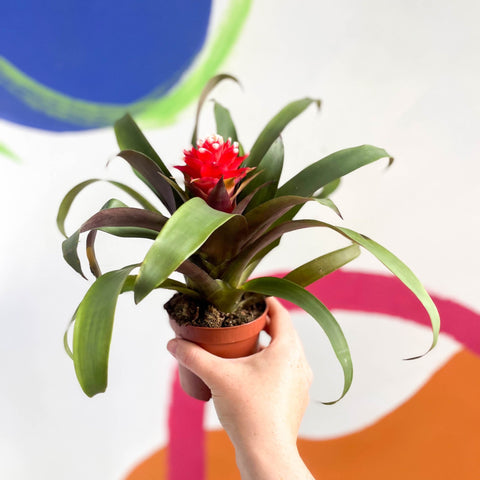
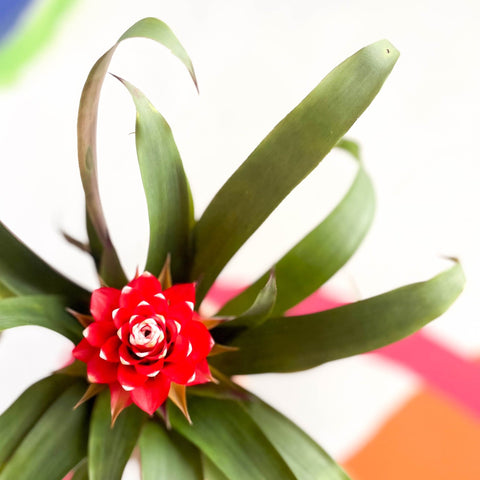
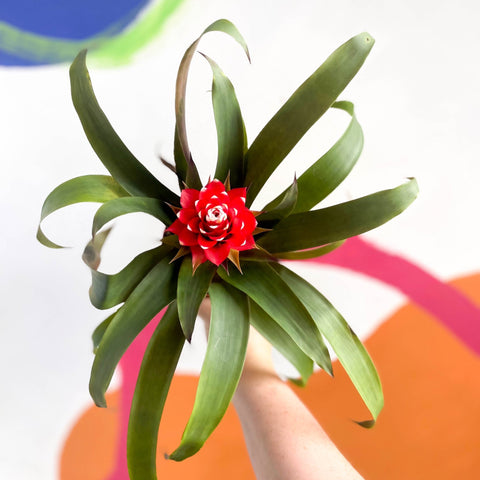
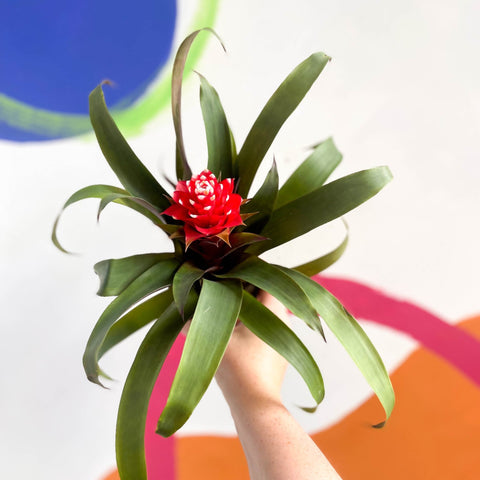
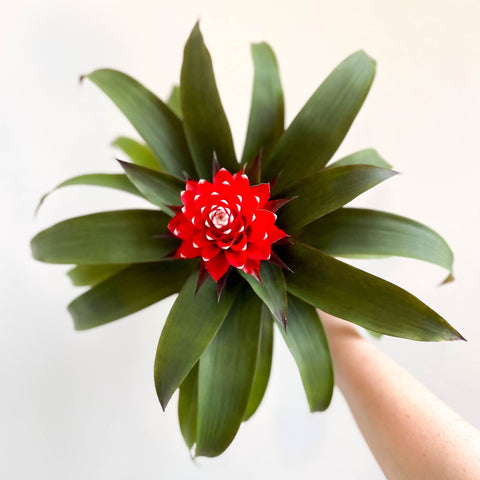
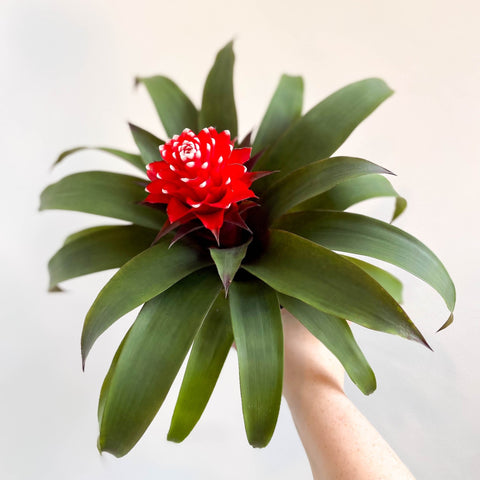
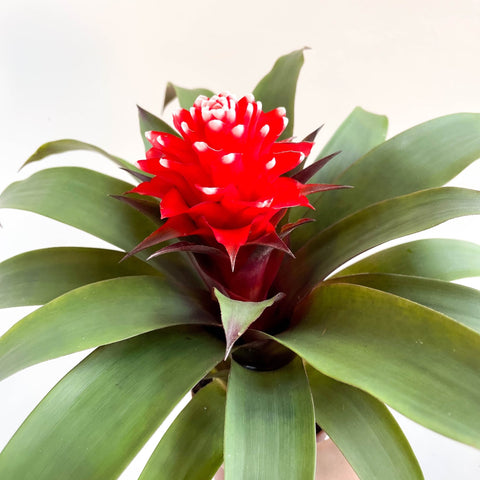
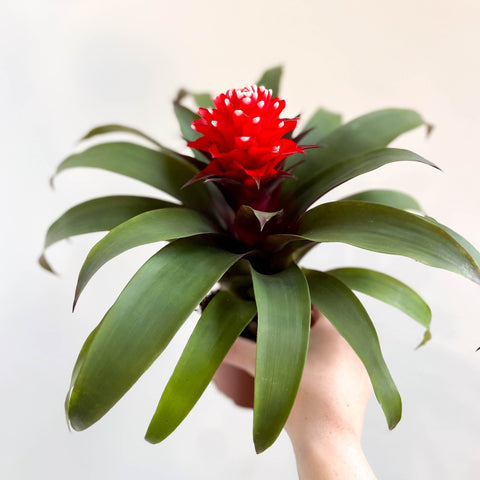
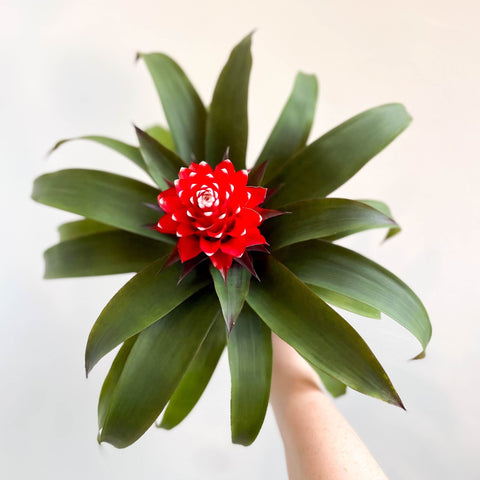
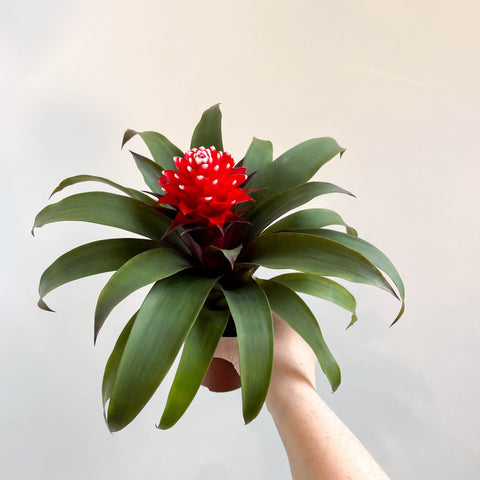
This Bromeliad's central flower spike is stunning as well as distinctive in bright red with white tips to each frond. The red colour is that of the 'bract', a specialised kind of leaf, out of which this plant's flowers bloom. The glossy, mid-green foliage erupts from the centre in a bright fountain of broad, tongue-like leaves. In the centre of this foliage is a 'goblet', which has adapted to catch rainwater and keep it as a reserve for the plant - which also helps it sustain its own high humidity levels. So when caring for your Guzmania as a houseplant, it's on you to keep this bit topped up! The bract will hang around for several months before dying back, and this signals the end of the plant's life cycle - but don't worry, your Bromeliad should produce pups from its base, which can be propagated to make their own new plants. We like to think of the life cycle of plants like this as like a phoenix: the main plant dies back to let new baby plants grow in its place.
Scientific Name
Guzmania lingulata 'Priscilla' (Guzman's broad-tongued plant, cultivar: Priscilla)
Common Name
Scarlet Star, Red Bromeliad, Droophead Tufted Bromeliad
Origin
Native to tropical forests in Mexico and South America.
Light
Bright, indirect light is best - i.e., out of direct sun but light enough that you can read a paper in the daytime without putting the lights on. It can adapt to lower light if you're okay with slower growth, but too much sun can cause it to look washed out and grow sickly.
Water
Let the top third of the soil dry between waters; remember to water less in winter. Keep the 'goblet' in the centre of the plant topped up. If you notice the bract or leaves going brown and crispy, your plant may need more water; if it's going yellow and squishy, it may be getting too much water.
Humidity
This plant likes high humidity. Make sure you keep it away from operating radiators which will dry it out; keeping the 'goblet' in the crown of the plant topped up with water should then keep the humidity around the plant high enough. If you still notice the plant showing signs of low humidity, with crispy brown edges to the foliage, introducing a humidity tray should help.
Soil
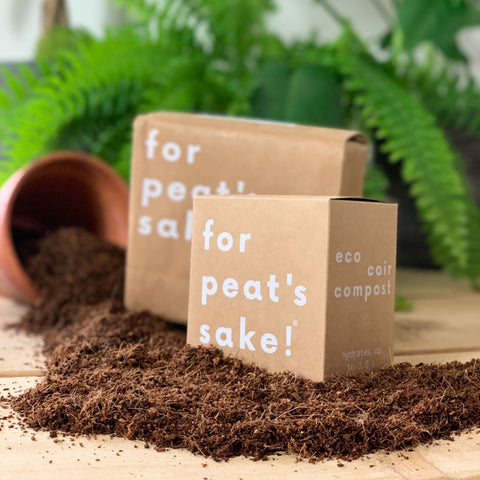
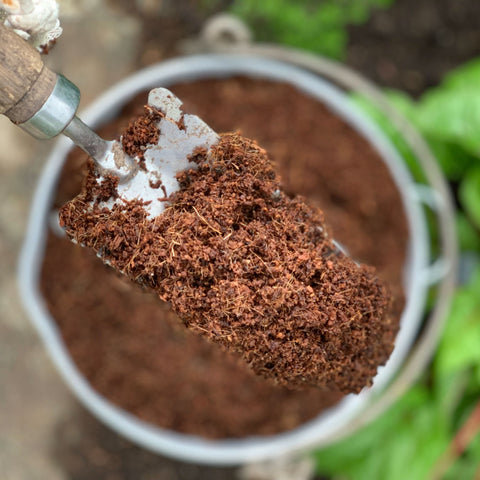
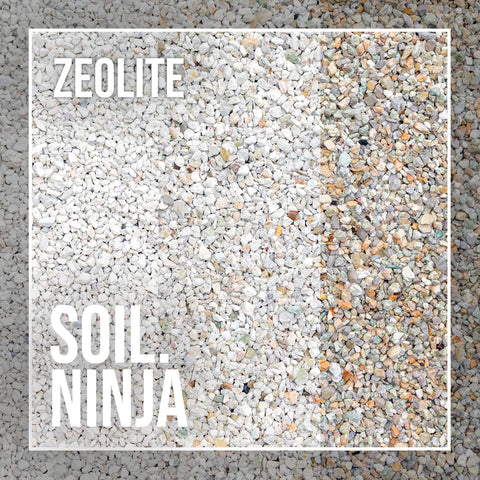
This plant is an epiphyte, so choose a chunky soil mix that will let its roots get some air; elements like bark and zeolite will help here, combined with some moisture-retentive elements like coir and perlite. A mix designed for epiphytes like Anthuriums or Orchids will work well here. Repotting isn't necessary, but you can do it every few years as the plant grows, and pot out pups once they are a third to half the size of the parent plant.
Food
Feed every three waters in the growing season, reduce to every four in autumn and winter.
Temperature
Ideal temperature is 15-30°C; make sure it does not get colder than 12°C in winter.
Pet-safe
Yes, but too much nibbling won't be good for pets, small humans or the plant!
Sprouts Top Tips
Our main tip to keep this plant happy is making sure that central cache in the crown of the plant always has some water in it. We would also recommend care when you move the plant to avoid getting the water in the crown of the plant everywhere... from experience, it can be messy to clean up after! When this is kept topped up, it means you can leave the soil for a while between waters, which helps avoid root rot - so if in doubt, put water in the centre of the plant but don't keep the soil super soggy.