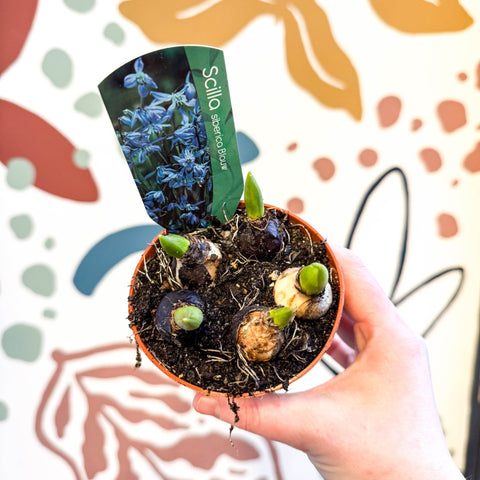
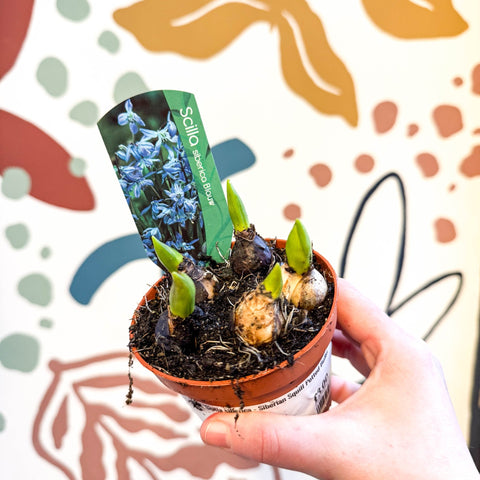
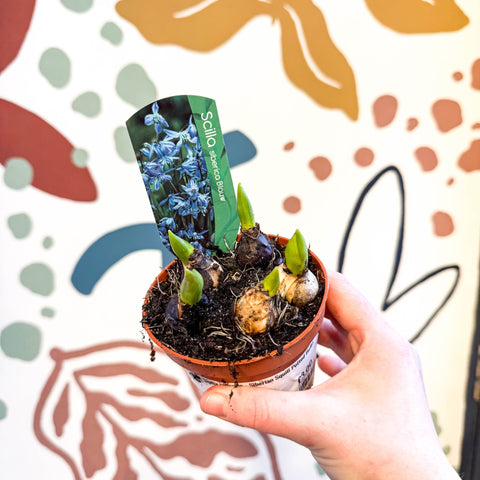
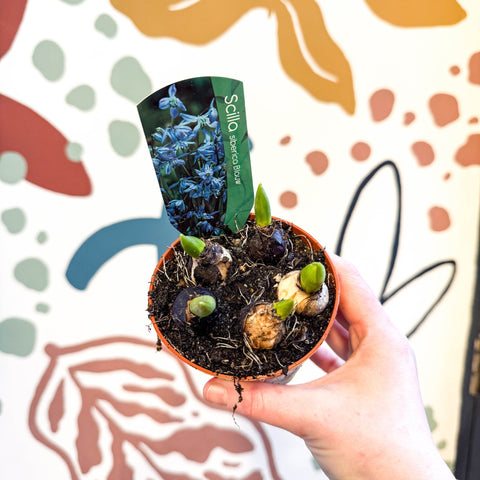
This early-blooming perennial produces delicate, star-shaped blue flowers in spring, creating a striking contrast against its green foliage. Hardy down to -20°C, Scilla siberica is perfect for naturalising in lawns, woodland gardens, or rockeries. Its compact size and vibrant colour make it ideal for adding charm to the garden in late winter or early spring.
Scilla siberica, also known as Siberian Squill, is a small, early-blooming perennial that produces clusters of star-shaped, intense blue flowers on slender stems. These flowers appear in early spring, often while there’s still a chill in the air, making them one of the first signs of the season’s change. This plant thrives in well-drained soil and partial to full sunlight, and it’s great for planting in naturalised areas, rockeries, or under shrubs.
Perennial
|
Bulbous, Compact, Early Spring Bloomer
|
Flowers: Early spring
Foliage: Spring
|
Scientific Name
Scilla siberica can be loosely translated to “the Scilla from Siberia,” which reflects both its geographical association and the genus name’s historical ties to flowering plants in the region.
Common Name
Siberian Squill
Origin
Native to Eastern Europe and parts of Western Asia, including Siberia.
Pruning Tips
Remove spent flowers to prevent seed production and encourage the plant’s energy to return to the bulb. Allow the foliage to die back naturally before cutting it back.
Wildlife Value
Attracts early-season pollinators such as bees, and its seeds provide food for birds.
Positioning
Thrives in full sun to partial shade, making it ideal for planting in woodland gardens or alongside other spring-blooming bulbs. It naturalises well in grass or wildflower meadows.
Water
Water moderately, especially during dry periods. Ensure the soil is well-drained, as Scilla siberica does not like to sit in waterlogged soil.
Soil
Prefers well-draining, sandy or loamy soil. It can tolerate slightly alkaline conditions but thrives in slightly acidic to neutral pH.
Food
Does not require heavy feeding; however, a light mulch in early spring will help conserve moisture and add nutrients to the soil.
Pet-safe
Toxic to pets if ingested, causing symptoms like drooling, vomiting, or diarrhoea. Keep this plant out of reach of animals.
Sprouts Top Tips
Siberian Squill is ideal for naturalising. Plant in clusters for the most dramatic effect, and allow the foliage to die back naturally. These bulbs are perfect for creating a carpet of colour in early spring.