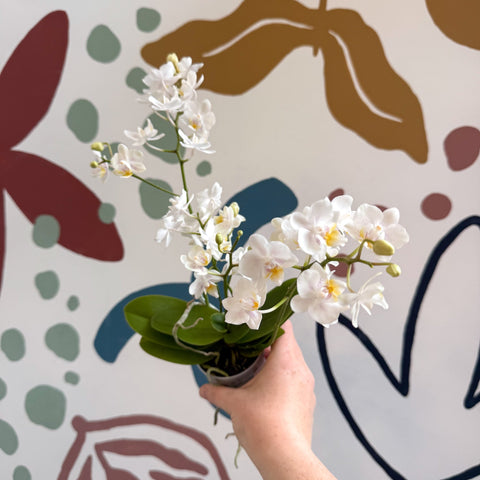
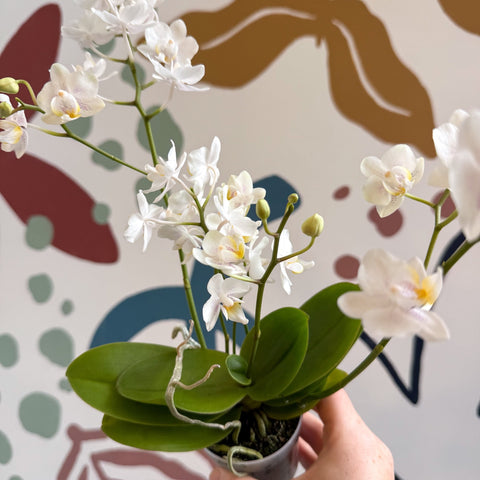
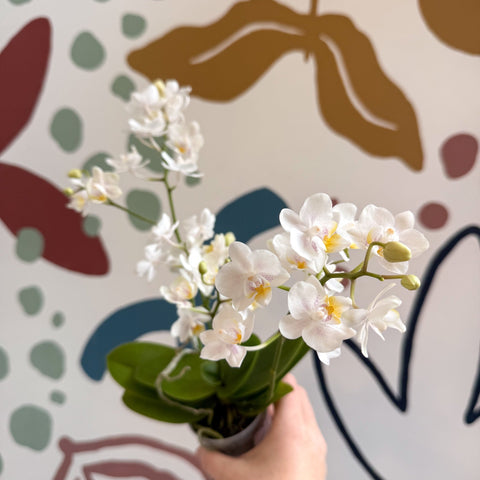
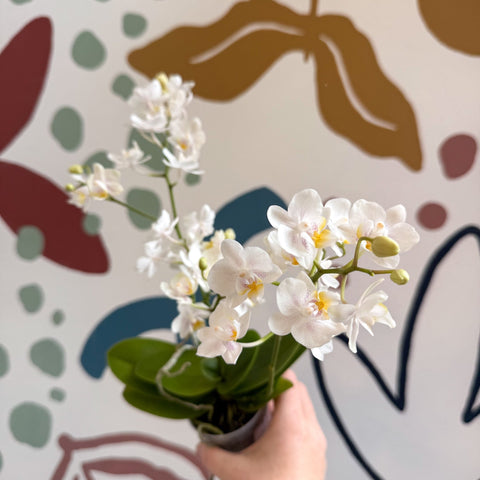
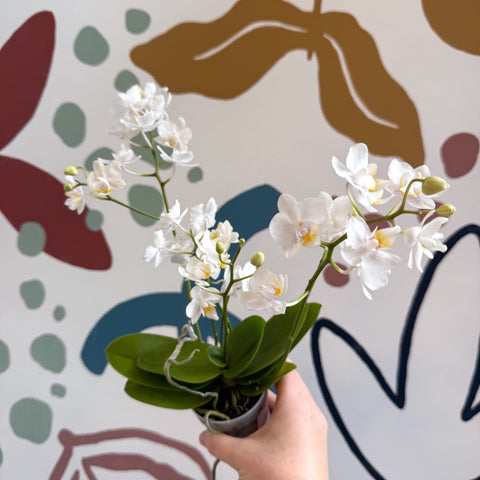
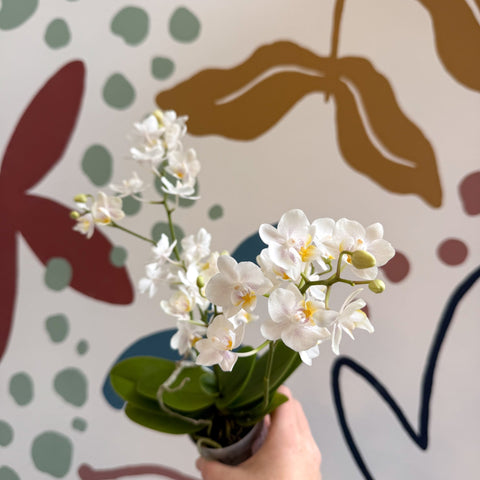
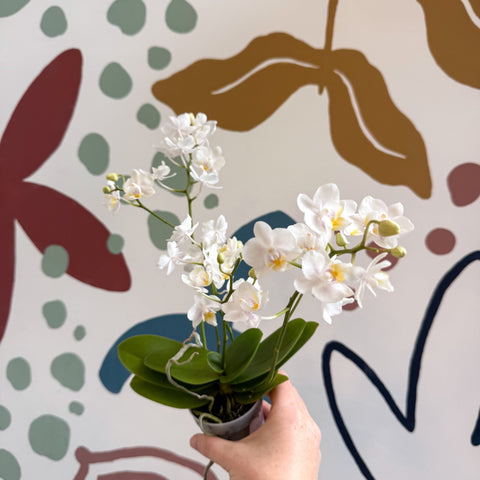
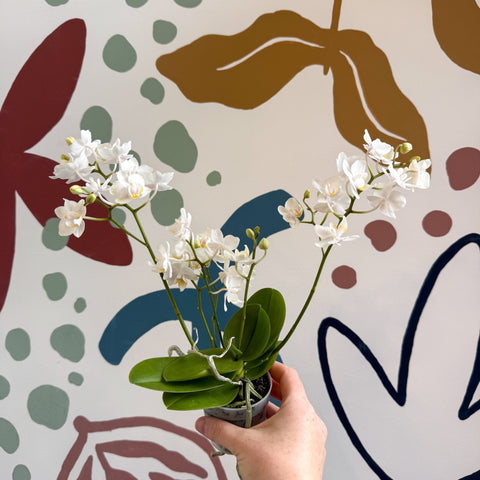
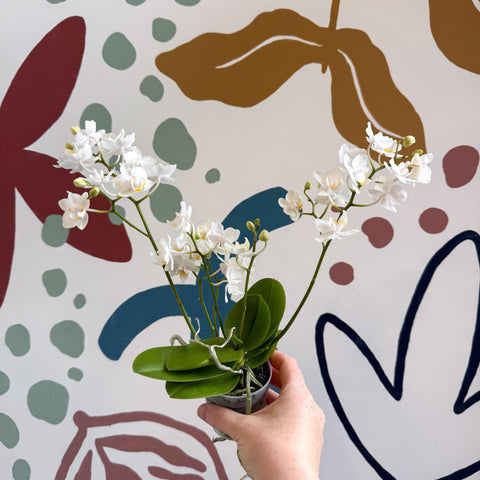
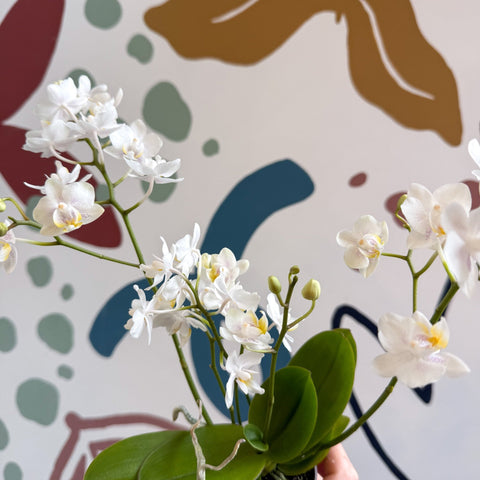
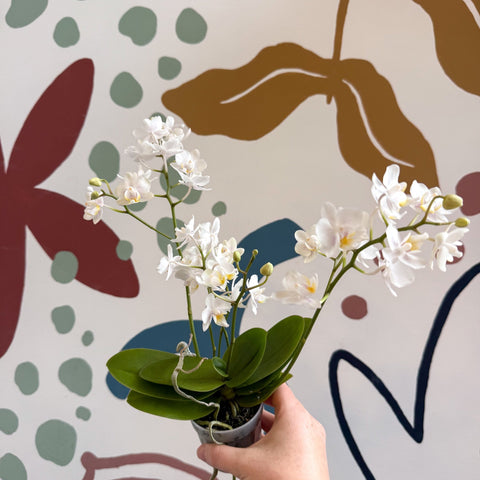
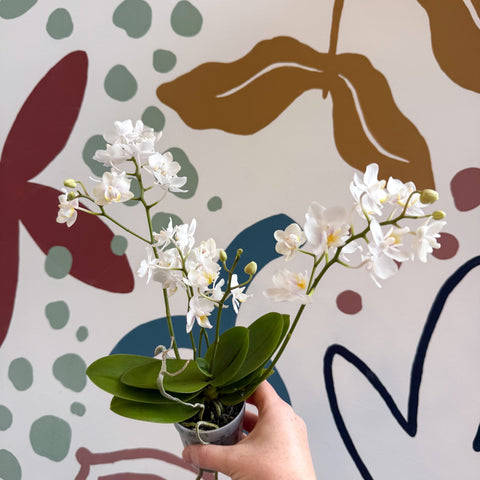
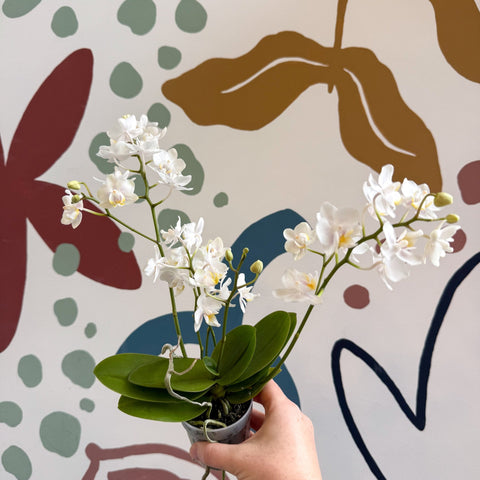
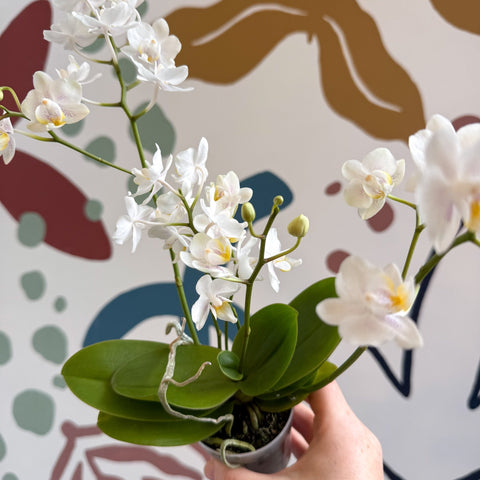
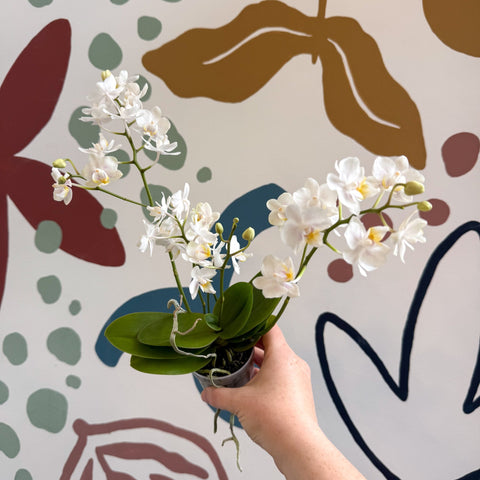
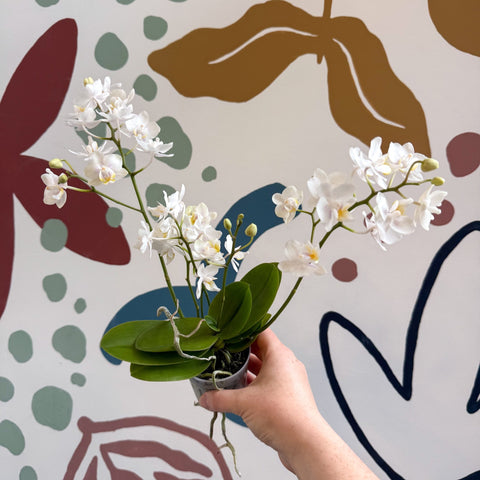
A compact and elegant orchid with pristine white blooms, this mini Phalaenopsis from the Cloud Series offers long-lasting flowers on multiple slender stems. Bred for beauty and ease, it’s ideal for windowsills, shelves, and gifting – bringing calm, understated charm to any indoor space. Despite its delicate look, this orchid is surprisingly low-maintenance and known for its ability to rebloom year after year with the right care.
Scientific Name
Phalaenopsis (moth-like appearance)
First described by Carl Ludwig Blume in 1825, Phalaenopsis orchids are named after the Greek phalaina (moth) and opsis (appearance), for their resemblance to fluttering moths.
Common Name(s)
Mini Moth Orchid, Mini Wild Orchid, Cloud Orchid, White Butterfly Orchid
Origin, be specific and include countries or geographical areas
Cultivated hybrid, with parent species native to Southeast Asia – including the Philippines, Taiwan, and parts of Indonesia and Australia. This variety was commercially grown in the Netherlands.
Light
Bright, indirect light is ideal. Avoid direct sun, especially in summer, to prevent leaf scorch. An east-facing windowsill is perfect. If leaves are dark green, the plant may need more light.
Water
Water when the visible roots turn silvery or the pot feels very light – usually every 7–10 days. Always let excess water drain completely; never let the plant sit in water. In winter, water less frequently (every 10–14 days) depending on light and temperature.
Humidity
Prefers moderate to high humidity (50–70%). Mist occasionally or place on a humidity tray if your home is very dry, especially in winter. Avoid misting the flowers directly.
Soil
Use an orchid-specific bark mix that allows excellent airflow and drainage. Avoid regular compost. These orchids are often sold in clear nursery pots so their roots can breathe and photosynthesise.
Food
Feed with a balanced orchid fertiliser every 2–3 weeks during the growing season (spring to early autumn). Reduce feeding in winter.
Temp
Thrives in 18–25°C. Protect from temperatures below 15°C and avoid cold draughts. Sudden drops in temperature can cause buds to fall.
Pet-safe
Yes – Phalaenopsis orchids are non-toxic to cats, dogs, and humans.
Sprouts Top Tips
Once the flowers finish, you can trim the flower spike back to just above a visible node (a
small bump on the stem). This may encourage the orchid to produce a new spike from that point. Alternatively, remove the whole spike and allow the plant to rest and regrow from the base.
Extras
Because the roots also photosynthesise, these orchids are often potted in clear plastic pots – don’t cover them completely in a dark cachepot for long periods.
Did You Know?
Unlike many other houseplants, Phalaenopsis orchids are epiphytes – in nature, they grow attached to trees rather than in soil. Their thick aerial roots absorb moisture and nutrients from rain and the surrounding air.