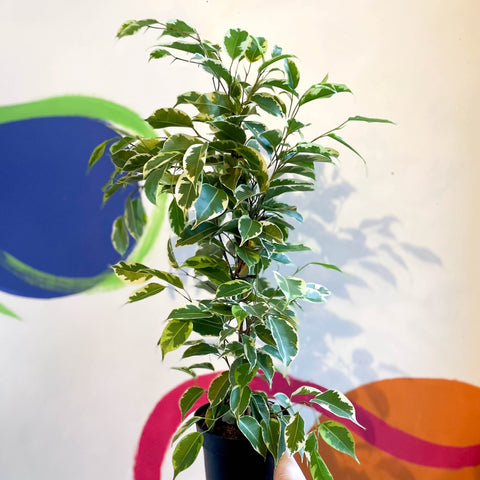
Ficus benjamina ‘Samantha’ - Variegated Weeping Fig

Size
Regular price £18.00
This product is not available for pickup at any store

This standout cultivar of Weeping Fig will bring some woodland class to your home. Its ovate leaves crowd the central, wooded trunk and bring lush greenery and a touch of colour to any planting display. New leaves whow paler green variegation bordering the mid-green leaves, and as they grow and mature this colour settles to a classy cream variegation. This Ficus is native to both tropical and subtropical areas, and at the cooler end of its range can grow deciduously. What does this mean for your houseplant? You may notice its leaves dropping in winter as the light levels and temperature get lower; don't worry too much, though, as your plant should wake up in spring. Bring in these glossy woodland leaves to enhance the greenery in your home.

Scientific Name
Ficus benjamina ‘Samantha’ (Benjamin's fig, cultivar: Samantha)

Synonyms: Urostigma benjaminum, Ficus benjaminoides, Ficus striata, Urostigma nitidum, Ficus neglecta (amongst others - a lot of specimens have been given different scientific names and then found to be this species)

The current name was first published in 1767, and despite other names cropping up in the interim, it has remained accepted.

Common Name
Weeping Fig, Benjamin Tree, Weeping Ficus, Ficus Tree, Ornamental Fig, Samantha Weeping Fig, Variegated Weeping Fig

Origin
Native to tropical and subtropical parts of Asia and Oceania. Found in Bangladesh, Borneo, Cambodia, Southern China, India, Laos, Indonesia, Malaya, Myanmar, Nepal, New Guinea, Philippines, Thailand, Vietnam,, Northeastern Australia, Taiwan and many island nations in between.

Light
It's important to get the light for your weeping fig right. Make sure it's bright but indirect light over summer - a location near a sunny window but out of the direct beams of light will work well. In autumn and winter, the light will be less strong and shouldn't scorch, so you can move it into that window to get a couple of hours of direct sun each day.

Water
Let the top third of the soil dry before you water again; this will happen much more quickly in hot weather, and be aware you'll need to reduce watering in winter in line with the soil moisture. Use lukewarm water to avoid shocking the roots and make sure the water drains away once you've watered as being sat in a puddle isn't great for this plant.

Humidity
It's important to keep this plant nice and humid, otherwise you'll risk browning the leaf tips and slowing its growth. A stable level of humidity can be achieved even in drier homes by using a humidifier or pebble tray to increase local humidity. Keep away from operating heaters and dry draughts.

Soil
Use a mix containing elements like coir, bark, perlite and sand to ensure it drains well but holds some moisture. A mix designed for Ficus plants like this one will be perfect. Repot every three years as the plant grows, into a pot size just a little bigger and change over as much soil as you can for best results.

Food
A feed every four waters in summer, and less frequently (e.g. every six waters) in winter will be perfect for keeping that growth going evenly.

Temperature
For best growth, your Weeping Fig will like to be between 16-26°C. Make sure it doesn't get below 12°C for long periods over winter.

Pet-safe
No, this plant is toxic to pets and small humans.

Sprouts Top Tips
When they aren't happy, weeping figs can be prone to dropping their leaves. There are a few reasons this could happen, though, so it's important not to misunderstand:
If you've just bought it, your plant may just be distressed at moving; give it time to get used to its new surroundings.
If it's somewhere very shady, try moving it somewhere brighter; in darker locations your plant will get upset and drop leaves. Make sure you can comfortably read by the natural light around your plant.
Finally, make sure you aren't leaving the plant sat in soggy soil; it can rot if it's left wet, preferring slightly damp soil and for the top to dry out before you water it again.

Check out The Sprouts Blog

Sprouts insights to house plants, gardening, our favourite brands and plant hire case studies.
We’re Growing – Welcome to Sprouts HQ! - Sprouts of Bristol
Sprouts of Bristol is expanding with the launch of Sprouts HQ – a new South Bristol premises that will house a dedicated packing space for online orders, an office, studio, and more room for rare and exciting plants. While the Kingsdown shop remains open as usual, the new HQ allows Sprouts to grow behind the scenes and offer even better service both in-store and online. This blog post shares the story behind the move, what customers can expect, and how to keep supporting this independent plant shop through the transition.
Jessy EdgarAugust 15, 2025
Terrarium & Wreath Workshops in Bristol – Autumn & Winter 2025 - Sprouts of Bristol
Join Sprouts of Bristol for terrarium, kokedama, and Christmas wreath workshops this autumn–winter. Creative, plant-filled fun in the heart of Bristol!
Jessy EdgarAugust 5, 2025
Build Your Own Terrarium: A Step-by-Step Guide from Sprouts - Sprouts of Bristol
Fancy creating your own tiny, self-contained world of green? Our DIY terrarium kits are the...
Jessy EdgarJuly 20, 2025