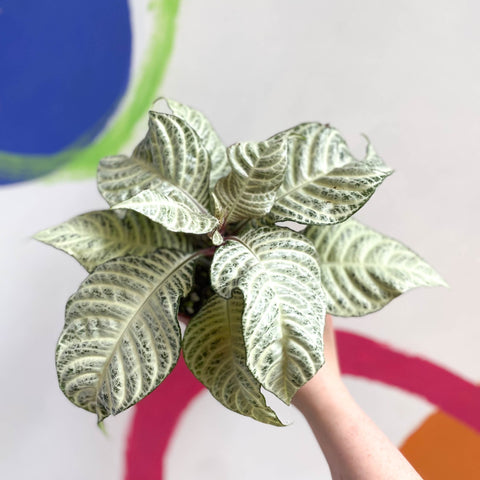
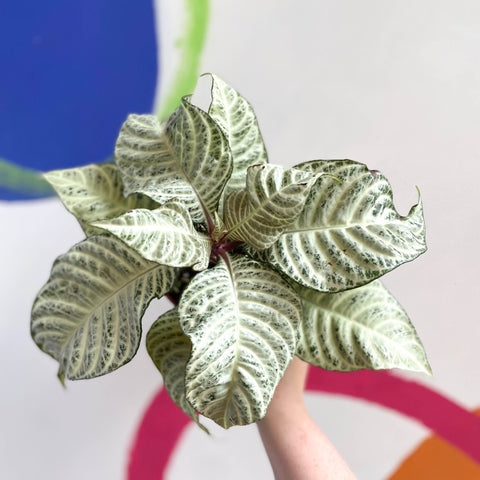
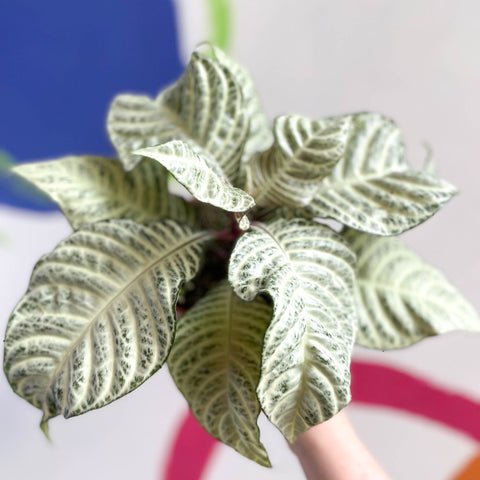
A bold beauty with distinctive style, Aphelandra squarrosa ‘White Wash’ features striking green leaves patterned with dramatic, silvery-white veins – giving it the unmistakable look of a zebra’s stripes. This cultivar has a softer, misted appearance compared to the classic form, with paler foliage and a velvety glow. Grown primarily for its foliage, it can also produce brilliant yellow cone-shaped flowers in the right conditions. A showpiece plant that brings texture and contrast to any indoor jungle.
Scientific Name
Aphelandra squarrosa ‘White Wash’ (squarrosa = “rough” or “scaly,” referring to its leaf texture)
Synonyms
Zebra Plant ‘White Wash’, Aphelandra ‘White Wash’, White Variegated Zebra Plant
Common Name
Zebra Plant, White Wash Zebra Plant, Aphelandra
Origin
Native to the tropical rainforests of Brazil, where it grows in warm, humid understories with filtered light.
Light
Prefers bright, indirect light. Direct sunlight may scorch the leaves, while low light can reduce the vibrancy of the variegation. A spot near an east- or north-facing window works well.
Water
Keep the soil evenly moist but not soggy. Water when the top 2–3 cm of soil feels dry. Avoid letting the plant dry out completely or sit in standing water.
Humidity
Loves high humidity – aim for 60% or higher. Use a pebble tray, regular misting, or a humidifier, especially in winter or centrally heated rooms.
Soil
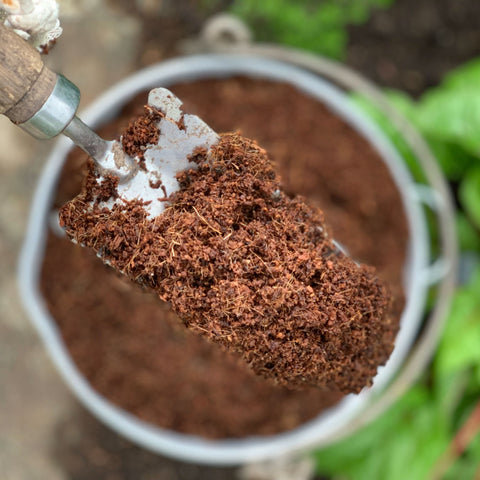
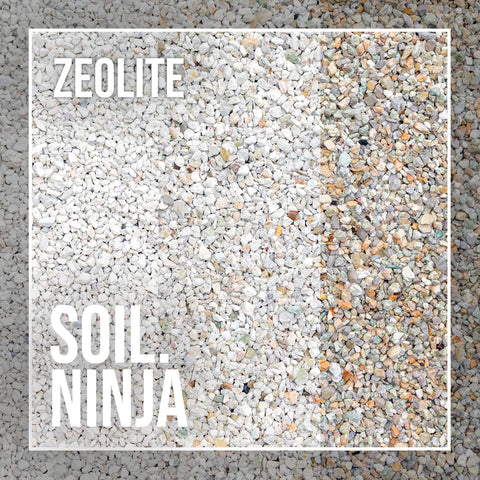
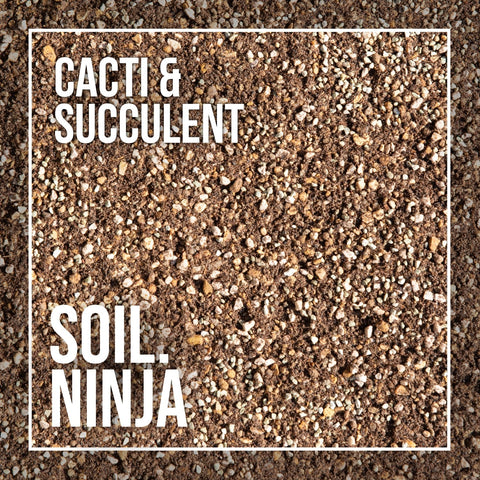
Use a light, well-draining indoor potting mix with added perlite or sand for improved drainage. Aphelandras like moisture, but dislike heavy, compacted soils.
Food
Feed every 2–4 weeks during spring and summer with a diluted, balanced liquid fertiliser. Reduce or stop feeding in autumn and winter.
Temperature
Prefers temperatures between 18–24°C. Avoid draughts, temperature swings, or any exposure below 15°C.
Pet-safe
No – Aphelandra species are mildly toxic if ingested by pets or humans.
Sprouts Top Tips
Keep in a consistent, warm spot with high humidity and avoid moving it too often. To encourage flowering, maintain bright light, good feeding, and slightly higher humidity. Remove spent flowers to keep the plant looking tidy.