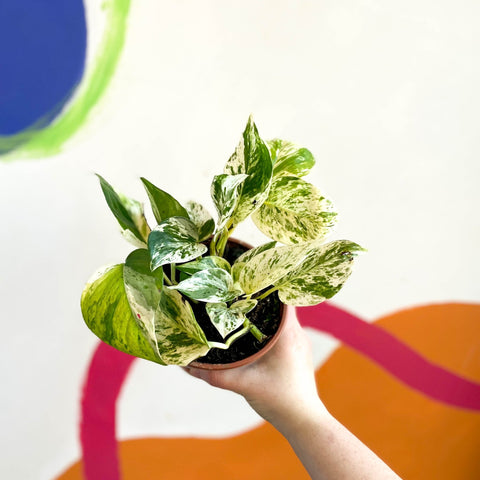
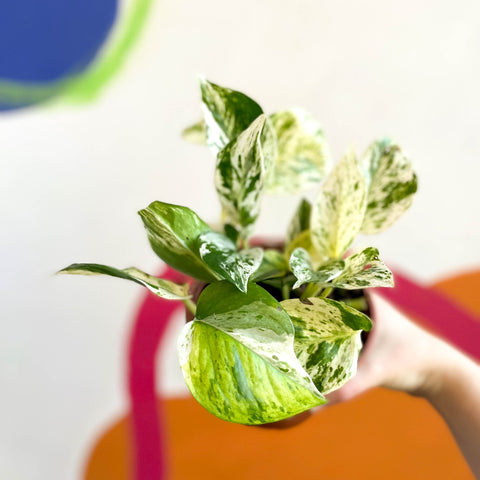
Scindapsus aureus 'Marble Queen' - British Grown

Size
Regular price £12.00
This product is not available for pickup at any store

Add a dash of gorgeous colour to your collection with the marbled white and pale green variegation in this pothos! As this plant grows, you'll see its rounded leaves, with their variegated marbling, creeping along any nearby surfaces. Your Pothos will look great hanging, climbing or dangling, and will love a bright spot which gives it enough light to sustain this high level of variegation. Your Marble Queen Pothos will repay your care with lush, bright foliage which you can enjoy with every new leaf that sprouts!

Scientific Name
Epipremnum aureum (golden plant which grows on the bottom of a tree) 'Marble Queen'

This plant was first described as a Pothos, and subsequently reclassified as both Rhaphidophora aurea and Scindapsus aureus before settling on the current scientific name: Epipremnum aureum.

Common Name
Marble Queen Pothos, Devil's Ivy, Pothos Plant

Origin
This is a cultivated variety; the species originates in French Polynesia

Light
Bright but indirect light is best, as this plant is not adapted to direct sunlight. If in a shadier location, water less frequently to stop it getting waterlogged; due to its variegation, this plant will benefit from brighter light. If it starts to lose variegation, it's probably in too dim a spot.

Water
Allow the top third of soil to dry out between waters; in a shadier location, allow about half to dry out. Keep an eye out for soggy soil in winter especially.

Humidity
Average humidity is fine; don't mist this pothos, though a hose down once a month or so will help it keep its leaves clear of dust. Make sure you don't keep it too close to a radiator which could dry it out

Soil
Use a well-draining soil with chunky bits like bark which will help it drain and get air to your roots. One designed for Monsteras or Philodendrons will work well here. Repot every few years as the plant grows.

Food
Feed every four waters in spring and summer; reduce to every six in autumn and winter.

Temperature
Average temperatures of 18-30°C are fine; make sure it doesn't get colder than 12°C in winter.

Pet-safe
No, this plant is toxic to pets and small humans.

Sprouts Top Tips
Allow this plant somewhere to grow to or something to grow up and it will deliver! It can have a spread of up to 8m in height in the right conditions. Alternatively, you can trim the ends to make entire new plants from the cuttings; just make sure there's a leaf and a node and your plant should be able to root anew!


Check out The Sprouts Blog

Sprouts insights to house plants, gardening, our favourite brands and plant hire case studies.
We’re Growing – Welcome to Sprouts HQ! - Sprouts of Bristol
Sprouts of Bristol is expanding with the launch of Sprouts HQ – a new South Bristol premises that will house a dedicated packing space for online orders, an office, studio, and more room for rare and exciting plants. While the Kingsdown shop remains open as usual, the new HQ allows Sprouts to grow behind the scenes and offer even better service both in-store and online. This blog post shares the story behind the move, what customers can expect, and how to keep supporting this independent plant shop through the transition.
Jessy EdgarAugust 15, 2025
Terrarium & Wreath Workshops in Bristol – Autumn & Winter 2025 - Sprouts of Bristol
Join Sprouts of Bristol for terrarium, kokedama, and Christmas wreath workshops this autumn–winter. Creative, plant-filled fun in the heart of Bristol!
Jessy EdgarAugust 5, 2025
Build Your Own Terrarium: A Step-by-Step Guide from Sprouts - Sprouts of Bristol
Fancy creating your own tiny, self-contained world of green? Our DIY terrarium kits are the...
Jessy EdgarJuly 20, 2025