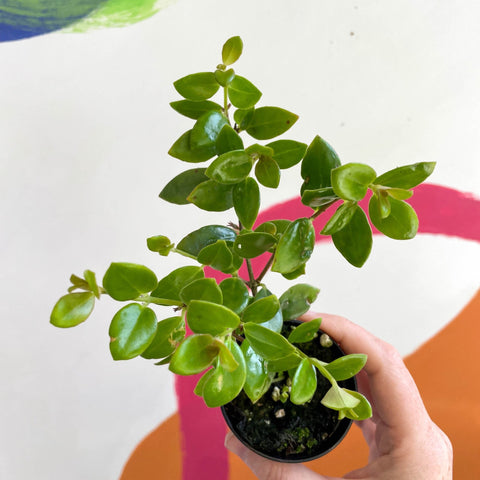
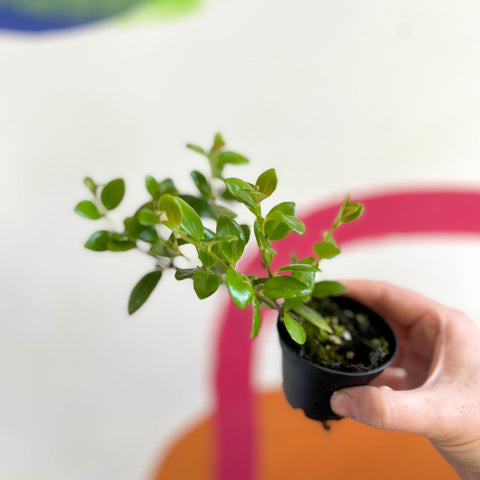
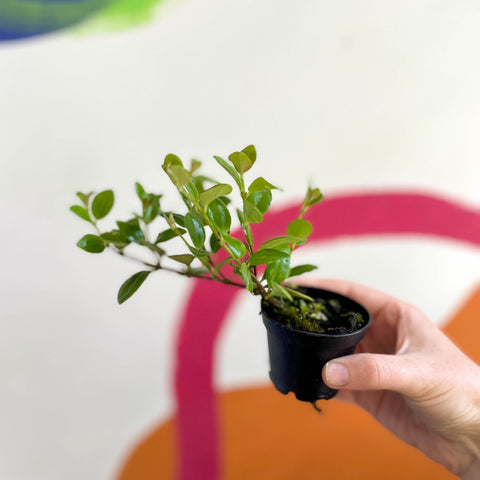
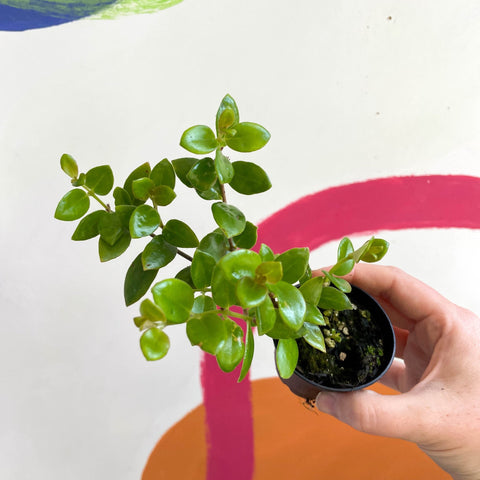
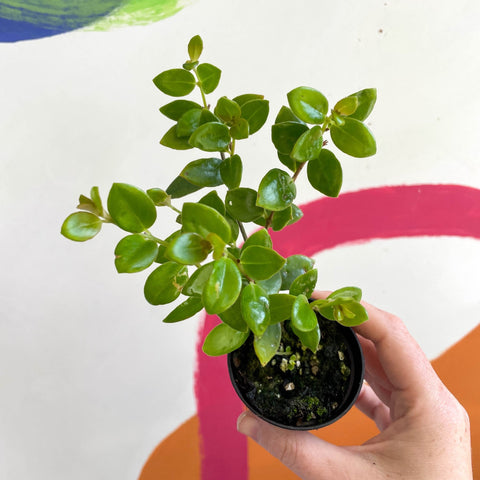
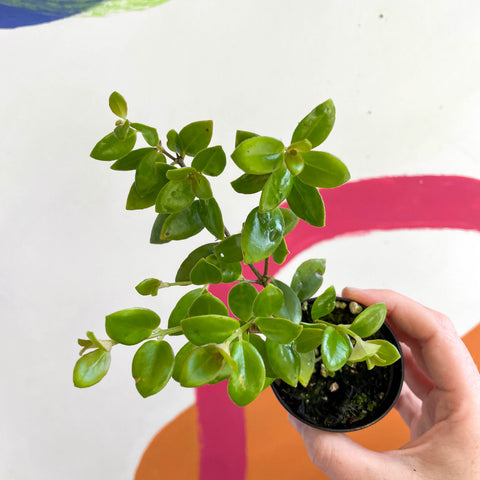
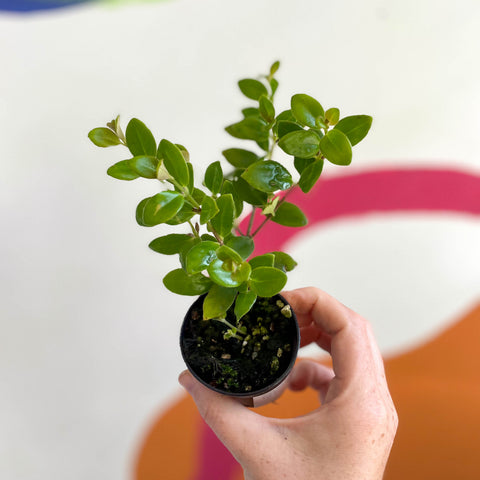
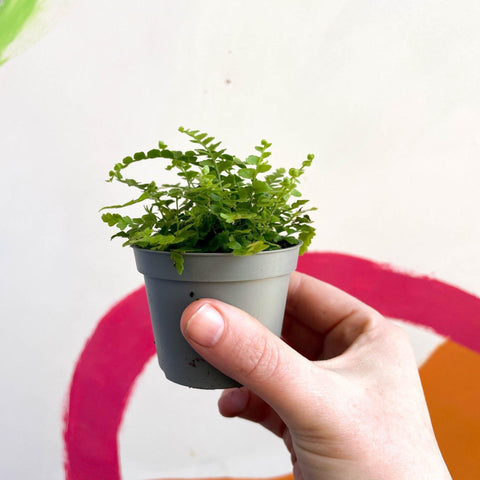
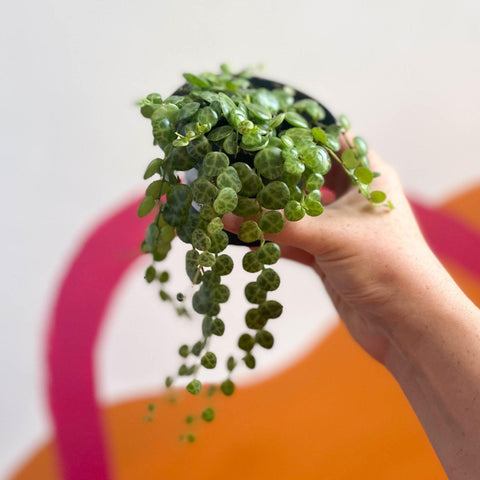
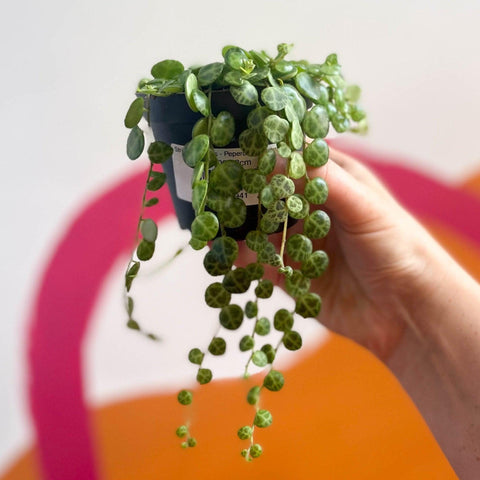
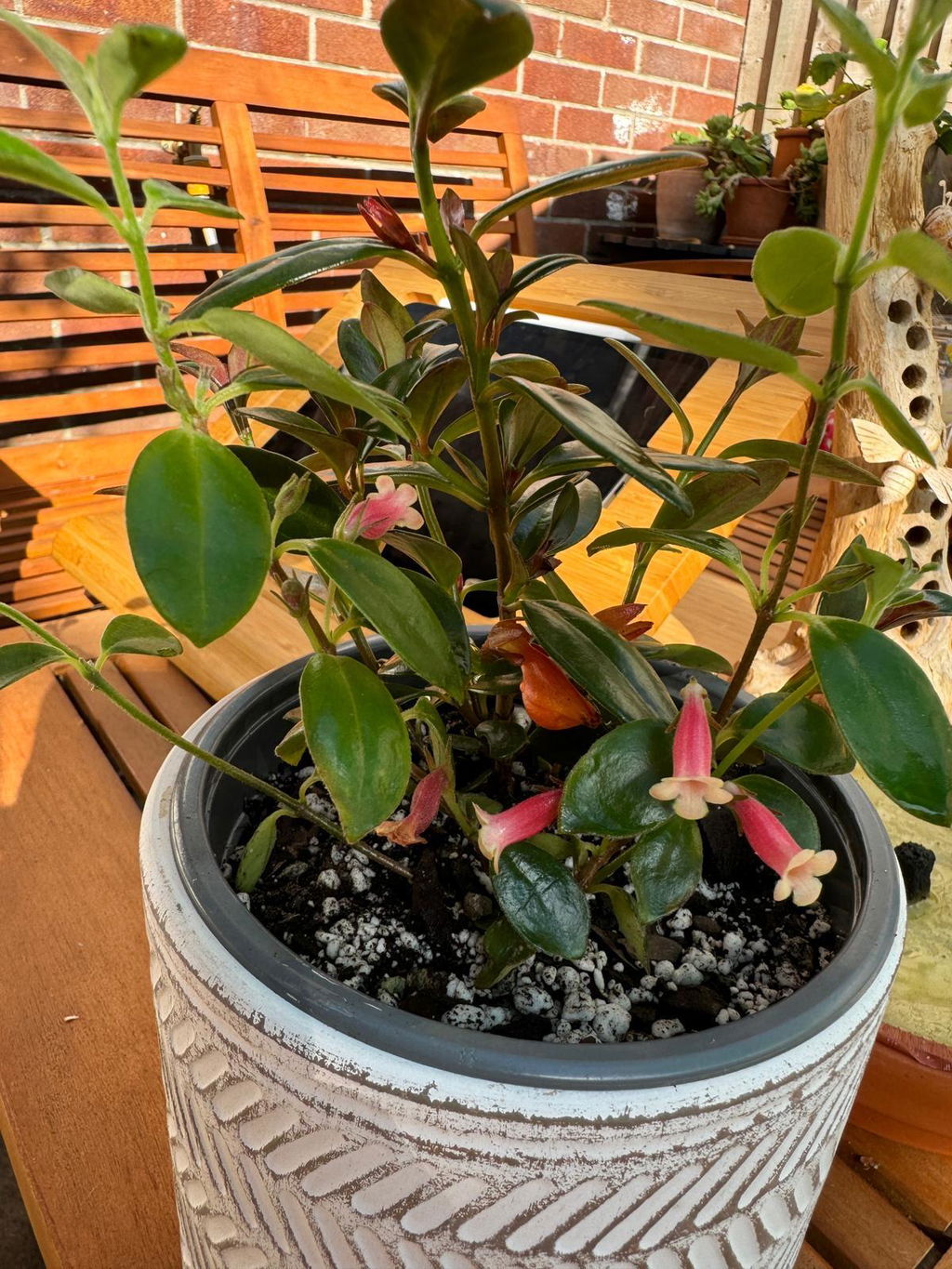
This eye-catching trailing plant boasts small, fleshy green leaves and vivid, tubular orange-red flowers that bloom intermittently throughout the year. A hybrid between Codonanthe and Nematanthus, ×Codonatanthus ‘Tambourine’ is loved for its compact, cascading habit and cheerful blooms. It’s ideal for hanging planters or high shelves where its trailing stems can spill and shine.
Scientific Name
×Codonatanthus ‘Tambourine’ (a hybrid name formed from Codonanthe + Nematanthus)
This intergeneric hybrid combines traits from two closely related genera in the Gesneriad family. Originally classified separately, many Codonanthe species have since been reclassified under Nematanthus, but this hybrid is still widely referred to as ×Codonatanthus in horticulture.
Common Names
Tambourine Plant, Goldfish Plant Hybrid (note: not a true Goldfish Plant, but shares similarities)
Origin
Hybrid origin; parent species native to tropical forests of Brazil
Light
Prefers bright, indirect light. Can tolerate some gentle morning sun but should be protected from harsh midday rays. Too little light will reduce flowering.
Water
Water when the top 2–3cm of soil feels dry. Keep soil lightly moist in spring and summer, but allow it to dry more between waterings in winter. Avoid letting it sit in water.
Humidity
Enjoys moderate to high humidity. A pebble tray or occasional misting can help, especially during dry winter months. Keep away from direct heat sources.
Soil
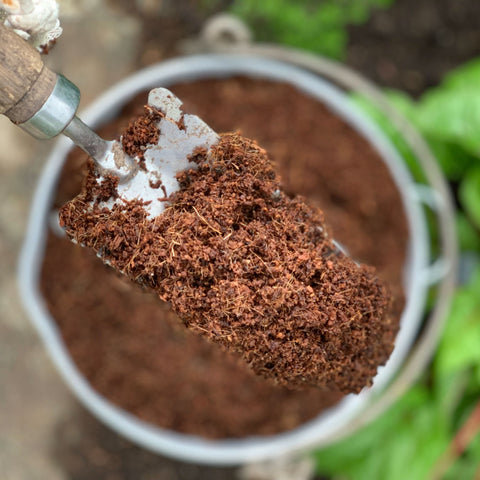
Likes a rich but airy potting mix. Use an African violet mix or combine regular compost with perlite and a little bark for added drainage. Repot every 1–2 years to refresh nutrients and manage root growth.
Food
Feed every 4–6 weeks during the growing season with a diluted liquid fertiliser. Reduce or stop feeding in winter.
Temp
Prefers temperatures between 18–24°C. Avoid cold draughts and do not expose to temperatures below 13°C.
Pet-safe
Generally considered non-toxic, but best kept out of reach just in case.
Sprouts Top Tips
To encourage bushier growth and more flowers, pinch back the stems in spring or early summer.
Extras
This plant responds well to regular light feeding and thrives in bathrooms or kitchens where humidity is higher – just be sure it still receives plenty of light.
Did You Know?
The hybrid’s parent, Nematanthus, is often called the “Goldfish Plant” because of its bright, curved flowers – and ‘Tambourine’ inherits their cheerful, bouncing look!