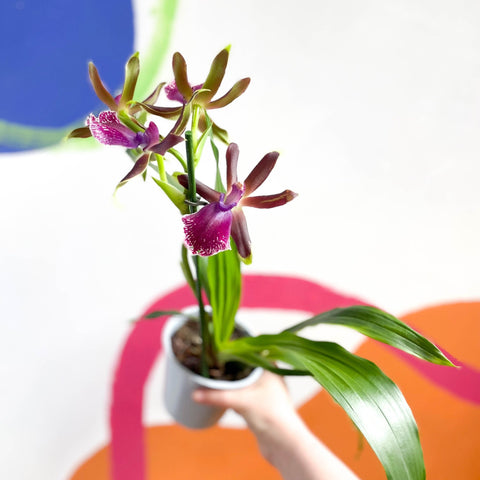
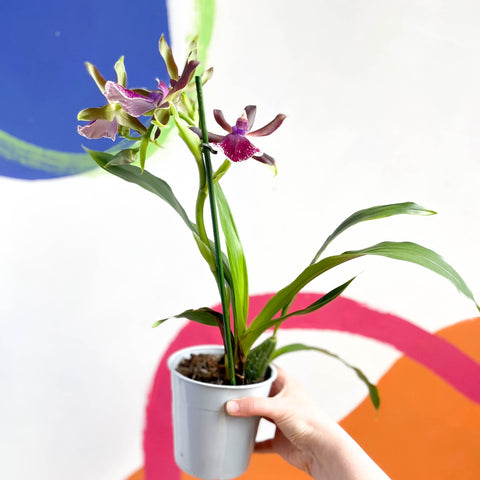
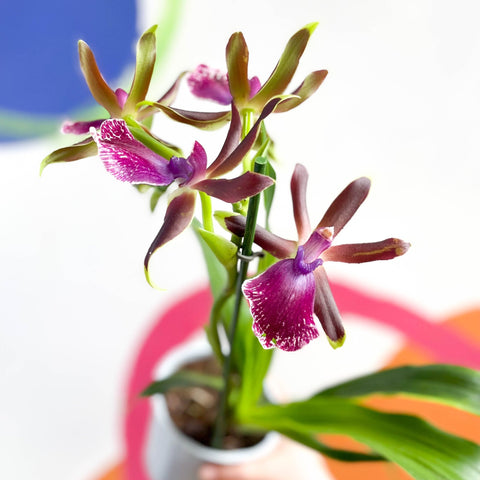
This hybrid Zygo Orchid was bred to combine the traits of its parent species, resulting in a robust cultivar with the striking colouring and strong scent inherited from the two species. The large lower petal that serves to attract pollinating insects in the wild is a broad brushstroke of bright purple, surrounded by thin petals with purple overlayed on green so that almost the entire petal is a chocolatey hue. Its long, mid-green leaves are almost as tall as the flower stem and sprout from 'pseudobulbs', a part of the plant which stores water for the orchid between rains - or, in your home, waterings. Bring a touch of the rainforest into your home with the lush, tropical foliage and distinctive flowers of this unusual orchid. The scented blooms can last several weeks in the right conditions, so take care of this plant and it'll keep adding colour to your surroundings.
Important Note We have tried to identify these orchids but please note that we are doing this by eye and comparing the plants we have in the shop to photos online. The orchids might arrive with the flowers open or closed.
Scientific Name
Zygopetalum ‘Louisendorf’ (yoked-petal plant, cultivar: Louisendorf)
Zygopetalum ‘Louisendorf’ is a hybrid between Zygopetalum maculatum subsp. maculatum (formerly known as Z. mackayi) and Zygopetalum crinitum, two species native to South America.
Common Name
Louisendorf Orchid, Hybrid Zygo Orchid, Zygo Orchid, Purple Orchid
Origin
While this is a cultivar first grown by humans, its parent plants do grow wild. Z. maculatum subsp. maculatum is found in Brazil, and Z. crinitum grows in Peru.
Light
Zygopetalum ‘Louisendorf’ thrives in bright, indirect light. Direct sunlight can scorch the leaves, so place it in an area with filtered light, such as a west or east-facing window with sheer curtains.
Water
Water regularly but ensure the soil is well-draining. Allow the top third of the soil to dry out between waters, as this hybrid does not tolerate soggy conditions. Avoid watering the leaves directly to prevent rot.
Humidity
This orchid prefers moderate to high humidity, ideally between 50-70%. During the winter, when heaters are on and indoor air drier, use a humidity tray or room humidifier to keep moisture levels up.
Soil
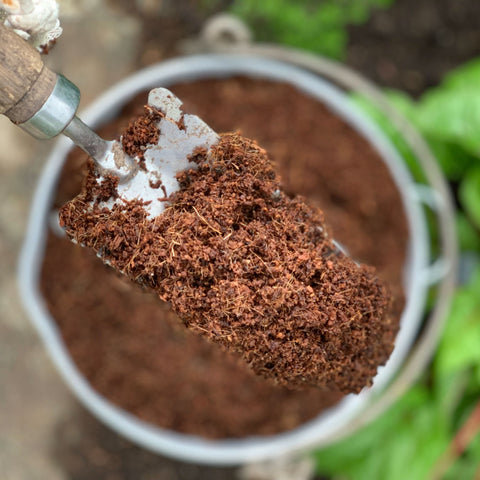
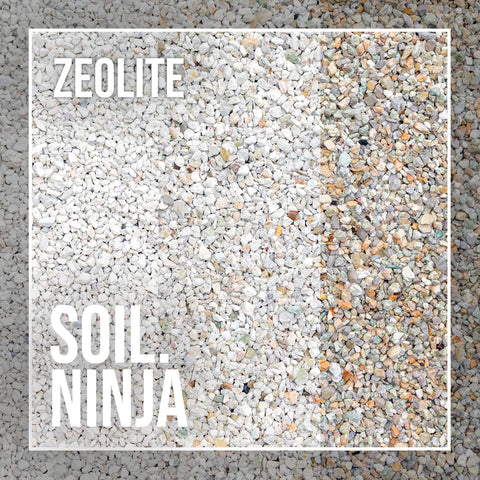
Use a well-draining orchid mix, typically a combination of bark, perlite, and a small amount of coir. This ensures good airflow around the roots. Repot every 3-4 years as the plant grows; repotting at this frequency will mean it stays a little potbound and is more likely to flower.
Food
Feed once every 2-4 weeks during the growing season (spring through summer) with a balanced orchid fertiliser, diluted to half strength. Reduce feeding in the dormant period (autumn and winter). You can supplement this with a foliar orchid feed in Spring but make sure not to overdo it and keep an eye on the instructions for your specific fertiliser.
Temperature
This hybrid thrives in warm temperatures, ideally between 18-24°C during the day, with a slight drop at night to around 16°C. Keep it away from cold draughts and temperatures below 13°C, as these can cause damage.
Pet-Safe
Yes; orchids are generally non-toxic to pets, but it is recommended to keep them out of reach of pets to prevent accidental ingestion.
Sprouts Top Tips:
• Fragrance: Zygopetalum ‘Louisendorf’ is known for its long-lasting, spicy fragrance. Ensure the plant is in a well-ventilated area to disperse the scent effectively.
• Flowering: This orchid tends to bloom in late winter or early spring. Once flowering begins, avoid disturbing the plant to maintain stable blooming conditions.