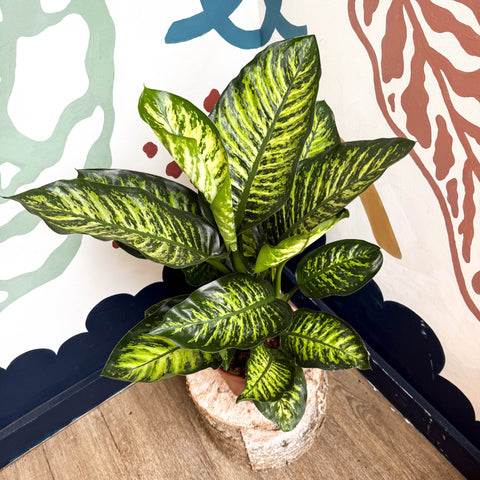
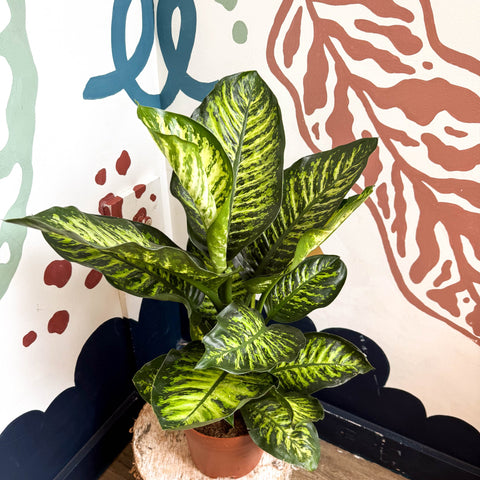
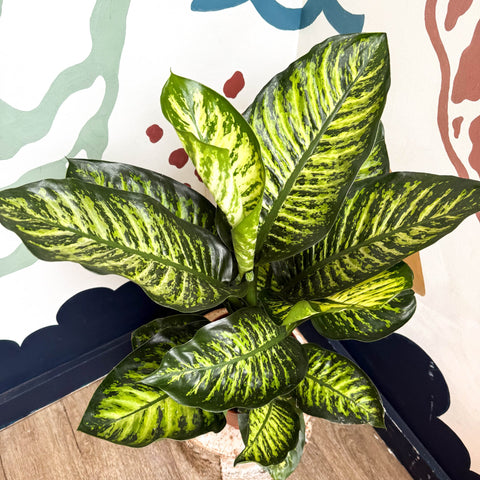
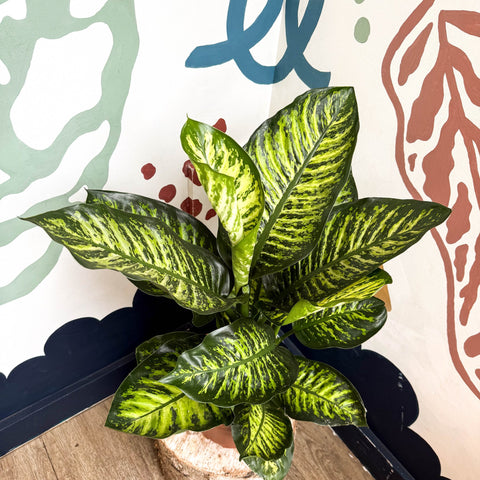
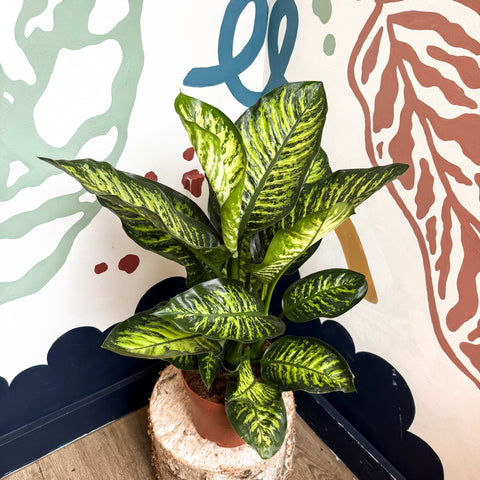
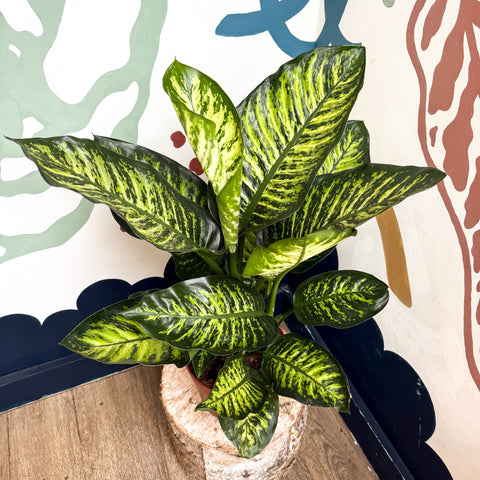
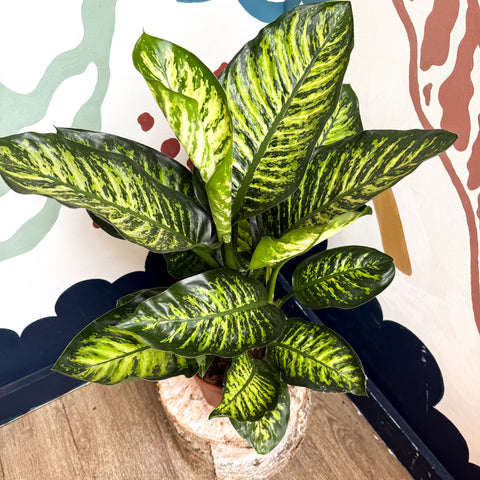
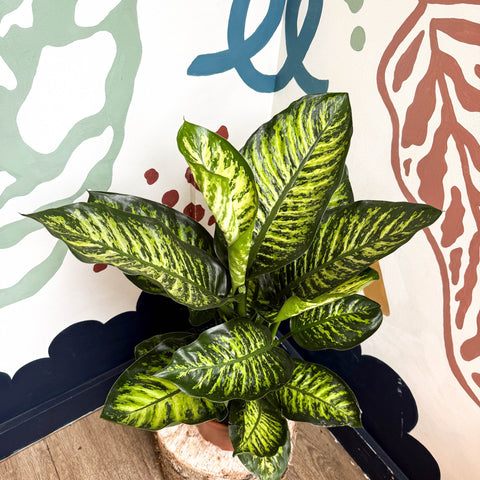
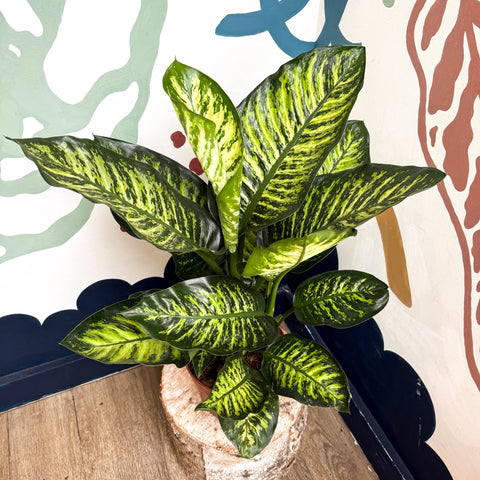
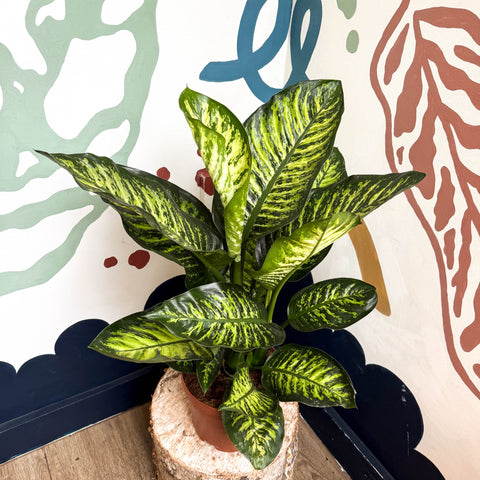
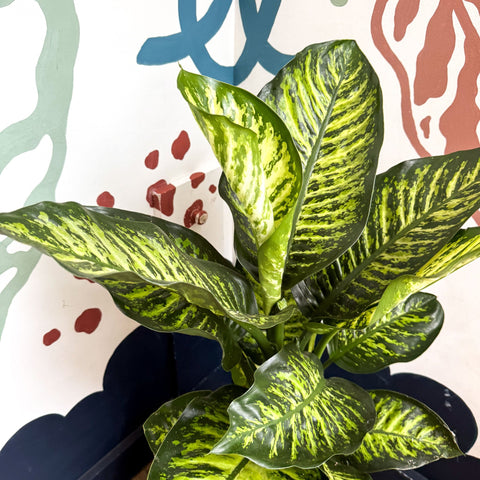
Broad, bold, and beautifully variegated, Dieffenbachia seguine ‘Maroba’, also known as the Leopard Lily, is a lush indoor foliage plant with a strong, upright growth habit. Its wide, deep green leaves are streaked and splashed with pale green to creamy yellow patterns, creating a striking contrast that brightens any corner. ‘Maroba’ is a slightly more compact and fuller cultivar of Dieffenbachia seguine, perfect for adding a tropical feel to your home without needing intense maintenance.
Scientific Name
Dieffenbachia seguine ‘Maroba’
(seguine = species native to tropical South America, commonly cultivated for its bold foliage)
Synonyms
Leopard Lily, Dieffenbachia ‘Maroba’
(We use “Leopard Lily” to avoid outdated and offensive terms like “dumb cane.”)
Common Name
Leopard Lily, Dieffenbachia Maroba
Origin
Species native to northern South America and the Caribbean. ‘Maroba’ is a cultivated variety selected for its dense form and bold leaf markings.
Light
Prefers bright, indirect light. Too much direct sunlight may scorch the leaves, while too little will fade the variegation and cause leggy growth. A spot near an east-facing window is ideal.
Water
Water when the top 2–4 cm of soil feels dry. Keep the soil evenly moist during the growing season, and reduce watering slightly in winter. Always allow excess water to drain freely.
Humidity
Enjoys moderate to high humidity. It will benefit from misting, a pebble tray, or being grouped with other plants to raise humidity naturally.
Soil
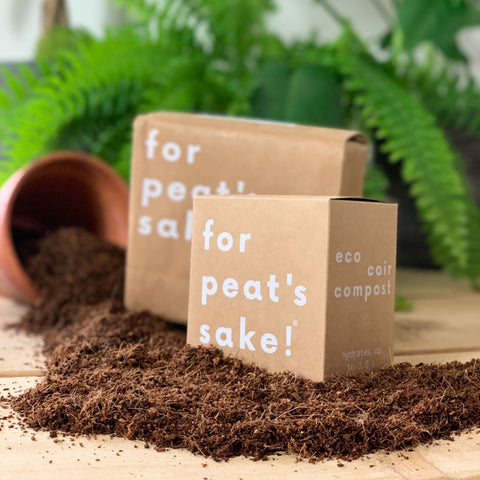
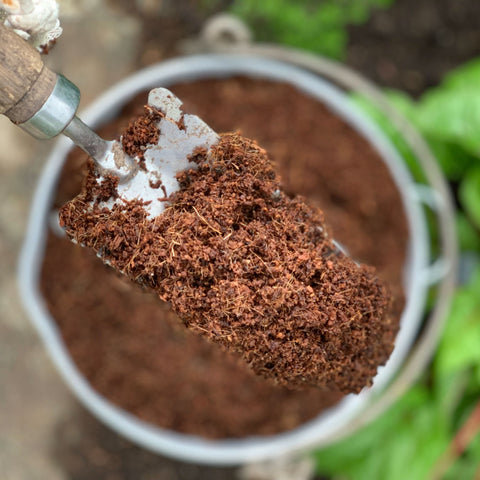
Use a free-draining indoor potting mix with added perlite or bark. Avoid heavy composts that retain too much moisture.
Food
Feed every 4–6 weeks in spring and summer with a diluted, balanced liquid fertiliser. Pause feeding in autumn and winter.
Temperature
Thrives between 18–26°C. Keep away from cold draughts and avoid temperatures below 15°C.
Pet-safe
No – like other Dieffenbachia species, toxic if ingested by pets or humans.
Sprouts Top Tips
Rotate regularly for even growth and remove lower leaves as the plant matures to keep it tidy. If the plant becomes leggy, prune the stems and re-root in water to rejuvenate its shape.