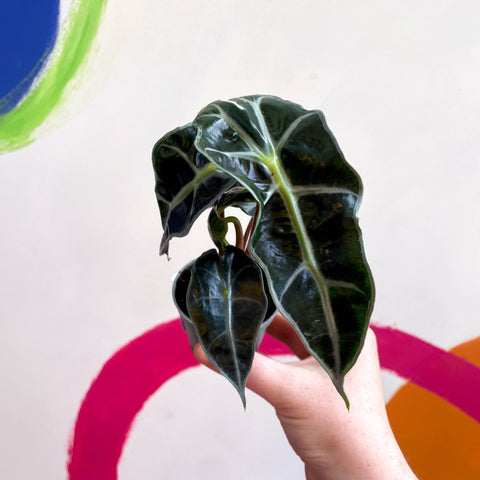
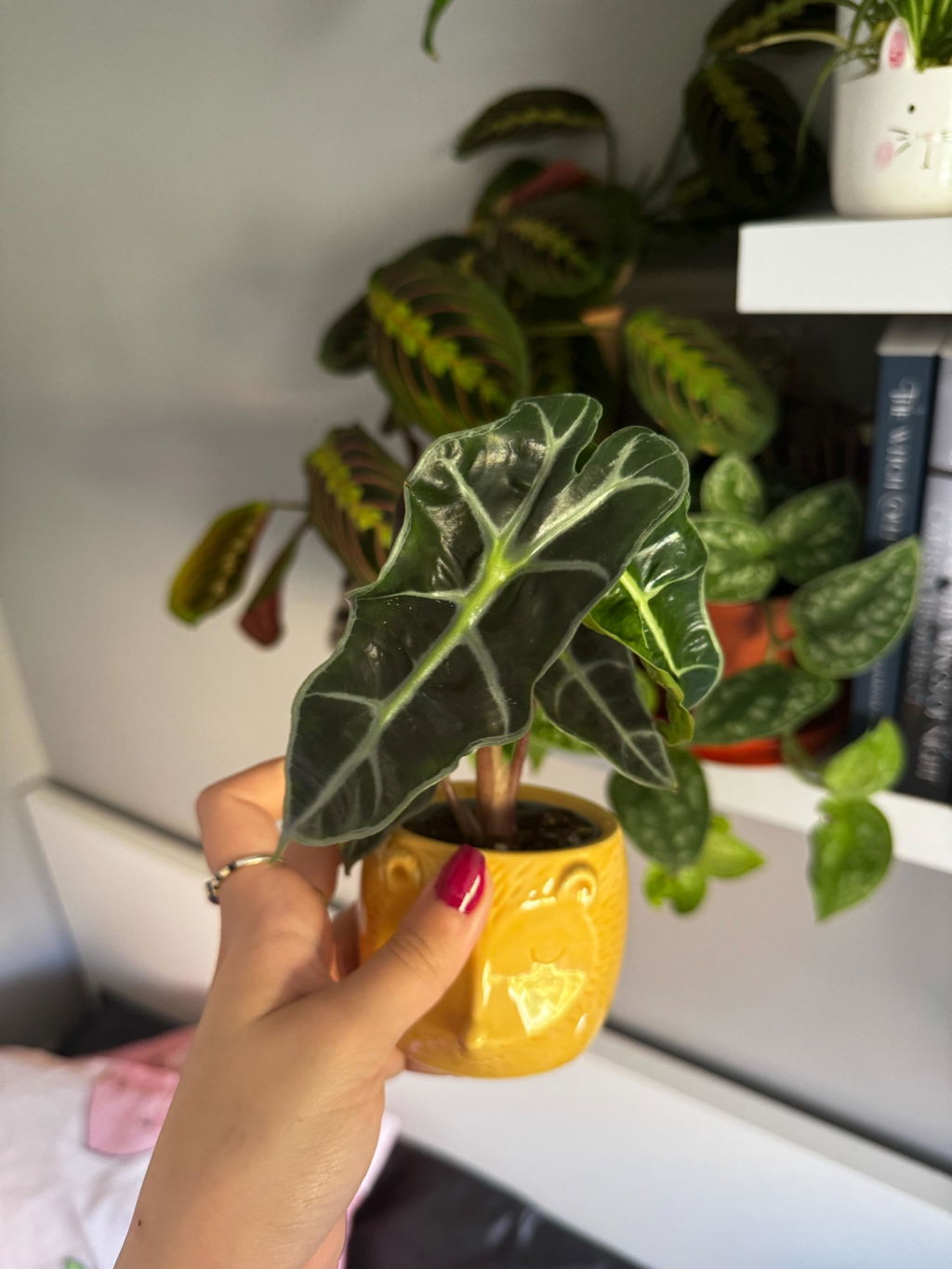
This Alocasia is striking with its glossy, deep green foliage, contrasted with the silver variegation along the veins and edges of the leaves. These bold outlines emphasise the stylishly uneven leaf edges, and their elegant long points. They may be shaped more like wobbly, elongated hearts, but the leaves of this Alocasia are chic and stylish. Make sure they get plenty of light and not to much water and they will bring that style to you too! The leaves alone can grow up to 30cm in length, on metre-long stems, so if you keep your plant happy you could get yourself some giant foliage!
Scientific Name
Alocasia x Amazonica 'Polly' (not-colocasia, hybrid from Amazon Nursery, Florida, cultivar: Polly)
This plant is an Alocasia hybrid with unknown parents. Some experts consider its scientific name to be a manufactured one rather than a 'true' scientific name because of this, but it is still helpful for clarifying exactly what hybrid is being talked about.
Common Name
African Mask Plant, Elephant's Ear
Origin
This is a hybrid plant, so doesn't have a natural habitat; it was bred in Florida, from parent plants thought to originate in tropical Southeast Asia
Light
Alocasias love light; if you get them used to it gradually, they can take plenty of direct sun too! (You just might need to watch them in the height of summer.) An east- or west-facing window would be ideal here, but south-facing works too as long as you're careful at the height of summer.
Water
Allow the soil of your Alocasia to almost completely dry out before you water again; these plants like drier roots than other Aroids.
Humidity
Alocasias are jungle plants, but average household humidity will usually be fine for them. Keep them away from operating heaters and radiators, and out of draughts, which will dry them out too much. If you notice your Polly's leaves getting brown and crispy round the edges, the plant may benefit from the introduction of a humidity tray to increase local humidity.
Soil
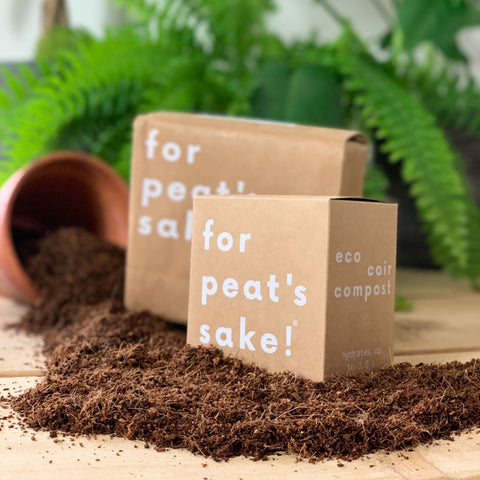
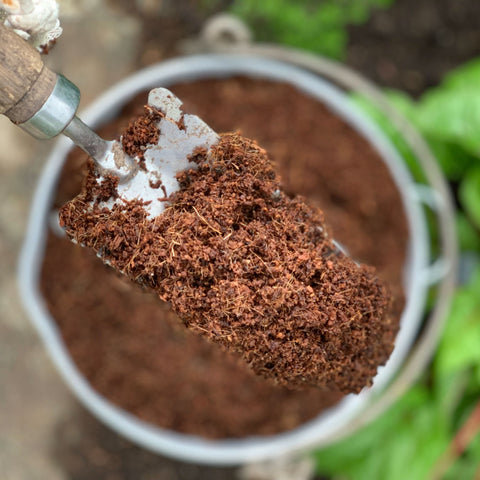
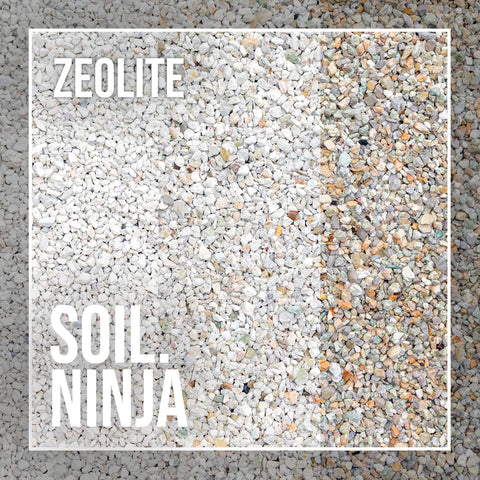
A chunky soil with plenty of elements to retain moisture (like coir and bark) alongside elements that aerate soil (like vermiculite and zeolite) will work well here. Look out for mixes designed for alocasias. Repot every couple of years as the plant grows; Alocasias prefer to be slightly root bound, so only repot when absolutely necessary.
Food
Feed every four waters in the growing season, reduce to every six in autumn and winter. Water before fertilising to prevent the fertiliser burning the roots.
Temperature
Likes temperatures of 15-30°C; don't let it get below 10°C in winter.
Pet-safe
No, this plant is toxic to pets and small humans.
Sprouts Top Tips
Alocasia can be prone to spider mites, so keep an eye out for these tiny, spider-like critters and the webs they make around the base of plants.
Alocasias are less thirsty than other aroids, so it can be easy to over-water; allow at least three quarters of the soil to dry out between waters. It might be easiest to test this with a wooden skewer or chopstick!