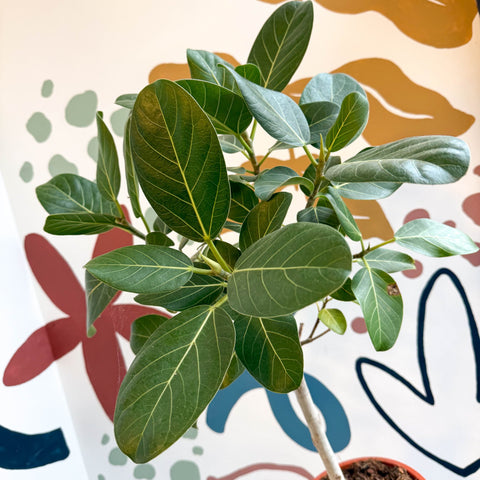
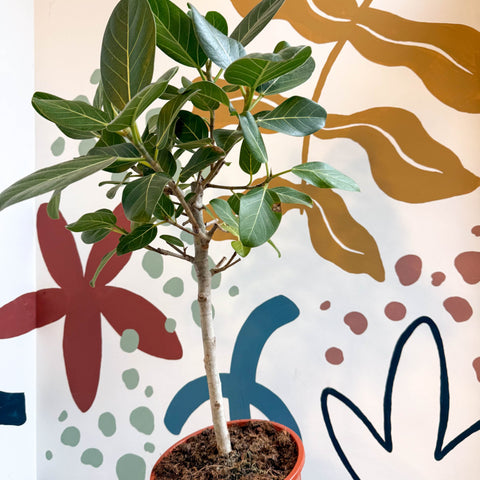
Bengal Figs can grow to absolutely gargantuan proportions in their native habitat, but don't worry - this dwarf variety won't go quite that far! It is easygoing as a houseplant, happy to do its thing and bring just a little slice of tropical jungle into your home. The species is recognised as the national tree of India, and this cultivar is a great option for bringing the plant indoors. Growing like a miniature tree with its mid-green, slightly fluffy leaves sprouting from the top of its trunk, and showing off their pale silvery veins, it will look fantastic as a standing plant in your living room, hallway or other space in your home. This dwarf variety is a great option for smaller spaces; it won't take over your whole space but will still bring that distinctive tree shape into your home.
Scientific Name
Ficus benghalensis 'Petite Audrey' (fig from Bengal, cultivar: little Audrey)
Synonyms: Perula benghalensis, Urostigma bengalense, Ficus banyana, Ficus indica
This plant has not been reclassified, but is sometimes seen referred to by the synonyms Ficus banyana and Ficus indica.
Common Name(s)
Banyan, Banyan Fig, Indian Banyan, Ficus Petite Audrey
Origin
Native to tropical areas of Asia, ranging through India, Sri Lanka, Nepal, Pakistan, Bangladesh, Maldives, Andaman Islands, Assam, Laccadive Islands and Assam.
Light
Prefers bright, indirect light but can tolerate some shade. Avoid harsh direct sunlight, which may scorch its leaves; some direct sun would be a good idea in autumn and winter when light is more scarce.
Water
Allow the soil to at least half dry out before watering. Reduce watering in autumn and winter, and use lukewarm water to avoid shocking the roots. When watering, ensure thorough drainage and avoid letting the plant sit in water.
Humidity
This plant loves high humidity, so will grow best in a group with other plants or with a humidity tray to keep its leaves happy and hydrated.
Soil
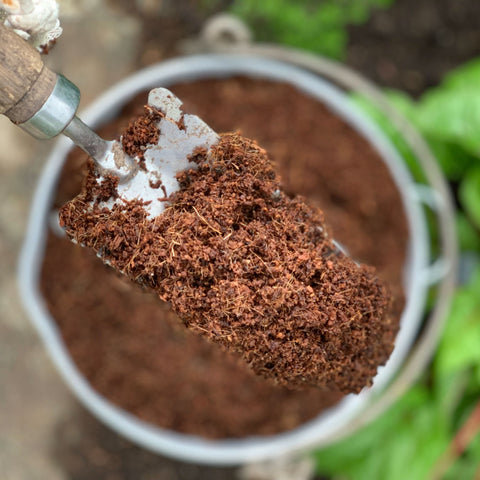
Use a well-draining potting mix with added perlite or bark for aeration. A mix designed for Ficus plants should work well here. Repot every 2-3 years or when it outgrows its pot.
Food
Feed occasionally during the growing season with a balanced liquid fertiliser, about every four waters. Stop feeding in autumn and winter.
Temperature
Thrives in temperatures between 18-30°C. Avoid exposure to temperatures below 15°C or cold draughts.
Pet-safe
No, this plant is toxic to pets and small children. Its sap contains latex, so avoid contact if you have a latex allergy.
Sprouts Top Tips
Perfect for desks or shelves, this smaller variety still loves space to spread its roots. Wipe leaves occasionally to keep them dust-free.