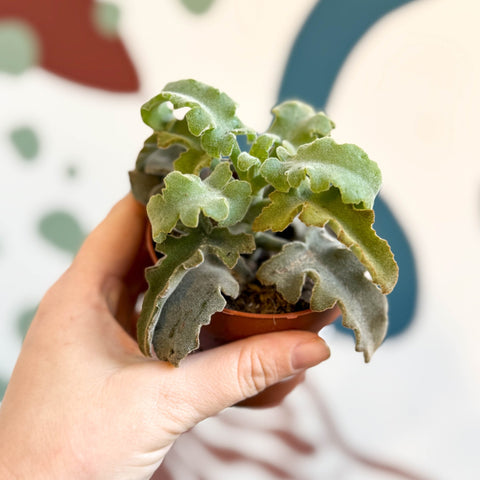
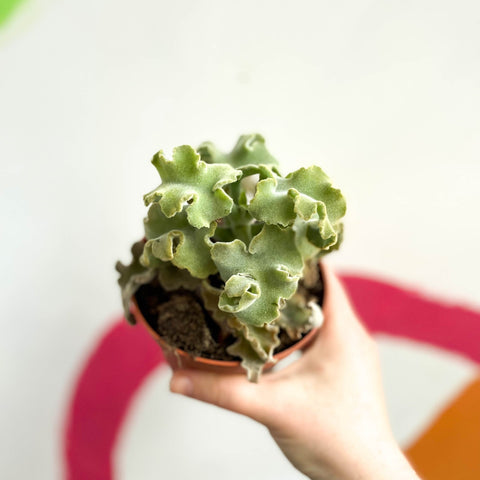
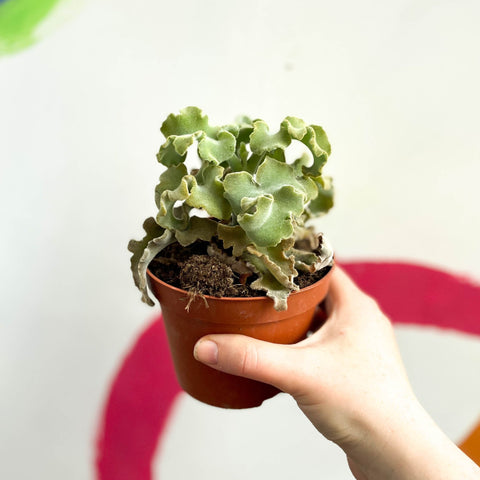
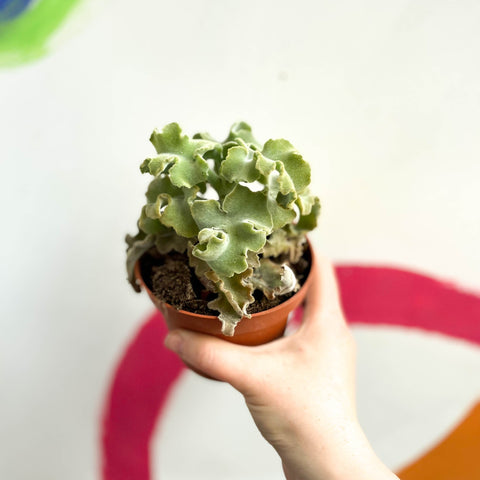
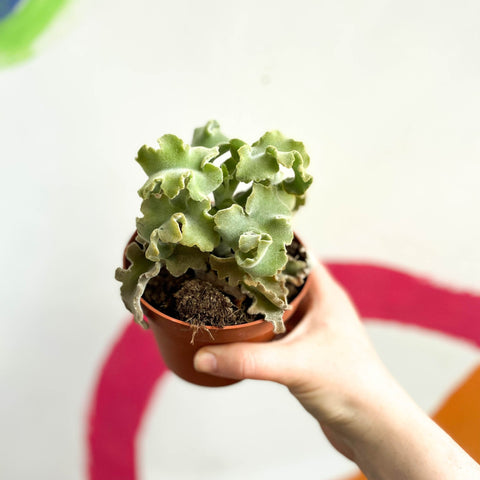
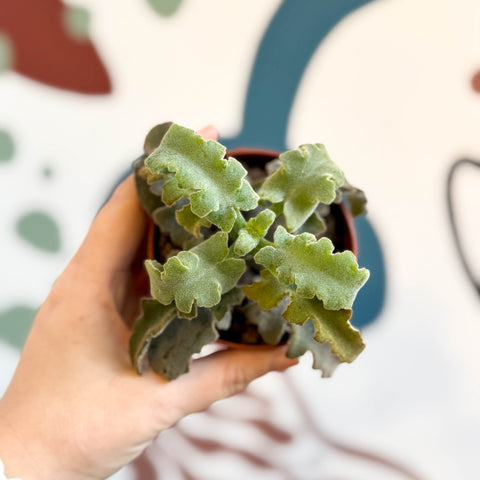
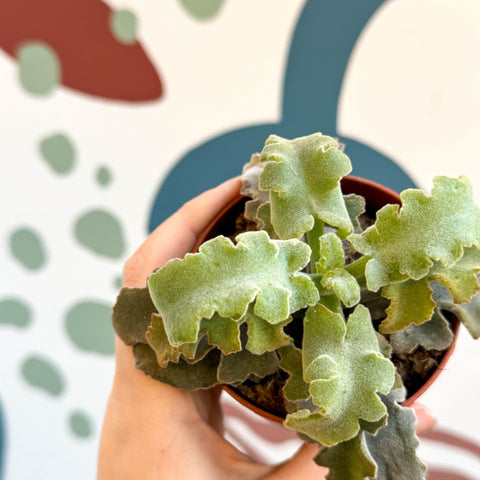
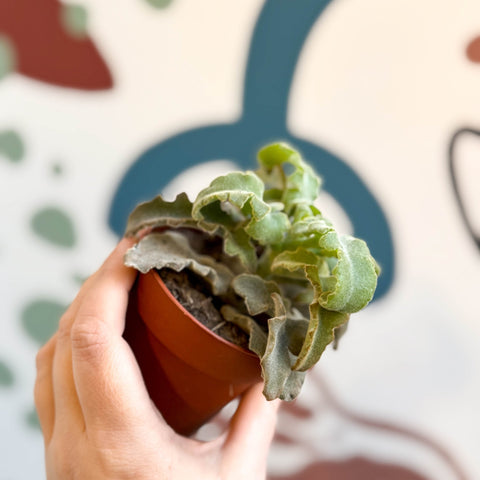
This succulent's leaves are striking not only for their silver-green colour and fluffy texture but also their shape, which gives it the cultivar name 'Maltese Cross'. The resemblance to the cross emblem of this European country is visible in the branching of each leaf. Mature leaves also gain a bronze tint, giving the plant even more of a distinctive style. The silhouette, the colours and the texture might be what draws you to this plant, but its easygoing nature will keep you enthralled. This succulent is happy with a few hours of sun and not much water, preferring drier soil most of the time. Easygoing and distinctive, this succulent is a great addition to any collection, from plant novice to plant pro.
Scientific Name
Kalanchoe beharensis 'Maltese Cross' (plant from Behara, Madagascar, from which the parts that fall grow, cultivar: Maltese cross)
Synonyms: Kalanchoe vantieghemi
This plant's scientific name has been accepted since a paper first naming it in 1903. It was first brought to Europe by French botanists at this time.
Common Name(s)
Maltese Cross Plant, Velvet Elephant Ear, Felt Bush, Elephant's Ear Kalanchoe, Felt Plant, Velvet Leaf, Teddy Bear, Napoleon's Hat
Origin
Native to Madagascar, specifically arid and rocky regions.
Light
Prefers bright, indirect light or direct morning and evening sun. An east- or west-facing windowsill, or a little distance from a south-facing window, will work well.
Water
Allow the soil to dry out completely between waterings. Water well when you do water, but leave plenty of time between waters. Always ensure excess water drains away; puddles are a recipe for root rot.
Humidity
Thrives in low-humidity environments, as it is adapted to dry conditions. Avoid placing in overly humid areas such as bathrooms.
Soil
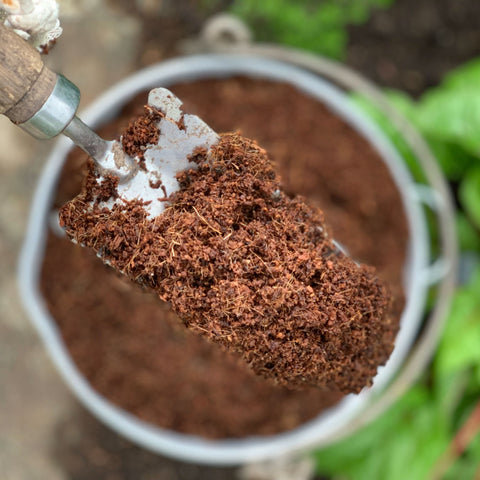
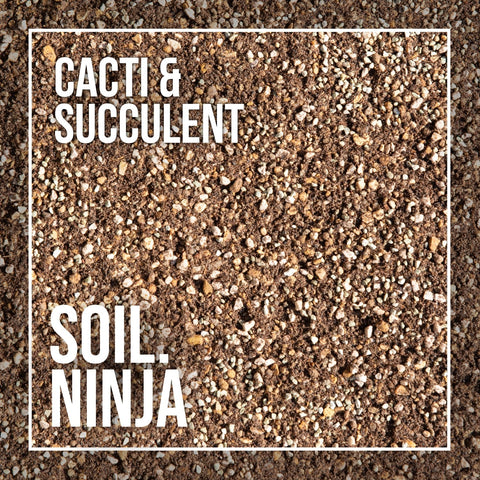
Use a well-draining soil mix, such as one designed for cacti and succulents. Elements like sand, grit and perlite will work well to add the drainage if you're mixing your own soil. Repot every 2-3 years in spring with fresh soil.
Food
Feed every few months with a cactus feed, or houseplant feed. Make sure it's diluted or added right after a water so as not to burn the roots.
Temperature
This plant's ideal temperature is between 15-25°C; make sure it does not get colder than 12°C for long periods in winter.
Pet-safe
No, this plant is toxic to pets and small humans if ingested.
Sprouts Top Tips
Keep an eye on leaf colour and texture. If the plant begins to look leggy or pale, it may need more light. Rotate the plant regularly for even growth and to prevent it from leaning towards the light source.